
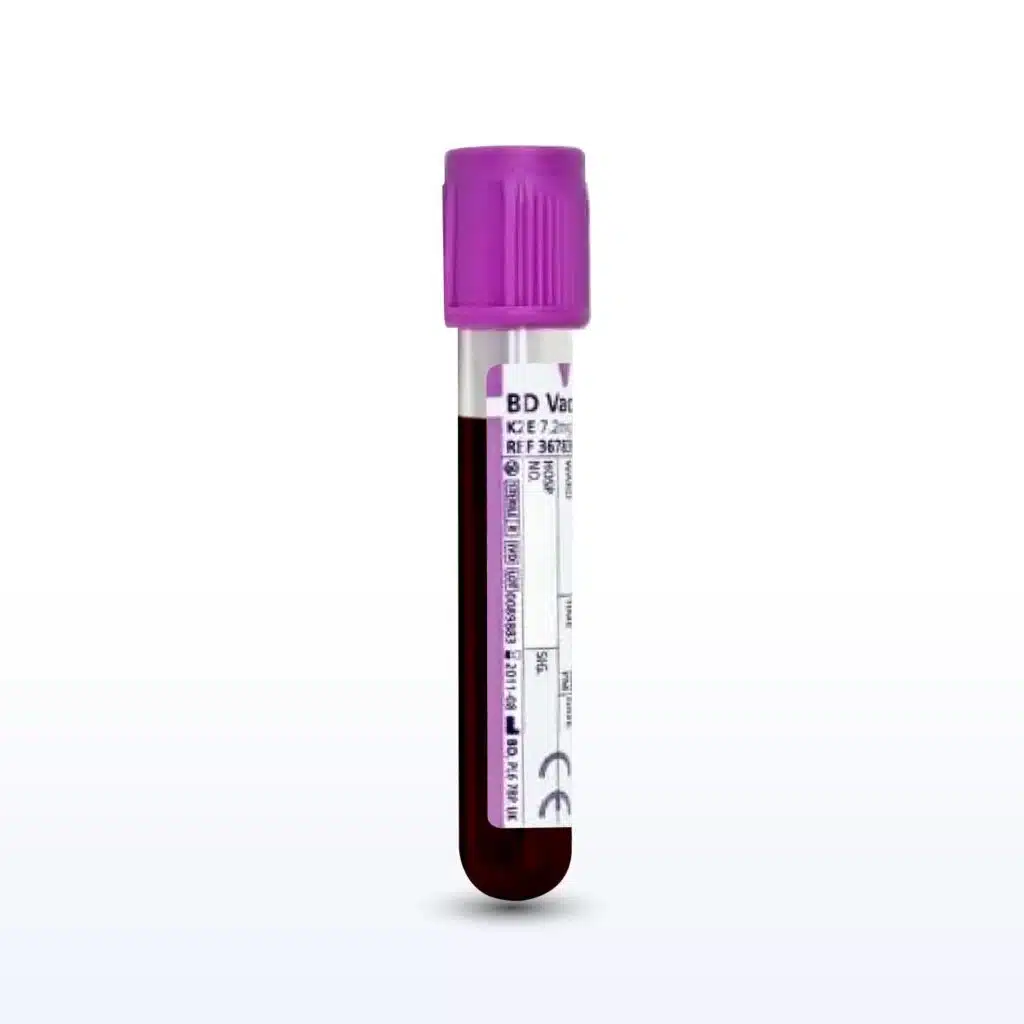
Discoid Lupus Erythematosus Whole Blood
Fresh, same-day shipped whole blood from IRB-consented donors with confirmed discoid lupus erythematosus (DLE), the most common chronic cutaneous lupus subtype. Suitable for type I interferon signature scoring, peripheral transcriptomics, genotyping and antimalarial or biologic therapy response research.
Discoid Lupus Erythematosus Whole Blood for Cutaneous Autoimmune Research
Discoid lupus erythematosus (DLE) is the most common form of chronic cutaneous lupus erythematosus, producing well-demarcated, scaly, disc-shaped plaques that heal with scarring, dyspigmentation and, on the scalp, permanent alopecia. Sanguine collects fresh Discoid Lupus Erythematosus Whole Blood from IRB-consented donors with a physician-confirmed DLE diagnosis and ships same-day, preserving both the nucleated cell fraction and the fluid phase.
Autoimmune Mechanisms in Discoid Lupus Erythematosus
DLE is a localised autoimmune disease in which cytotoxic inflammation is directed at the dermal-epidermal junction. Unlike systemic lupus erythematosus, DLE is usually confined to the skin and its serology is comparatively quiet — which is precisely why cell-based and transcriptomic readouts from whole blood are more informative here than autoantibody titres alone.
- The histological hallmark is a lichenoid interface dermatitis: CD4+ and CD8+ T cells accumulate at the dermal-epidermal junction and drive keratinocyte apoptosis, producing the characteristic scarring.
- A type I interferon signature is a well-established feature of cutaneous lupus, with plasmacytoid dendritic cells and interferon-induced gene expression central to lesional and systemic biology.
- Ultraviolet light is a recognised trigger, linking keratinocyte injury and nucleic acid release to downstream interferon-driven inflammation.
- Antinuclear antibodies are frequently negative or present only at low titre in DLE, distinguishing it serologically from systemic lupus; a minority of patients later develop systemic disease, making cohort annotation important.
- Whole blood supports interferon-stimulated gene signature scoring and peripheral transcriptomic profiling — the readouts most closely tied to current cutaneous lupus therapeutic mechanisms.
- Retaining nucleated cells allows genomic DNA and RNA to be recovered from the same collection, and permits researchers to derive plasma or serum in-house where analyte assays are also planned.
Donor Stratification Available
- Lesion distribution: localised (head and neck) vs generalised DLE
- Scalp involvement with scarring alopecia
- Presence or absence of concurrent systemic lupus erythematosus features
- Antinuclear antibody status where documented
- Treatment status: topical or intralesional corticosteroid, antimalarial (hydroxychloroquine), systemic immunosuppressant, biologic, or treatment-naive
- Photosensitivity, smoking status and disease duration where documented
- Matched healthy controls available
Product Features
- Fresh whole blood from clinically diagnosed DLE donors
- Custom anticoagulants and collection tubes available, including EDTA, heparin and RNA-stabilising formats
- Same-day collection and shipment
- Standard and custom volumes; volumes reported per lot
- Research Use Only (RUO)
De-identified Donor Data
- Physician-confirmed diagnosis, including lesion distribution where available
- Demographics: age, sex assigned at birth, ethnicity
- Relevant medical and treatment history
- Concurrent autoimmune diagnoses and comorbidities where documented
- Additional DLE-specific metadata available on request
Applications
- Type I interferon signature scoring and interferon-stimulated gene expression analysis
- Peripheral blood transcriptomic and single-cell profiling
- Genomic DNA extraction for genotyping and sequencing in cutaneous lupus
- Epigenetic and DNA methylation studies
- Cutaneous versus systemic lupus comparative studies
- Antimalarial and biologic therapy response research
- Scarring and fibrosis biomarker discovery
- Derivation of plasma or serum for complement and cytokine analyte work
Other Discoid Lupus Erythematosus Specimen Types
- Discoid Lupus Erythematosus Plasma
- Discoid Lupus Erythematosus Bulk Plasma
- Discoid Lupus Erythematosus Serum
- Discoid Lupus Erythematosus PBMC
- Cutaneous Lupus Erythematosus Whole Blood — our broader cutaneous lupus product
- Cutaneous Lupus Erythematosus Skin Punch Biopsy
Compliance and Quality Assurance
- IRB-approved protocols and electronic informed consent
- 21 CFR Part 11-compliant e-signatures
- HIPAA-compliant donor data handling
- Documentation support available for regulatory review
Ordering & Customization
Discoid Lupus Erythematosus Whole Blood is available in standard and custom volumes. For pricing, current availability, international orders or documentation requirements, email learnmore@sanguinebio.com. To browse other disease-state options and live stock status across our whole blood inventory, visit our human whole blood page.
Whole Blood
Frequently Asked Questions
1 Answer
YES – All collections are conducted under IRB-approved protocols and electronic informed consent. Sanguine utilizes Advarra and WCG IRB for oversight.
1 Answer
YES – all our products are research use only (RUO).
1 Answer
You can find our full product catalog here.
1 Answer
Storage depends on sample type but often cryopreserved samples stored in liquid nitrogen can be stored for years.
1 Answer
Extensive customization is available. To discuss your project request a quote or email us at learnmore@sanguinebio.com.
1 Answer
Sanguine offers flexible prospective collection services tailored to fit your research. For more information and to request a quote, please see: our prospective biospecimen collection services page.
1 Answer
Timelines depend on condition, sample type, and I/E criteria but we often start collection within 2 weeks of signed agreement.
1 Answer
YES – we have in-stock inventory. You can also email us at learnmore@sanguinebio.com as we continually get new samples in our inventory.
1 Answer
Each sample from a different individual – Unique donor means each sample comes from a different person, ensuring biological diversity in your study.
1 Answer
YES – Unique donors can be specified and guaranteed based on your requirements.
1 Answer
For information about sample quality, please see: Quality and Compliance
1 Answer
YES – “IRB-approved collection protocols” and IRB approval documentation available upon request. Sanguine utilizes two internationally-recognized IRBs (Advarra and WCG IRB) for review and approval.
Ask a Question
Need a custom Whole Blood cohort?
Our scientific team can scope prospective collections with donor-specific I/E criteria, typically starting within 2 weeks of agreement.