Serum vs Plasma: Choosing the Right Biospecimen for Your Research
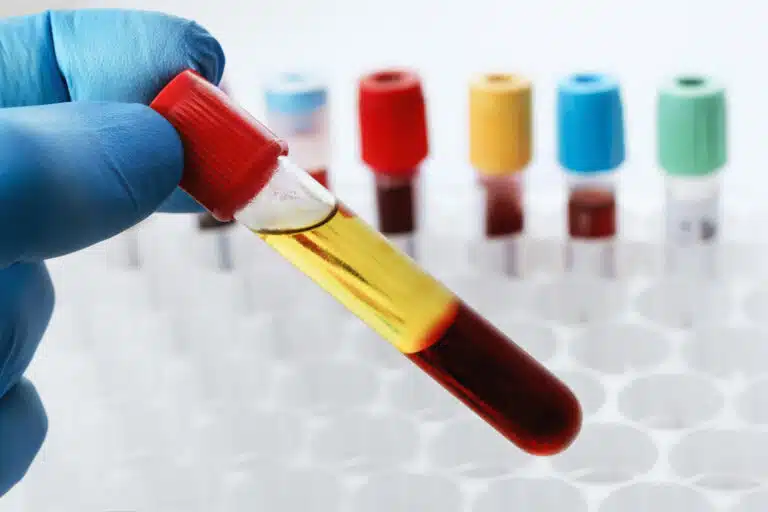
In biomedical research, selecting the right biospecimen is critical to generating meaningful insights. Among the most commonly used blood-derived samples are serum and plasma. While they originate from the same source — whole blood — these two materials have distinct properties that make them better suited for different applications.
In this blog, we’ll break down the key differences between serum and plasma, discuss their benefits in research, and help you determine whether serum vs plasma is best for your study.
What Is Serum?
Human Serum is the liquid portion of blood that remains after the clotting process. To prepare serum, blood is collected in a tube without anticoagulants, allowing it to clot naturally. The clot is then removed, leaving a clear, yellowish fluid.
Key Characteristics of Serum:
- Lacks fibrinogen and most clotting factors
- Rich in proteins, antibodies, hormones, electrolytes, and metabolites
- Commonly used when studying immune responses, biomarkers, and diagnostics
What Is Plasma?
Human Plasma is the liquid component of blood that remains when clotting is prevented. Blood is collected in tubes containing anticoagulants (such as EDTA or heparin) to maintain clotting factors in their active form. Plasma appears slightly more opaque than serum due to these clotting proteins.
Key Characteristics of Plasma:
- Contains fibrinogen and other clotting factors
- Preserves a more complete profile of blood components
- Ideal for studies involving coagulation, circulating biomarkers, and proteomics
Serum vs Plasma: A Side-by-Side Comparison
| Feature | Serum | Plasma |
|---|---|---|
| Preparation | Blood clots naturally; fluid is separated | Anticoagulants prevent clotting; fluid is separated |
| Contains | No fibrinogen or clotting factors | Fibrinogen + clotting factors |
| Appearance | Clear, pale yellow | Slightly cloudy or opaque |
| Applications | Biomarker discovery, immunology, diagnostics, hormone testing | Coagulation studies, proteomics, metabolomics, drug monitoring |
| Processing Time | Longer due to clotting step | Faster since no clotting required |
When to Use Serum in Research
Human serum sample is widely used in studies focused on immune function and biomarker discovery. Because it lacks clotting factors, normal human serum offers a “cleaner” sample for detecting proteins, antibodies, and other analytes.
Common applications:
- Autoimmune disease research
- Hormone and metabolic profiling
- Diagnostic assay development
- Infectious disease serology
When to Use Plasma in Research
Human blood plasma preserves clotting proteins and provides a more complete snapshot of circulating analytes, making it valuable for studies requiring unaltered blood chemistry.
Common applications:
- Coagulation and hematology studies
- Proteomic and metabolomic analyses
- Therapeutic drug monitoring
- Longitudinal studies, where consistent sample processing is critical
Choosing Serum vs Plasma for Your Study
The decision between serum vs plasma depends on your research goals:
- If you’re focusing on immune biomarkers or diagnostic assay development, serum may be your best choice.
- If your study involves clotting, proteomics, or drug metabolism, plasma is typically preferred.
- In some cases, researchers use both serum and plasma to maximize insights and validate findings.
At Sanguine, we provide high-quality plasma and serum samples from healthy donors and those with a wide range of disease states — including autoimmune, cardiovascular, metabolic, and rare conditions. Our samples come with rich de-identified donor data and can be custom-collected to meet your study’s needs.
Advance Your Research with Sanguine
Whether you need serum, plasma, or matched sets across multiple matrices, Sanguine connects you with reliable, IRB-compliant biospecimens and a nationwide donor network to accelerate your discovery. We cover over 200 conditions plus healthy controls and offer everything from inventory to fully customized cohorts to meet your research needs and budget.
Explore Human Serum and Plasma Samples
Related Reading
- The value of serum in health research
- Metabolomics sample collection considerations
- Measuring cytokine levels in serum or plasma
- How hemolysis affects blood samples
Publications
Example publications using serum and plasma collected by Sanguine:
- Pre-analytical stability of ocrelizumab in serum after delayed centrifugation of whole blood
- Exploratory Prognostic Biomarkers of Complement-Mediated Thrombotic Microangiopathy (CM-TMA) in Adults with Atypical Hemolytic Uremic Syndrome (aHUS): Analysis of a Phase III Study of Ravulizumab
References
- Yu Z, Kastenmüller G, He Y, Belcredi P, Möller G, Prehn C, et al. Differences between Human Plasma and Serum Metabolite Profiles. Oresic M, editor. PLoS ONE. 2011 Jul 8;6(7):e21230.
- Vignoli A, Tenori L, Morsiani C, Turano P, Capri M, Luchinat C. Serum or Plasma (and Which Plasma), That Is the Question. J Proteome Res. 2022 Apr 1;21(4):1061–72.
- Mannello F. Serum or Plasma Samples?: The “Cinderella” Role of Blood Collection Procedures. Preanalytical Methodological Issues Influence the Release and Activity of Circulating Matrix Metalloproteinases and Their Tissue Inhibitors, Hampering Diagnostic Trueness and Leading to Misinterpretation. ATVB. 2008 Apr;28(4):611–4.
- Wakefield LM, Letterio JJ, Chen T, Danielpour D, Allison RS, Pai LH, et al. Transforming growth factor-beta1 circulates in normal human plasma and is unchanged in advanced metastatic breast cancer. Clin Cancer Res. 1995 Jan;1(1):129–36.
- Jeon JH, Kim YS, Choi EJ, Cheon S, Kim S, Kim JS, et al. Implication of co-measured platelet factor 4 in the reliability of the results of the plasma transforming growth factor-beta 1 measurement. Cytokine. 2001 Nov 7;16(3):102–5.
- Kong FMS, Zhao L, Wang L, Chen Y, Hu J, Fu X, et al. Ensuring sample quality for blood biomarker studies in clinical trials: a multicenter international study for plasma and serum sample preparation. Transl Lung Cancer Res. 2017 Dec;6(6):625–34.
- Tsang JCH, Lo YMD. Circulating nucleic acids in plasma/serum. Pathology. 2007 Apr;39(2):197–207.
- Sha SJ, Deutsch GK, Tian L, Richardson K, Coburn M, Gaudioso JL, et al. Safety, Tolerability, and Feasibility of Young Plasma Infusion in the Plasma for Alzheimer Symptom Amelioration Study: A Randomized Clinical Trial. JAMA Neurol. 2019 Jan 1;76(1):35–40.
- Boada M, López OL, Olazarán J, Núñez L, Pfeffer M, Paricio M, et al. A randomized, controlled clinical trial of plasma exchange with albumin replacement for Alzheimer’s disease: Primary results of the AMBAR Study. Alzheimer’s & Dementia. 2020 Oct;16(10):1412–25.
- Villeda SA, Plambeck KE, Middeldorp J, Castellano JM, Mosher KI, Luo J, et al. Young blood reverses age-related impairments in cognitive function and synaptic plasticity in mice. Nat Med. 2014 Jun;20(6):659–63.
- Li VL, He Y, Contrepois K, Liu H, Kim JT, Wiggenhorn AL, et al. An exercise-inducible metabolite that suppresses feeding and obesity. Nature. 2022 Jun;606(7915):785–90.