
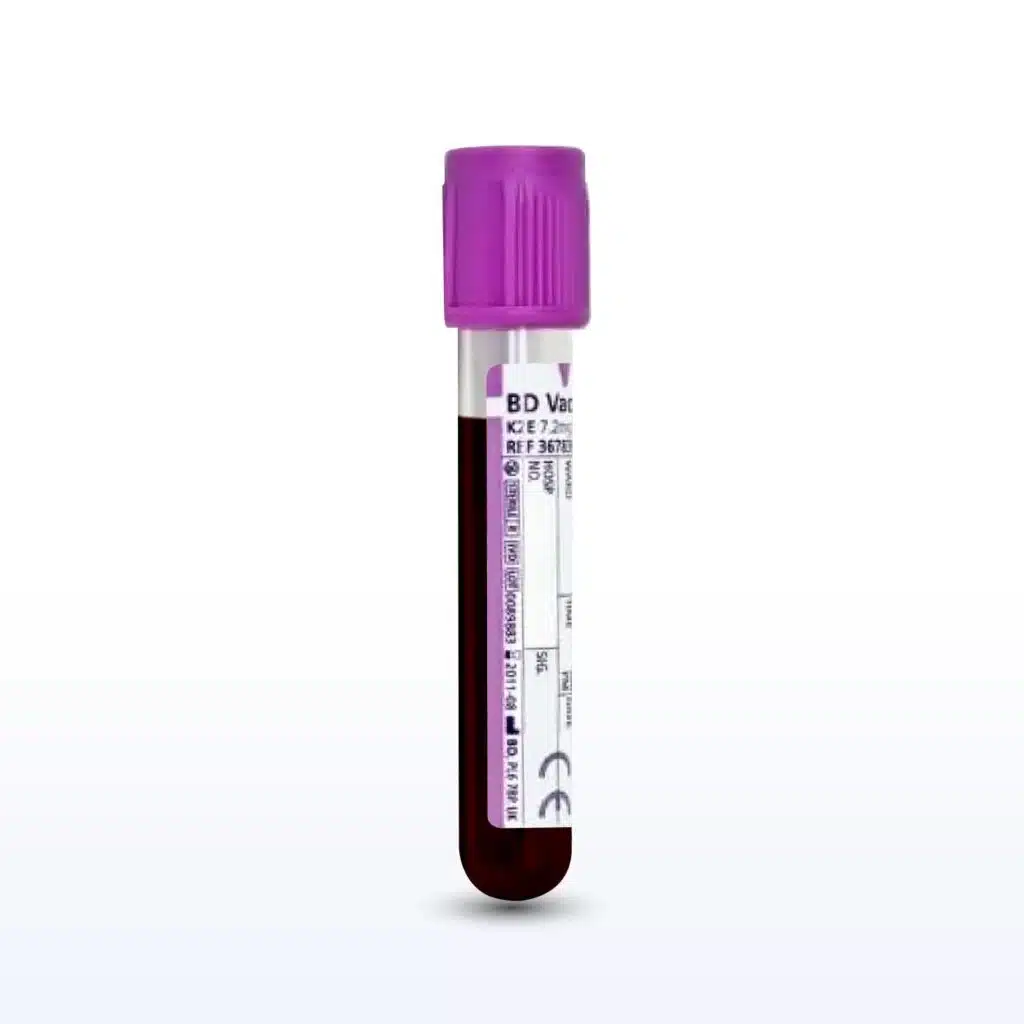
Alzheimer’s Disease Whole Blood

Alzheimer’s Disease Whole Blood for Neurodegeneration Research

Fresh Alzheimer’s Disease Whole Blood is collected from IRB-consented donors with a clinically confirmed diagnosis of Alzheimer’s disease and shipped same-day to preserve nucleic acid and cellular integrity. Whole blood retains the nucleated cell fraction alongside the fluid phase, which makes it the appropriate starting material for genotyping and transcriptomic work in neurodegenerative disease research.

Neurodegeneration and Blood-Based Biomarkers in Alzheimer’s Disease

Alzheimer’s disease is a progressive neurodegenerative disorder characterised neuropathologically by extracellular amyloid-beta plaques, intracellular neurofibrillary tangles of hyperphosphorylated tau, synaptic loss and neuronal death. Blood-based biomarkers have moved rapidly from exploratory to central in this field, and understanding which fraction supports which assay is essential to study design.

  • Amyloid-beta species (including the Abeta42/Abeta40 ratio) and phosphorylated tau isoforms, notably p-tau181 and p-tau217, are the leading blood biomarkers of Alzheimer’s pathology.
  • Neurofilament light chain reflects neuroaxonal damage and glial fibrillary acidic protein (GFAP) reflects astrocytic reactivity; both are established circulating markers in neurodegeneration.
  • These analyte-level assays are validated on the plasma fraction rather than on whole blood; whole blood is suitable where researchers intend to derive plasma themselves or need the cellular compartment in parallel.
  • APOE genotype is the strongest common genetic risk factor for late-onset Alzheimer’s disease, and whole blood is a standard source of genomic DNA for APOE and polygenic risk genotyping.
  • Whole blood supports transcriptomic profiling of peripheral immune cells, an area of growing interest given the role of microglia and innate immune genes such as TREM2 in disease risk.
  • Custom anticoagulant and tube selection allows the same collection to be directed towards DNA, RNA or downstream plasma isolation as the protocol requires.

Donor Stratification Available

  • Disease stage: mild, moderate or severe where documented
  • Cognitive assessment scores where documented
  • Age at onset: early-onset vs late-onset presentation
  • APOE genotype where documented
  • Treatment status: cholinesterase inhibitor, memantine, anti-amyloid monoclonal antibody, or treatment-naive
  • Diagnostic modality: clinical diagnosis, imaging-supported, or biomarker-supported
  • Family history of dementia and relevant comorbidities
  • Matched age-similar healthy controls available

Product Features

  • Fresh Alzheimer’s disease whole blood from clinically diagnosed donors
  • Custom tubes and anticoagulants available, including EDTA, heparin and RNA-stabilising formats
  • Collected and shipped same-day for maximum freshness
  • Standard and custom volumes; volumes reported per lot
  • Research Use Only (RUO)

De-identified Donor Data

  • Confirmed Alzheimer’s disease diagnosis by physician or specialist
  • Demographic details: age, sex assigned at birth, ethnicity
  • Disease stage and cognitive assessment data where documented
  • Medical history including allergies, medications and infectious disease status
  • Additional Alzheimer’s disease-specific metadata available on request

Applications

  • APOE genotyping and polygenic risk score genotyping
  • Genomic DNA extraction for targeted and whole-genome sequencing
  • Peripheral blood transcriptomic and gene expression analysis
  • Epigenetic and DNA methylation studies in neurodegeneration
  • Derivation of plasma for amyloid-beta, p-tau, neurofilament light and GFAP assays
  • Diagnostic assay development and validation for blood-based Alzheimer’s biomarkers
  • Drug response and mechanism-of-action studies
  • Case-control biobanking and cohort comparison studies

Other Alzheimer’s Disease Specimen Types

Compliance and Quality Assurance

  • IRB-approved protocols and electronic informed consent
  • 21 CFR Part 11-compliant e-signatures
  • HIPAA-compliant data management
  • Fast shipping with real-time tracking

Ordering & Customization

Alzheimer’s Disease Whole Blood is available in a range of standard and custom volumes. For pricing, current availability, international orders or documentation requirements, email learnmore@sanguinebio.com to ensure compatibility with your country’s regulations. To browse other disease-state options and live stock status across our whole blood inventory, visit our human whole blood page.

Whole Blood

Frequently Asked Questions

Showing 1–12 of 26 results

Are samples IRB approved?

1 Answer

YES – All collections are conducted under IRB-approved protocols and electronic informed consent. Sanguine utilizes Advarra and WCG IRB for oversight.

YES – all our products are research use only (RUO).

Storage depends on sample type but often cryopreserved samples stored in liquid nitrogen can be stored for years.

Extensive customization is available. To discuss your project request a quote or email us at learnmore@sanguinebio.com.

Sanguine offers flexible prospective collection services tailored to fit your research. For more information and to request a quote, please see: our prospective biospecimen collection services page.

Timelines depend on condition, sample type, and I/E criteria but we often start collection within 2 weeks of signed agreement.

YES – we have in-stock inventory. You can also email us at learnmore@sanguinebio.com as we continually get new samples in our inventory.

Each sample from a different individual – Unique donor means each sample comes from a different person, ensuring biological diversity in your study.

YES – Unique donors can be specified and guaranteed based on your requirements.

For information about sample quality, please see: Quality and Compliance

YES – “IRB-approved collection protocols” and IRB approval documentation available upon request. Sanguine utilizes two internationally-recognized IRBs (Advarra and WCG IRB) for review and approval.

1
×

Ask a Question

Need a custom Whole Blood cohort?

Our scientific team can scope prospective collections with donor-specific I/E criteria, typically starting within 2 weeks of agreement.

More Information