
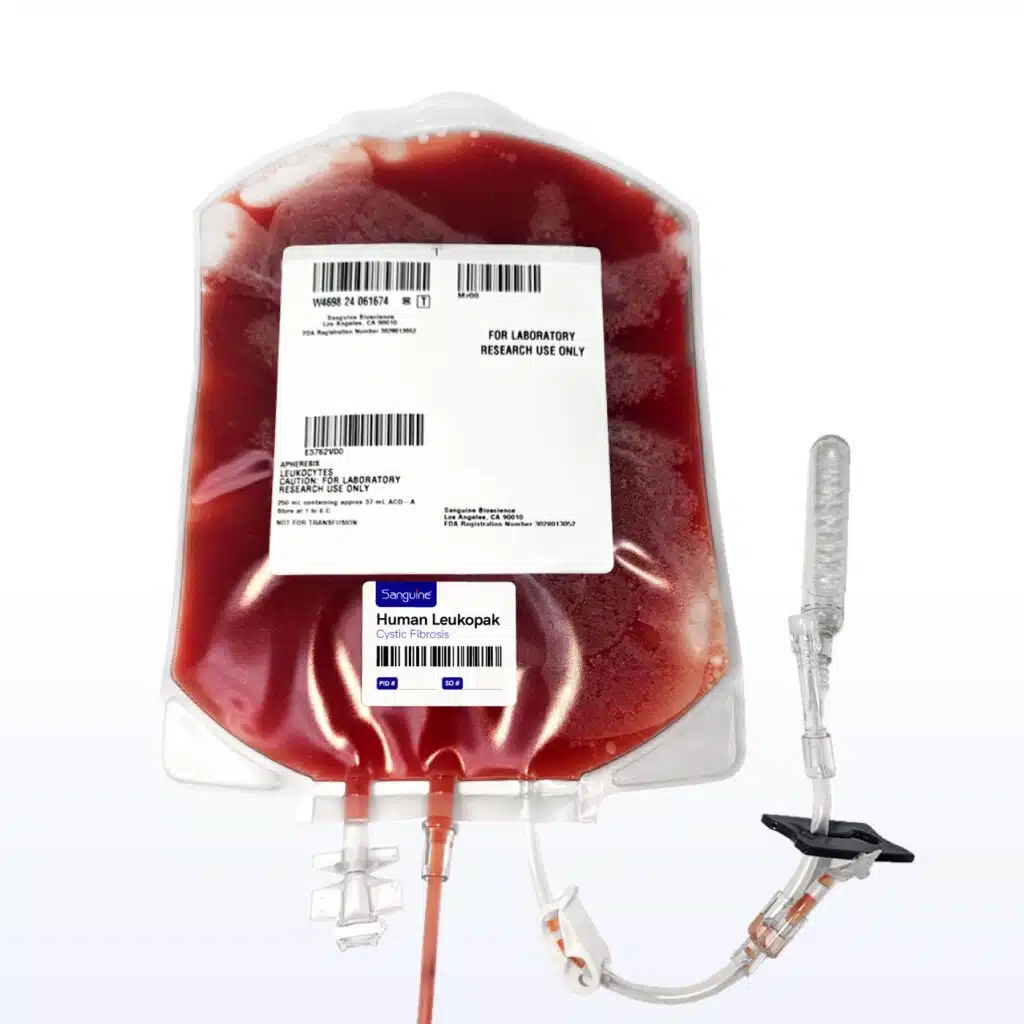
Cystic Fibrosis Leukopak
 Powered by Bioz
About:LeukoCore Cystic Fibrosis Leukopak products contain concentrated immune cells collected by IRB-approved apheresis from donors with clinically confirmed cystic fibrosis, a monogenic disease caused by biallelic pathogenic variants in CFTR. High cell numbers suit monocyte-derived macrophage work, CFTR gene editing and correction studies, iPSC reprogramming, and single-cell multi-omics. Donors can be stratified by CFTR genotype and modulator therapy status where available.
About Cystic Fibrosis Leukopak
LeukoCore Cystic Fibrosis Leukopak for CFTR and Inflammation Research
LeukoCore Cystic Fibrosis Leukopak biospecimens are collected from IRB-consented donors clinically diagnosed with cystic fibrosis through IRB-approved apheresis procedures. Cystic fibrosis is a monogenic autosomal recessive disease caused by biallelic pathogenic variants in CFTR, which encodes a cAMP-regulated chloride and bicarbonate channel; loss of channel function dehydrates airway surface liquid, impairs mucociliary clearance and establishes a cycle of chronic infection and neutrophil-dominated inflammation. Each leukopak contains large quantities of peripheral blood mononuclear cells, making it suited to high-cell-number work in immunology, gene correction and drug development.
Why a Leukopak for Cystic Fibrosis Research
- Cystic fibrosis is defined by a specific protein defect rather than by autoimmunity. F508del is the most common pathogenic variant, and variant class determines both the trafficking or gating defect involved and eligibility for CFTR modulator therapy — making donor genotype the single most important selection criterion.
- CFTR is expressed in myeloid cells including monocytes, macrophages and neutrophils, and cell-intrinsic contributions of CFTR dysfunction to impaired phagocyte function and dysregulated inflammatory signalling have been described. A leukopak supplies enough starting material to interrogate this directly.
- Monocyte yields from a single leukopak support differentiation into large numbers of monocyte-derived macrophages, the workhorse cell type for phagocytosis, killing and inflammatory response assays in cystic fibrosis.
- Gene editing and gene correction programmes targeting CFTR require cell numbers well beyond what a standard venipuncture provides. Leukopaks are the practical source for CRISPR and base-editing optimisation in patient-derived cells.
- Patient-derived mononuclear cells are a common starting point for iPSC reprogramming, enabling isogenic corrected and uncorrected lines from the same donor genotype.
- The systemic inflammatory phenotype of cystic fibrosis — including elevated inflammatory cytokines and altered neutrophil biology — is best characterised with sufficient cells for parallel functional, transcriptomic and proteomic readouts from one donor.
Donor Stratification Available
- CFTR genotype where available, including F508del homozygous, F508del heterozygous, and other variant combinations
- CFTR modulator treatment status: on elexacaftor/tezacaftor/ivacaftor or other modulator, modulator-naive, or modulator-ineligible by genotype
- Lung function by FEV1 percent predicted where reported
- Pancreatic sufficiency versus insufficiency
- Comorbidity including cystic fibrosis-related diabetes and hepatobiliary involvement
- Chronic airway colonisation status and age group
- Matched healthy controls available
Product Features
- Research Use Only (RUO) human leukopaks
- Clinically confirmed cystic fibrosis donors
- High cell yield for large-scale studies
- Processed and shipped within 24 hours of collection
- Fresh or cryopreserved options available
- IRB-approved and ethically sourced
- Infectious disease testing
- HLA-A typing
- Screen donors with LeukoLot™
De-identified Donor Data
- Verified cystic fibrosis diagnosis from healthcare providers
- Donor demographics: age, sex assigned at birth, race/ethnicity
- Self-reported medication history and allergies
- CFTR genotype and modulator therapy where available
- Relevant clinical data (if available)
Applications
- Monocyte-derived macrophage differentiation and functional assays
- Phagocytosis, bacterial killing and inflammatory signalling studies in CFTR-deficient myeloid cells
- CFTR gene editing, base editing and gene correction optimisation in patient-derived cells
- iPSC reprogramming from donor mononuclear cells for isogenic disease modelling
- CFTR modulator pharmacology and response research in immune cells
- Cytokine profiling and cell-based assays of systemic cystic fibrosis inflammation
- Multi-omics studies including single-cell RNA sequencing and ATAC-seq
- Immune cell characterisation and immunophenotyping in cystic fibrosis
Other Cystic Fibrosis Specimen Types
Compliance and Quality Assurance
- Collected under IRB oversight with donor e-consent (21 CFR Part 11 compliant)
- HIPAA-compliant handling of donor information
- Rigorous donor screening and documentation
Ordering & Customization
Cystic Fibrosis Peripheral Blood Leukopak samples are available fresh or cryopreserved. For pricing, current availability, or to discuss a genotype-stratified cohort, contact learnmore@sanguinebio.com. Need a different condition, or want to check current availability across our full leukopak inventory? Visit our human leukopak page to browse other disease-state options and live stock status. For international shipping or regulatory documentation, please contact us to confirm regional compliance and shipping availability.
Applications
- Immunology and translational research
- Biomarker discovery and validation
- Drug screening and assay development
- Vaccine and infectious disease research
Product Features
- Research Use Only (RUO), Leukopak
- Sourced from screened, consented donors
- Processed under validated SOPs
- QC tested for purity, viability, and sterility
- Processed within 24 hours of collection
- IRB-approved protocols with electronic informed consent
Donor Metadata
- Verified diagnosis and clinical history
- Demographic data: age, sex assigned at birth, race/ethnicity
- Medication and treatment background when available
Compliance and Quality Assurance
- IRB-approved collections and standardized procedures
- 21 CFR Part 11-compliant e-consent system
- HIPAA-compliant data management
Ordering & Customization
Human Leukopak are available in customizable aliquot sizes. For international orders or documentation needs, please contact learnmore@sanguinebio.com to confirm requirements and availability. We also work with multiple ordering platforms and distributors, learn more here.
Protocols & Documentation
-
Download
Leukopak Cryopreservation
Standard operating procedure for cryopreserving leukopak units with controlled freezing and post-thaw viability targets.
-
Download
Leukopak Thawing
Validated thawing workflow for cryopreserved leukopaks to maximize recovery while maintaining sterility and chain of custody.
-
Download
Choosing the Right PBMC Configuration
Reference guide comparing PBMC formats, cryopreservation states, and study-fit recommendations for your application.
-
Informed Consent Form (ICF)
Available upon request — confirms donor consent for research use and downstream commercialization.
Leukopak
Where can I find your complete catalog?
You can find our full product catalog here.
How long can samples be stored?
Storage depends on sample type but often cryopreserved samples stored in liquid nitrogen can be stored for years.
What customization options are available?
Extensive customization is available. To discuss your project request a quote or email us at learnmore@sanguinebio.com.
Do you offer prospective collections?
Sanguine offers flexible prospective collection services tailored to fit your research. For more information and to request a quote, please see: our prospective biospecimen collection services page.
What is the turnaround time for custom collections?
Timelines depend on condition, sample type, and I/E criteria but we often start collection within 2 weeks of signed agreement.
Do you have samples in stock?
YES - we have in-stock inventory. You can also email us at learnmore@sanguinebio.com as we continually get new samples in our inventory.
What does unique donor mean?
Each sample from a different individual - Unique donor means each sample comes from a different person, ensuring biological diversity in your study.
Are samples collected under IRB-approved protocols?
YES - "IRB-approved collection protocols" and IRB approval documentation available upon request. Sanguine utilizes two internationally-recognized IRBs (Advarra and WCG IRB) for review and approval.
Frequently Asked Questions
Ask a Question
Pair with a Healthy Control
Match your Cystic Fibrosis Leukopak with normal donor samples for comparison
Healthy Donor Leukopaks
5 In Stock View InventoryNeed a custom Leukopak cohort?
Our scientific team can scope prospective collections with donor-specific I/E criteria, typically starting within 2 weeks of agreement.