
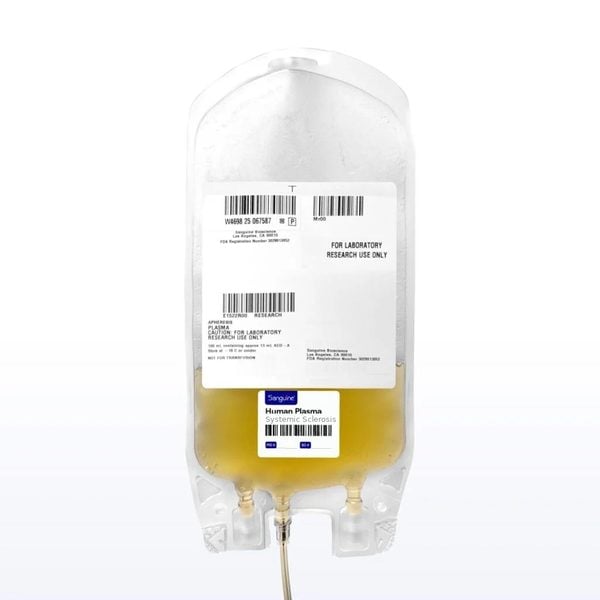
Systemic Sclerosis (Scleroderma) Bulk Plasma
About:Systemic Sclerosis (Scleroderma) Bulk Plasma - large-volume human plasma from clinically confirmed systemic sclerosis donors, fresh-processed. Systemic sclerosis is an autoimmune fibrosing disease driving vascular dysfunction and TGF-beta-mediated fibrosis. Ideal for autoantibody purification (anti-centromere, anti-Scl-70), complement and coagulation factor studies, and large-scale multiplex work. Available in 50mL, 100mL, and 150mL fresh volumes.
About Systemic Sclerosis (Scleroderma) Bulk Plasma
Systemic Sclerosis (Scleroderma) Bulk Plasma for Autoimmune Fibrosis Research
Our Systemic Sclerosis (Scleroderma) Bulk Plasma is sourced from IRB-consented donors clinically diagnosed with systemic sclerosis, an autoimmune disease characterized by vascular dysfunction, immune dysregulation, and progressive fibrosis of the skin and internal organs. Bulk, fresh-processed volumes support applications requiring larger sample quantities than standard aliquots.
Systemic Sclerosis Biology and Why Bulk Plasma
- Systemic sclerosis pathophysiology involves an interplay of microvascular injury, innate and adaptive immune activation, and fibroblast-to-myofibroblast transition driven substantially by TGF-beta signaling, resulting in excess extracellular matrix deposition.
- Disease-specific autoantibodies – anti-centromere antibodies (associated with limited cutaneous disease) and anti-topoisomerase I / anti-Scl-70 antibodies (associated with diffuse cutaneous disease and interstitial lung disease) – are central to both diagnosis and subtype stratification.
- Bulk, fresh plasma volumes are suited to applications that consume larger sample quantities, including autoantibody purification and affinity work, complement and coagulation factor studies, and large-scale multiplex or discovery-phase assays.
- Vascular complications including pulmonary arterial hypertension and scleroderma renal crisis are major sources of morbidity, driving interest in circulating vascular and endothelial biomarkers.
- Antifibrotic and immunomodulatory therapies (including nintedanib for SSc-associated interstitial lung disease) have created demand for plasma-based pharmacodynamic and biomarker studies.
Donor Stratification Available
- Disease subtype: limited cutaneous versus diffuse cutaneous systemic sclerosis
- Autoantibody status (anti-centromere, anti-Scl-70/topoisomerase I, anti-RNA polymerase III)
- Organ involvement, including interstitial lung disease and pulmonary arterial hypertension
- Disease duration and treatment history
- Age band and sex assigned at birth
- Matched healthy controls available
Product Features
- Collected from clinically confirmed systemic sclerosis donors
- Fresh-processed, available in 50mL, 100mL, and 150mL bulk volumes
- Research Use Only (RUO)
- IRB-approved protocols with documented consent
- Custom volumes available on request
De-identified Donor Data
- Systemic sclerosis diagnosis confirmation and subtype
- Age, sex assigned at birth, and ethnicity
- Donor-reported allergy and infectious disease history
- Autoantibody status and organ involvement where documented
- Additional systemic sclerosis-specific metadata available on request
Applications
- Autoantibody purification and affinity-based assay development
- Complement and coagulation factor studies
- Large-scale multiplex and discovery-phase biomarker studies
- Vascular and endothelial biomarker research
- Pharmacodynamic studies for antifibrotic and immunomodulatory therapies
Compliance and Quality Assurance
- IRB-approved and HIPAA-compliant protocols
- Electronic informed consent with 21 CFR Part 11-compliant e-signatures
- Documentation support available for regulatory review
Ordering & Customization
Systemic sclerosis bulk plasma is available in 50mL, 100mL, and 150mL fresh volumes, with custom volumes available on request. For pricing, international orders, or documentation requirements, please email learnmore@sanguinebio.com to ensure compatibility with your country’s regulations. To compare donor availability across conditions, visit our human plasma page.
Applications
- Immunology and translational research
- Biomarker discovery and validation
- Drug screening and assay development
- Vaccine and infectious disease research
Product Features
- Research Use Only (RUO), Bulk Plasma
- Sourced from screened, consented donors
- Processed under validated SOPs
- QC tested for purity, viability, and sterility
- Processed within 24 hours of collection
- IRB-approved protocols with electronic informed consent
Donor Metadata
- Verified diagnosis and clinical history
- Demographic data: age, sex assigned at birth, race/ethnicity
- Medication and treatment background when available
Compliance and Quality Assurance
- IRB-approved collections and standardized procedures
- 21 CFR Part 11-compliant e-consent system
- HIPAA-compliant data management
Ordering & Customization
Human Bulk Plasma are available in customizable aliquot sizes. For international orders or documentation needs, please contact learnmore@sanguinebio.com to confirm requirements and availability. We also work with multiple ordering platforms and distributors, learn more here.
Where can I find your complete catalog?
You can find our full product catalog here.
How long can samples be stored?
Storage depends on sample type but often cryopreserved samples stored in liquid nitrogen can be stored for years.
What customization options are available?
Extensive customization is available. To discuss your project request a quote or email us at learnmore@sanguinebio.com.
Do you offer prospective collections?
Sanguine offers flexible prospective collection services tailored to fit your research. For more information and to request a quote, please see: our prospective biospecimen collection services page.
What is the turnaround time for custom collections?
Timelines depend on condition, sample type, and I/E criteria but we often start collection within 2 weeks of signed agreement.
Do you have samples in stock?
YES - we have in-stock inventory. You can also email us at learnmore@sanguinebio.com as we continually get new samples in our inventory.
What does unique donor mean?
Each sample from a different individual - Unique donor means each sample comes from a different person, ensuring biological diversity in your study.
Are samples collected under IRB-approved protocols?
YES - "IRB-approved collection protocols" and IRB approval documentation available upon request. Sanguine utilizes two internationally-recognized IRBs (Advarra and WCG IRB) for review and approval.
Frequently Asked Questions
Ask a Question
Pair with a Healthy Control
Match your Systemic Sclerosis (Scleroderma) Bulk Plasma with normal donor samples for comparison
Healthy Bulk Plasma
View InventoryNeed a custom Bulk Plasma cohort?
Our scientific team can scope prospective collections with donor-specific I/E criteria, typically starting within 2 weeks of agreement.