
Trends in Study Design

Clinical development programs face intense pressure to bring new therapeutics to market quickly and efficiently. Innovative adaptive study designs help meet that pressure by letting researchers modify a clinical program based on early efficacy readouts. These approaches aim to avoid sunk costs. They redirect resources toward the most promising therapeutics or research questions, which accelerates treatments to patients. As a result, clinical study designs are growing more complex, trying to answer as many questions as possible within a single study.
Several factors are driving this complexity. They include rapid technological and scientific advances, growing interest in rare disease research, a shift toward decentralized or hybrid study designs, more data sources (biological samples, ePRO, trackers), and the use of real-world evidence for natural history or synthetic control arm data. Together, these factors extended the average clinical study follow-up period by about 6.7 months between 2010 and 2020.1 Adaptive trials also collect far more study data than traditional studies, requiring more expertise and labor to analyze data and prepare reports. Below, we highlight key considerations and industry trends in research study design and execution.
Consider the complexity of the study design
The biggest driver of study design complexity has been the shift toward master or adaptive protocol designs. These designs can answer several questions at once, steering a program forward. Many drug development programs have moved away from traditional phase 1/2/3 designs to cut study start-up cost and time. At the same time, they still try to answer as many research questions as possible within a single study.
With this added complexity, each successive study can be better informed. Researchers can refine parameters like outcome measures, patient subpopulation recruitment, and sample or data collection timepoints. Oncology studies show the greatest design complexity. They typically have the most data points and study arms, to accommodate testing combination therapeutics across cancer subtypes. To support adaptive and master protocol designs, Sanguine has developed a flexible condition access model. This model streamlines complex clinical program needs and accelerates program timelines.
Access to target population
As research expands into fields like gene therapies for rare diseases, contacting and recruiting eligible participants becomes critical. In a recent survey of 100 translational and clinical researchers, access to a wide group of patients was the most cited priority. Researchers were asked which study criteria mattered most (Figure 1).
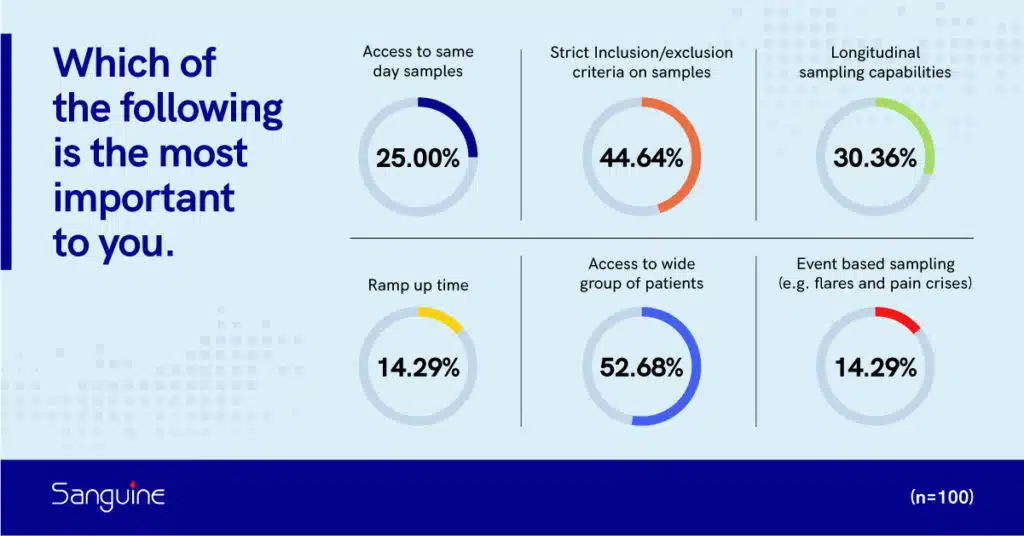
Figure 1. Researcher responses to the question of which three study criteria are most important for your study needs. (n=100)
Sanguine’s patient-centered approach connects researchers directly with an enthusiastic patient population. Our growing database of >50,000 engaged potential participants across the United States includes patients with rare diseases who are often difficult to recruit. We build mutually beneficial relationships with patient advocacy groups (PAGs) and treat patients as partners in the research process. This helps us continuously welcome new study participants. These participants stay committed to completing studies and remain involved in future opportunities. Building bonds with PAGs fosters an environment focused on education, informed consent, and incorporating patient perspectives into research.
Optimize Eligibility Criteria
Technological advances, such as ‘omics’ and imaging technologies, are helping researchers discover novel biomarkers that predict how patients will respond to therapeutics. As a result, studies increasingly stratify participants into specific subpopulations based on predicted response to targeted therapies. This drives stricter inclusion and exclusion criteria to ensure study success. Survey respondents also cited setting strict inclusion and exclusion criteria as a key part of study design (Figure 1). Recent trends show growing selectivity in stratifying participants into specific subpopulations. Studies of polygenic diseases – or diseases with high phenotypic heterogeneity, such as autoimmune diseases – are seeing strong results. These results come from stratification based on molecular biomarkers. This approach allows researchers to develop therapeutics that work for a specific subpopulation. It enables more personalized care that improves patient outcomes and quality of life.
Two popular study designs, the umbrella and basket approaches, are often used when patient stratification is the goal. In an umbrella design, participants share a biomarker or molecular signature related to a single disease. They are stratified to receive multiple interventions. In a basket design, the goal is to identify a subpopulation across patients with diverse diseases (for example, cancers in different tissues). These patients share a common biomarker or genetic mutation that predicts response to a targeted treatment. Basket designs can also apply to rare disease research, where the same mutation causes different phenotypes and therefore different syndromes. Researchers categorize patients based on molecular phenotype rather than disease name. This lets them enroll more patients and potentially treat them with the same therapeutic approach.
Based on your desired eligibility criteria, Sanguine can provide feedback on enrollment feasibility and screen failure estimates. Our patient network is comprehensively annotated with relevant medical history and other data. This lets us target enrollment and recruit participants rapidly and effectively with limited geographic restraints. Medical records often include confirmed diagnoses, past and current treatments, diagnostic lab or assay results, and medical scans or imaging. This level of detail enables efficient recruitment of the right participants for your study, on a timely basis. In-home collection also permits rapid screening with predetermined molecular tests, further speeding up enrollment of eligible, willing participants.
Determine sample and data collection needs
Researchers we surveyed identified some of their biggest enrollment challenges: motivating patients to participate, retaining patients, visit frequency, and travel distance to the visit (Figure 2).
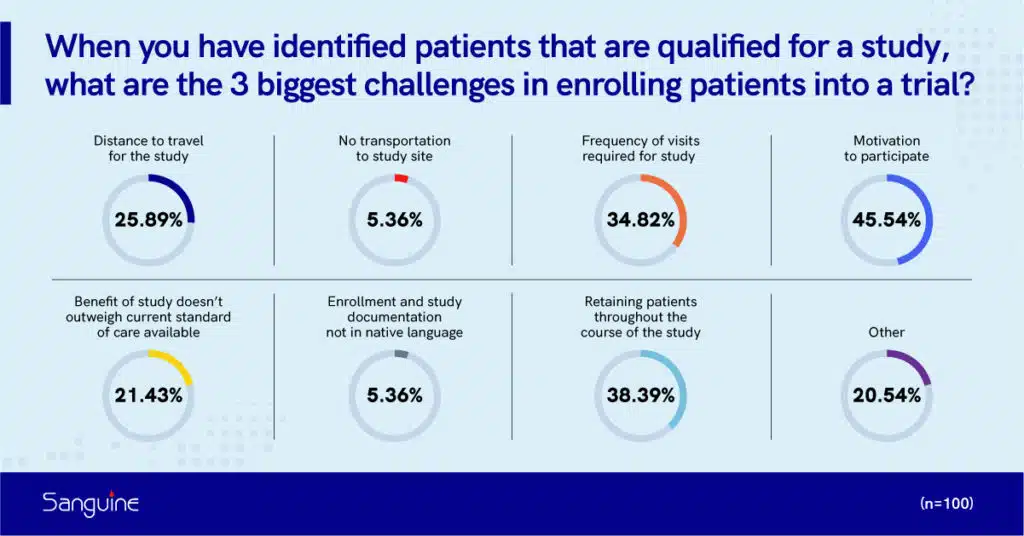
Figure 2. Researcher respondents identify the biggest challenges associated with enrolling patients into a study. (n=100)
Sanguine’s mobile at-home approach substantially reduces the burden of study participation. It also builds relationships with patients that keep them informed about emerging research. This keeps them motivated to participate in studies they’re eligible for. This lets researchers rapidly enroll eligible, comfortable participants into carefully designed studies. Our commitment to our patient populations is a leading reason we can rapidly enroll patients. We maintain an exceptionally high study retention rate of >90% across most of our studies.
As downstream analyses grow more complex and sensitive, researchers increasingly request same-day delivery and limited sample manipulation. This reduces interference from artifacts in the sample data. More studies are also incorporating patient-reported outcomes (PRO), using electronic devices to administer custom or validated questionnaires. This data can provide valuable patient perspective on routines, diet, lifestyle, symptoms, and quality of life. Validated questionnaires can support regulatory submissions and strengthen peer-reviewed publications.
A single timepoint sample only captures a snapshot of a patient. A longitudinal study with repeated sampling provides a more complete patient profile. Repeated measures of the same individual also boost statistical power and may require fewer enrolled patients. Overall, collecting diverse longitudinal data provides valuable insight into disease progression, medication efficacy, and adverse events. Longitudinal sample collection can follow regular, predetermined intervals. It can also be triggered by an event, such as a symptom-based flare-up. The latter can provide valuable insight for evaluating study objectives and developing diagnostics. But these unscheduled visits complicate study design. They add burden and stress for patients, particularly when travel to a study site is required.
In-home collection with Sanguine empowers researchers to build longitudinal design into their studies. By eliminating travel, participants are more willing to consent to repeated measures. They can also easily arrange event-triggered collections with their dedicated mobile phlebotomist. We can also accommodate additional unplanned collections due to unforeseen study changes or amendments. This follows reconsent from patients. A recent trend that complements in-home collection is the use of biometric trackers or other wearable technology. These tools passively generate data that informs exploratory study endpoints.
Considerations for a precision medicine design approach
In recent years, study design complexity has also grown due to the new era of precision medicine. This approach uses genomic and molecular methods to identify similar subpopulations within a heterogeneous disease. It then helps develop tailored treatments. Working with Sanguine allows faster recruitment of more participants within a particular subpopulation, thanks to our mobile at-home approach spanning the United States.
Precision medicine approaches rely on big data collected by advanced technologies to inform efficacy endpoints. This makes collecting the right biological samples and other relevant data extremely important. It’s often assumed that more data leads to better, more reliable results. But design limitations can sometimes magnify bias and lead to incorrect conclusions. New analytic approaches using artificial intelligence and machine learning are further fueling the potential of personalized medicine. This added complexity makes it even harder to guard against erroneous conclusions when the methods behind the results are difficult to scrutinize. Determining the ideal outcome measures for efficacy objectives and endpoints requires highly specialized statisticians and researchers. Their expertise helps maximize chances of success. Overall, current trends show a substantial push toward precision medicine approaches in study design. As exciting as this new era will be, it will also add much greater complexity to study design planning and execution. Careful planning helps avoid poorly designed studies with inconclusive or erroneous results.
Other study considerations
Designing a clinical study means balancing the desire for as much data as possible against the burden of participation on patients. It can be difficult to anticipate which questions you’ll want answered, or which sample collection timepoints are optimal. Evaluating whether added complexity or extra collection timepoints are truly necessary can improve the patient experience and boost recruitment and retention.
At Sanguine, all our sample collection methods are non-invasive and keep patients comfortable at home during each visit. We typically recommend collecting as many sample types at once as a researcher may need for future analyses. We work with researchers to determine which specific samples are needed. We can process many sample types – such as isolating PBMCs or further subtypes – in our partner laboratory facilities, using standard or customized procedures. We also perform a wide range of CLIA-certified diagnostic tests, such as HLA typing, infectious disease panels, and other genetic tests.
When designing more complex studies, regular communication between researchers and partner CROs is critical for maintaining study consistency and integrity. A comprehensive approach involves both internal and external subject matter experts. Together they build and iteratively optimize the study design to help ensure successful execution. Lastly, for complex protocols, working with a central IRB can help ensure rapid coordination of amendment reviews. This also provides adequate resources and expertise to address safety or study concerns.
Conclusion
Proper study planning can determine whether a long, expensive clinical study succeeds or fails. Working with Sanguine gives you access to our expertise throughout study start-up and execution. We provide comprehensive feasibility evaluations and share insights from previous experience. This helps you proactively plan for and mitigate potential downstream scientific and operational risks. Making informed decisions during the planning phase helps reduce the risk of costly delays or poorly designed studies. It also accelerates clinical development timelines and helps bring potential treatments from the bench to the bedside.
Increased study complexity requires researchers to partner with organizations dedicated to maximizing study success and improving patients’ lives. At Sanguine, we understand the challenges of study design, recruitment, and execution. We’re committed to providing solutions that drive translational research forward. We leverage our extensive patient community of >50,000 engaged, potential participants, along with our streamlined mobile, at-home study visit model. This lets us provide research partners with a customized approach that fulfills their study needs.
References
- Impact report: Faster New Drug Approval Times are More than Offset by Longer Clinical Times in U.S. July/August 2020. Tufts Center for the Study of Drug Development. Volume 22, Issue 4. Available at: https://f.hubspotusercontent10.net/hubfs/9468915/TuftsCSDD_June2021/images/Jul-Aug-2020.png (accessed June 20, 2022).