TREATING ADVANCED THYROID CANCER WITH PROTEIN KINASE INHIBITORS
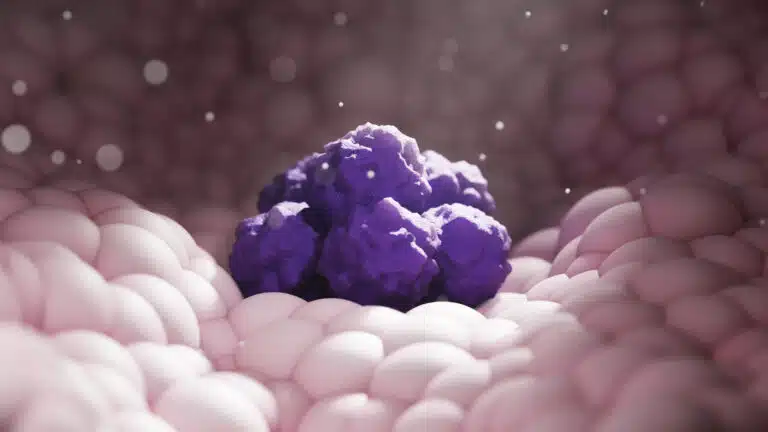
Thyroid cancer is a tumor that starts in the thyroid gland. It is the most common endocrine cancer, and it affects both men and women at any age.
Early-stage thyroid cancer often causes no symptoms. As it progresses, symptoms can include a lump in the front of the neck, hoarseness, swollen lymph nodes, trouble swallowing or breathing, and neck pain.
There are several types of thyroid cancer: papillary, follicular, medullary, anaplastic, and other variants. Papillary and follicular thyroid carcinoma – together called differentiated thyroid carcinoma – make up about 94% of cases.
Radioactive Iodine (RAI) Treatment
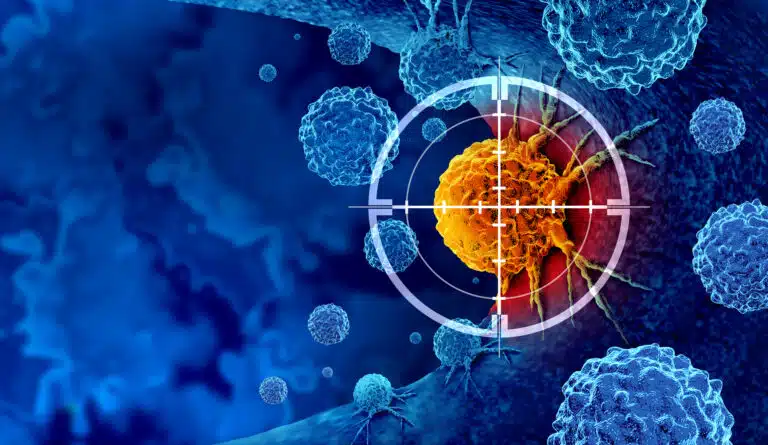
Radioactive iodine (RAI) treatment is the standard therapy for differentiated thyroid carcinoma. It uses a radioactive form of iodine called iodine-131 (I-131). RAI travels through the bloodstream, and thyroid cancer cells absorb it wherever they are in the body. The radiation then kills those cancer cells.
Because only thyroid cells take up RAI, this treatment is targeted. It does not harm other cells.
Differentiated thyroid cancer is usually curable, but it comes back in 20-40% of patients. In about 5% of patients, the cancer cells become less specialized (a process called dedifferentiation). When this happens, the disease can become more aggressive and spread. It can also stop responding to RAI, which worsens the prognosis. Resistance to RAI therapy is responsible for a large number of deaths in advanced (papillary and follicular) thyroid cancer, and it remains a major clinical challenge.
Genetic Drivers of RAI Resistance
About 70% of papillary thyroid carcinomas carry mutations in the RET, RAS, or BRAF oncogenes. Follicular thyroid carcinoma is also linked to RAS mutations, along with other gene changes.
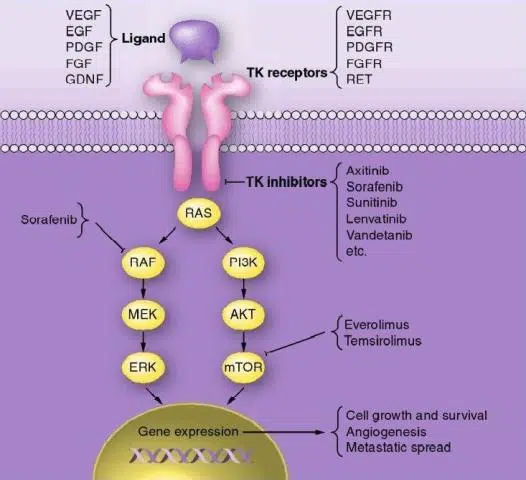
These mutated oncogenes keep the MAPK signaling pathway constantly switched on. This blocks two genes the thyroid needs to absorb iodine and produce thyroid hormone: the sodium-iodide symporter and thyroid peroxidase.
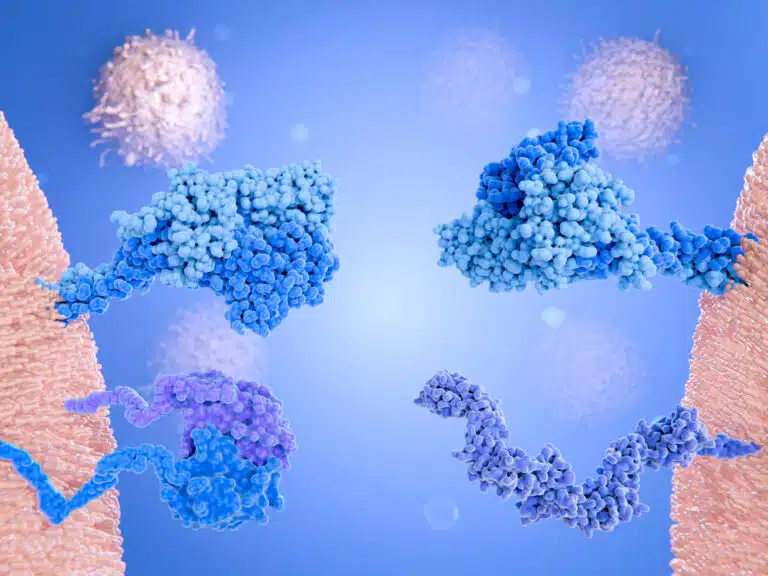
In a pre-clinical study, Chakravarty et al. (2011) showed that mice with poorly differentiating thyroid cancer and overexpressing the BRAF (V600E) oncogene failed to take up RAI. Shutting off BRAF activation, or inhibiting the MAPK pathway with kinase inhibitors targeting BRAF or MEK, made the mice responsive again to a therapeutic dose of RAI. This suggests that inhibiting the MAPK pathway with protein kinase inhibitors may help restore RAI uptake in refractory thyroid cancer patients whose tumors show MAPK-pathway activation.
Clinical Evidence: Selumetinib
A pilot clinical study published in The New England Journal of Medicine (368;7, February 14, 2013) by Ho et al. observed that inhibiting the MAPK pathway with the MEK inhibitor selumetinib (AZD6244) enhanced RAI uptake in thyroid cancer patients who are resistant to RAI. Selumetinib is currently in clinical trials for various solid and hematologic malignancies.
Of the 24 patients screened for the study, 5 had NRAS-mutant tumors. All of them showed augmented RAI uptake following selumetinib treatment: 4 patients had confirmed partial responses (PR), and 1 patient showed no disease progression after RAI treatment. No significant toxic effects from selumetinib were observed in this study.
Increased RAI uptake and a confirmed PR were also observed in 1 patient with a BRAF mutation after selumetinib treatment. However, selumetinib treatment in most of the patients with BRAF mutations enrolled in this study did not increase RAI uptake to the threshold level required for therapy. Further studies are needed to understand the differences observed between RAS-mutant and BRAF-mutant tumors.
Beyond Oncogenes: Tyrosine Kinase Receptors
In addition to oncogene activation, overexpression of many tyrosine kinase receptors (c-Met, EGF, VEGF, etc.) has also been reported in dedifferentiated thyroid cancers. Signaling from these receptors keeps both the MAPK and PI3K/Akt pathways constantly active, disrupting iodine transport and thyroid hormone production.
This further suggests that blocking the MAPK pathway, and also the PI3K/Akt pathway, may benefit patients with RAI-refractory thyroid cancer. Several clinical trials are currently evaluating the efficacy of various protein kinase inhibitors (GSK2118436, sorafenib, everolimus, lenvatinib) that target these pathways, aiming to re-sensitize RAI-refractory thyroid carcinomas to radioactive iodine therapy.
Suggested reading:
- Chakravarty, D., Santos, E., Ryder, M., Knauf, J. A., Liao, X. H., West, B. L., Bollag, G., Kolesnick, R., Thin, T. H., Rosen, N., et al. (2011). Small-molecule MAPK inhibitors restore radioiodine incorporation in mouse thyroid cancers with conditional BRAF activation. J Clin Invest 121, 4700-4711.
- Ho, A. L., Grewal, R. K., Leboeuf, R., Sherman, E. J., Pfister, D. G., Deandreis, D., Pentlow, K. S., Zanzonico, P. B., Haque, S., Gavane, S., et al. (2013). Selumetinib-enhanced radioiodine uptake in advanced thyroid cancer. N Engl J Med 368, 623-632.
- https://clinicaltrials.gov/ct2/results?term=refractory+thyroid+cancer&pg=1
- https://www.cancer.gov/cancertopics/wyntk/thyroid/page4