
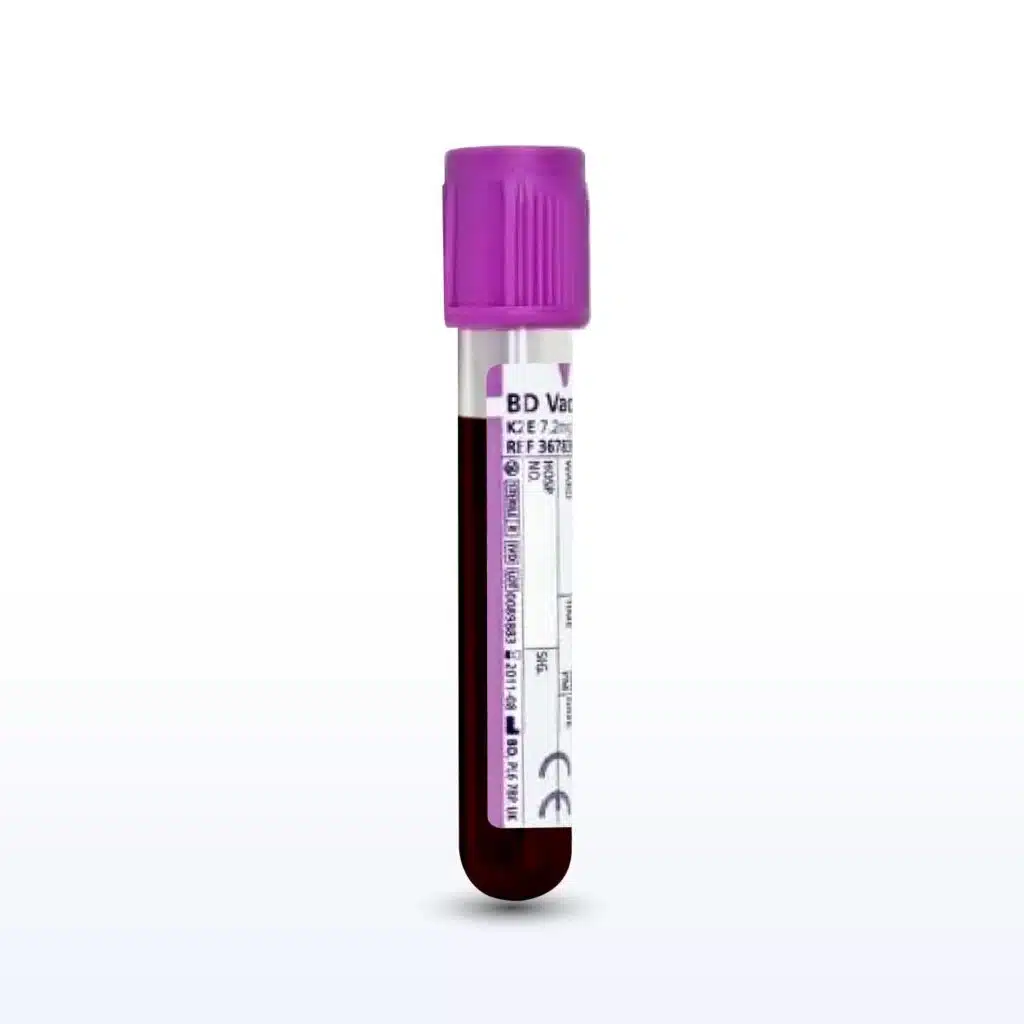
Acute Myeloid Leukemia Whole Blood
 Powered by Bioz
About:Fresh whole blood from consented donors with confirmed acute myeloid leukemia, a myeloid neoplasm defined by blocked differentiation and circulating blasts. Useful for FLT3/NPM1/IDH1/IDH2 mutation assay development, measurable residual disease methodology, blast immunophenotyping and targeted therapy research.
About Acute Myeloid Leukemia Whole Blood
Acute Myeloid Leukemia Whole Blood for Haematologic Oncology Research
Acute Myeloid Leukemia (AML) Whole Blood is collected from IRB-consented donors with a clinically confirmed AML diagnosis and shipped same day. AML is an aggressive myeloid neoplasm in which transformed haematopoietic progenitors lose the capacity to differentiate and accumulate as blasts in bone marrow and peripheral blood, displacing normal haematopoiesis. Classification and treatment are increasingly driven by recurrent genetic lesions, and these fresh samples support tumour genomics, minimal residual disease methodology and targeted therapy research.
Leukaemic Transformation, Molecular Drivers and Why Whole Blood
- AML is a clonal neoplasm of myeloid progenitors. Blocked differentiation and unchecked proliferation produce circulating blasts, which is what makes peripheral whole blood informative rather than only marrow.
- Recurrent driver lesions define prognostic groups and therapeutic options. FLT3 internal tandem duplications and tyrosine kinase domain mutations, NPM1 mutations, and IDH1/IDH2 mutations each have licensed or investigational targeted agents.
- Cytogenetic abnormalities, including core-binding factor rearrangements and complex karyotypes, remain central to risk stratification alongside molecular findings.
- Blast immunophenotype by multiparameter flow cytometry is used both diagnostically and to define the marker combinations used for measurable residual disease tracking — work that requires viable nucleated cells.
- Whole blood preserves leukaemic blasts, residual normal leukocytes and the plasma compartment together, allowing paired genomic, immunophenotypic and circulating-analyte analysis from one collection.
- Circulating tumour DNA and cell-free nucleic acid approaches to AML monitoring can be developed from the plasma fraction of the same donor sample.
Donor Stratification Available
- Molecular profile where documented: FLT3, NPM1, IDH1/IDH2, CEBPA, TP53
- Cytogenetic risk group where available
- Disease status: newly diagnosed, on treatment, in remission, or relapsed/refractory
- De novo versus secondary AML arising from a prior myeloid neoplasm
- Treatment history: intensive chemotherapy, hypomethylating agents, venetoclax-based regimens, targeted inhibitors, or prior transplant
- Matched healthy controls available
Product Features
- Fresh whole blood from clinically diagnosed AML donors
- Custom anticoagulants and collection tubes available
- Same-day collection and shipment
- Custom volumes available on request
- Research Use Only (RUO)
De-identified Donor Data
- Physician-confirmed AML diagnosis, including FLT3/NPM1/IDH1/IDH2 status where available
- Demographics: age, sex assigned at birth, ethnicity
- Relevant medical and treatment history
- Disease status at collection and blast percentage where documented
Applications
- FLT3, NPM1 and IDH1/IDH2 mutation detection assay development
- Measurable residual disease methodology development by flow cytometry and molecular methods
- Blast immunophenotyping and leukaemia-associated immunophenotype characterisation
- Targeted inhibitor sensitivity and resistance research in primary cells
- Bulk and single-cell transcriptomic profiling of leukaemic and residual normal populations
- Circulating tumour DNA and cell-free nucleic acid assay development
- Immuno-oncology target discovery, including AML surface antigen and CAR-T target validation
- Tumour immunology and T cell exhaustion profiling in the leukaemic setting
Other Acute Myeloid Leukemia Specimen Types
Looking for the lymphoblastic form? See our Acute Lymphoblastic Leukemia Whole Blood product, or our Myelodysplastic Syndrome Whole Blood for related myeloid neoplasms.
Compliance and Quality Assurance
- IRB-approved protocols and electronic informed consent
- HIPAA-compliant donor data handling
Ordering & Customization
AML whole blood is available in standard and custom volumes. For pricing, current availability, international orders or documentation requirements, email learnmore@sanguinebio.com. To browse donor cohorts across our full inventory, visit our human whole blood page.
Applications
- Hematology and clinical chemistry research
- Plasma, serum, and PBMC isolation
- Flow cytometry and biomarker studies
- Drug-spike and ex vivo stimulation assays
Product Features
- Research Use Only (RUO), human whole blood
- Collected from screened, consented donors
- Available in EDTA, sodium heparin, ACD, or citrate anticoagulants
- Shipped fresh under temperature-controlled conditions
- Drawn and shipped same day of collection
- IRB-approved protocols with electronic informed consent
Donor Metadata
- Verified diagnosis and clinical history
- Demographic data: age, sex assigned at birth, race/ethnicity
- Medication and treatment background when available
Compliance and Quality Assurance
- IRB-approved collections and standardized procedures
- 21 CFR Part 11-compliant e-consent system
- HIPAA-compliant data management
Ordering & Customization
Human Whole Blood are available in customizable aliquot sizes. For international orders or documentation needs, please contact learnmore@sanguinebio.com to confirm requirements and availability. We also work with multiple ordering platforms and distributors, learn more here.
Whole Blood
Where can I find your complete catalog?
You can find our full product catalog here.
How long can samples be stored?
Storage depends on sample type but often cryopreserved samples stored in liquid nitrogen can be stored for years.
What customization options are available?
Extensive customization is available. To discuss your project request a quote or email us at learnmore@sanguinebio.com.
Do you offer prospective collections?
Sanguine offers flexible prospective collection services tailored to fit your research. For more information and to request a quote, please see: our prospective biospecimen collection services page.
What is the turnaround time for custom collections?
Timelines depend on condition, sample type, and I/E criteria but we often start collection within 2 weeks of signed agreement.
Do you have samples in stock?
YES - we have in-stock inventory. You can also email us at learnmore@sanguinebio.com as we continually get new samples in our inventory.
What does unique donor mean?
Each sample from a different individual - Unique donor means each sample comes from a different person, ensuring biological diversity in your study.
Are samples collected under IRB-approved protocols?
YES - "IRB-approved collection protocols" and IRB approval documentation available upon request. Sanguine utilizes two internationally-recognized IRBs (Advarra and WCG IRB) for review and approval.
Frequently Asked Questions
Ask a Question
Pair with a Healthy Control
Match your Acute Myeloid Leukemia Whole Blood with normal donor samples for comparison
Healthy Whole Blood
View InventoryNeed a custom Whole Blood cohort?
Our scientific team can scope prospective collections with donor-specific I/E criteria, typically starting within 2 weeks of agreement.