
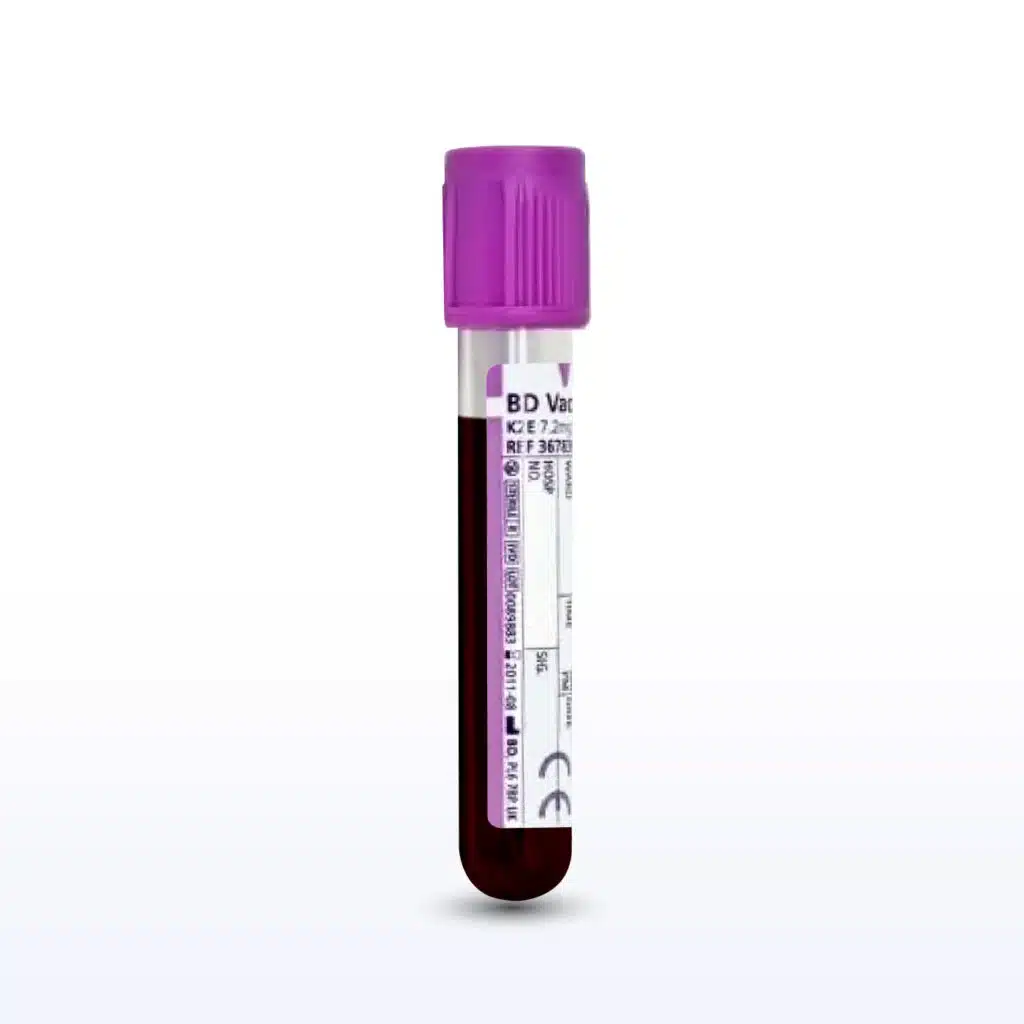
Hypersomnia Whole Blood
 Powered by Bioz
About:Whole blood from consented donors with confirmed hypersomnia, a central disorder of hypersomnolence with no established autoimmune mechanism. Useful for circadian and clock gene expression, whole-blood transcriptomics, HLA and pharmacogenomic genotyping, and wake-promoting therapy response research. Stratification by diagnostic subtype and objective measures including MSLT and actigraphy; matched healthy controls available.
About Hypersomnia Whole Blood
Hypersomnia Whole Blood for Sleep-Wake and Neurological Research
Hypersomnia Whole Blood is collected from IRB-consented donors with a clinically confirmed hypersomnia diagnosis and shipped same-day to preserve cell viability and RNA integrity. Hypersomnia encompasses the central disorders of hypersomnolence, characterised by excessive daytime sleepiness despite adequate or prolonged nocturnal sleep. These are sleep-wake regulatory disorders; no established autoimmune mechanism underlies idiopathic hypersomnia or narcolepsy type 2, and this product is not positioned as an autoimmune specimen.
Sleep-Wake Biology and Why Whole Blood
- The central disorders of hypersomnolence include idiopathic hypersomnia, narcolepsy type 2, and Kleine-Levin syndrome. Their shared clinical feature is pathological excessive daytime somnolence, and for idiopathic hypersomnia and narcolepsy type 2 the underlying pathophysiology remains unresolved.
- Diagnosis rests on objective measurement rather than symptom report: overnight polysomnography to exclude other causes, the multiple sleep latency test (MSLT) to quantify mean sleep latency and sleep-onset REM periods, and actigraphy or extended monitoring to document total sleep time.
- Idiopathic hypersomnia is often accompanied by prolonged sleep time and severe sleep inertia, and unlike narcolepsy type 1 it is not defined by cataplexy or by a deficiency of a known neuropeptide.
- Narcolepsy type 1 is a mechanistically distinct entity involving loss of hypothalamic hypocretin (orexin) neurons and a strong HLA-DQB1*06:02 association. An immune-mediated basis has been proposed but remains unproven, and that hypothesis does not extend to idiopathic hypersomnia or narcolepsy type 2.
- Sleep-wake regulation involves monoaminergic, histaminergic, adenosinergic, and GABAergic signalling together with circadian clock gene output, which is why wake-promoting agents acting on dopamine reuptake, histamine H3 receptors, and GABA-B signalling are the mainstay of symptomatic treatment.
- Whole blood preserves leukocytes and the plasma compartment together, supporting circadian and clock gene expression analysis, HLA and pharmacogenomic genotyping, and DNA and RNA extraction from a single specimen.
Donor Stratification Available
- Diagnostic subtype: idiopathic hypersomnia, narcolepsy type 2, or other central disorder of hypersomnolence
- Objective sleep measures where documented: MSLT mean sleep latency, number of sleep-onset REM periods, and polysomnography findings
- Documented long sleep time, actigraphy results, and presence of severe sleep inertia
- Subjective sleepiness severity, including Epworth Sleepiness Scale score where recorded
- Treatment status: untreated versus wake-promoting agent treated, including modafinil, solriamfetol, pitolisant, or oxybate
- Exclusion or documentation of comorbid obstructive sleep apnoea, insufficient sleep, shift work, and psychiatric comorbidity; collection time of day available on request
- Matched healthy controls available
Product Features
- Fresh whole blood from clinically diagnosed hypersomnia donors
- Custom anticoagulants and collection tubes available, including RNA-stabilising tubes
- Same-day collection and shipment
- Standard and custom volumes
- IRB-approved protocols and electronic informed consent
- Research Use Only (RUO)
De-identified Donor Data
- Physician-confirmed diagnosis, including sleep study results where available
- Demographics: age, sex assigned at birth, ethnicity
- Relevant medical and treatment history
- Diagnostic subtype and objective sleep measures where documented
- Additional hypersomnia-specific metadata available on request
Applications
- Circadian and clock gene expression analysis in stabilised whole blood
- Whole-blood transcriptomic profiling of donors stratified by objective sleepiness measures
- DNA extraction for HLA typing and candidate-gene or genome-wide association work
- Pharmacogenomic research on wake-promoting agent metabolism and response
- Neurochemical, hormonal, and metabolic profiling in the paired plasma fraction, including cortisol and melatonin-pathway analytes
- Immunophenotyping of circulating leukocyte subsets for exploratory characterisation
- Biomarker discovery to support objective differentiation of hypersomnolence subtypes
- Assay development and reference-range establishment for sleep medicine research panels
Other Hypersomnia Specimen Types
Looking for narcolepsy specifically? See our Narcolepsy Whole Blood product.
Compliance and Quality Assurance
- IRB-approved protocols and electronic informed consent
- 21 CFR Part 11-compliant e-consent
- HIPAA-compliant donor data handling
Ordering & Customization
Hypersomnia whole blood is available in standard and custom volumes. For pricing, international orders, or documentation requirements, email learnmore@sanguinebio.com. To compare donor availability across conditions, visit our human whole blood page.
Applications
- Hematology and clinical chemistry research
- Plasma, serum, and PBMC isolation
- Flow cytometry and biomarker studies
- Drug-spike and ex vivo stimulation assays
Product Features
- Research Use Only (RUO), human whole blood
- Collected from screened, consented donors
- Available in EDTA, sodium heparin, ACD, or citrate anticoagulants
- Shipped fresh under temperature-controlled conditions
- Drawn and shipped same day of collection
- IRB-approved protocols with electronic informed consent
Donor Metadata
- Verified diagnosis and clinical history
- Demographic data: age, sex assigned at birth, race/ethnicity
- Medication and treatment background when available
Compliance and Quality Assurance
- IRB-approved collections and standardized procedures
- 21 CFR Part 11-compliant e-consent system
- HIPAA-compliant data management
Ordering & Customization
Human Whole Blood are available in customizable aliquot sizes. For international orders or documentation needs, please contact learnmore@sanguinebio.com to confirm requirements and availability. We also work with multiple ordering platforms and distributors, learn more here.
Whole Blood
Where can I find your complete catalog?
You can find our full product catalog here.
How long can samples be stored?
Storage depends on sample type but often cryopreserved samples stored in liquid nitrogen can be stored for years.
What customization options are available?
Extensive customization is available. To discuss your project request a quote or email us at learnmore@sanguinebio.com.
Do you offer prospective collections?
Sanguine offers flexible prospective collection services tailored to fit your research. For more information and to request a quote, please see: our prospective biospecimen collection services page.
What is the turnaround time for custom collections?
Timelines depend on condition, sample type, and I/E criteria but we often start collection within 2 weeks of signed agreement.
Do you have samples in stock?
YES - we have in-stock inventory. You can also email us at learnmore@sanguinebio.com as we continually get new samples in our inventory.
What does unique donor mean?
Each sample from a different individual - Unique donor means each sample comes from a different person, ensuring biological diversity in your study.
Are samples collected under IRB-approved protocols?
YES - "IRB-approved collection protocols" and IRB approval documentation available upon request. Sanguine utilizes two internationally-recognized IRBs (Advarra and WCG IRB) for review and approval.
Frequently Asked Questions
Ask a Question
Pair with a Healthy Control
Match your Hypersomnia Whole Blood with normal donor samples for comparison
Healthy Whole Blood
View InventoryNeed a custom Whole Blood cohort?
Our scientific team can scope prospective collections with donor-specific I/E criteria, typically starting within 2 weeks of agreement.