
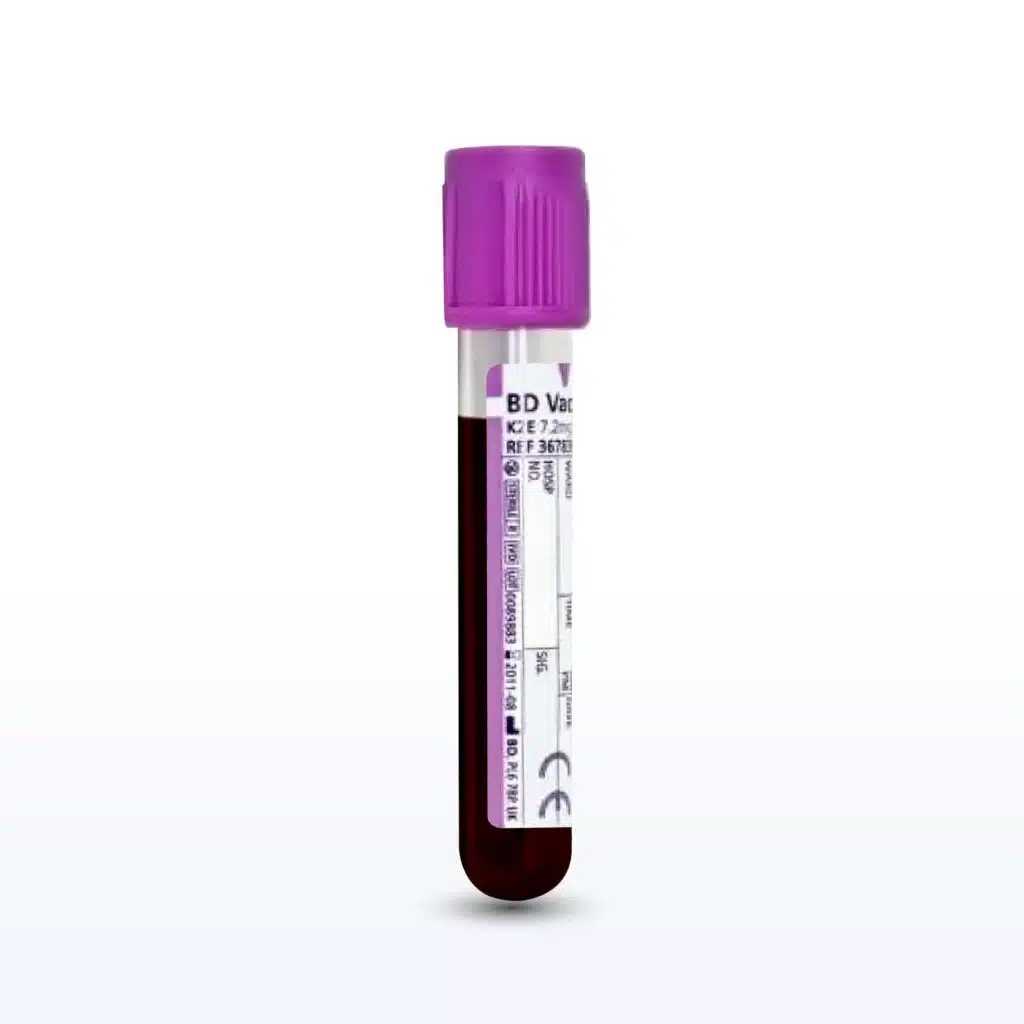
Multifocal Motor Neuropathy Whole Blood
 Powered by Bioz
About:Whole blood from consented donors with confirmed multifocal motor neuropathy (MMN), an autoimmune purely motor neuropathy with multifocal conduction block and IgM anti-GM1 ganglioside antibodies in many patients. Useful for anti-GM1 antibody assay work, complement measurement, B-cell immunophenotyping and repertoire sequencing, and IVIg response research. Matched healthy controls available.
About Multifocal Motor Neuropathy Whole Blood
Multifocal Motor Neuropathy Whole Blood for Autoimmune Neuromuscular Research
Multifocal Motor Neuropathy Whole Blood is collected from IRB-consented donors with a clinically confirmed diagnosis of multifocal motor neuropathy (MMN) and shipped same-day to preserve cell viability, DNA quality, and RNA integrity. MMN is a rare, autoimmune, purely motor neuropathy characterised by multifocal conduction block, and whole blood preserves both the antibody-containing plasma compartment and the circulating immune cells that produce it.
MMN Immunology and Why Whole Blood
- MMN presents as slowly progressive, asymmetric limb weakness with wasting, typically beginning in the distal upper limbs, and without objective sensory loss – a distribution that makes it a critical differential diagnosis against motor neuron disease.
- The electrophysiological hallmark is multifocal motor conduction block in the absence of comparable sensory abnormality, reflecting focal demyelination and impaired conduction at motor nerve segments.
- IgM antibodies against the GM1 ganglioside are detected in a substantial proportion, though not all, of patients. GM1 is enriched at motor nerve nodal and paranodal membranes, and antibody binding is thought to disrupt nodal architecture with complement participation.
- MMN responds to intravenous immunoglobulin, usually requiring ongoing maintenance dosing, but characteristically does not respond to corticosteroids or plasma exchange – a treatment-response signature that distinguishes it from CIDP.
- The antibody isotype is IgM rather than IgG, so B-cell biology, IgM class control, and complement activation are the mechanistically relevant axes for therapeutic research, and complement inhibition has attracted interest as a strategy.
- Whole blood provides the plasma fraction for anti-GM1 IgM titre and complement measurement, viable leukocytes for B-cell immunophenotyping, and genomic DNA and stabilised RNA from a single specimen.
Donor Stratification Available
- Anti-GM1 IgM antibody status and titre where serological testing is documented
- Distribution and number of affected limbs, and documented sites of motor conduction block
- Disease duration since onset and degree of secondary axonal loss where assessed
- Treatment status: IVIg-naive versus established maintenance IVIg or subcutaneous immunoglobulin, and dosing interval
- Functional disability and hand-strength measures where recorded
- Age band, sex, and exclusion of alternative diagnoses including CIDP and motor neuron disease
- Matched healthy controls available
Product Features
- Fresh whole blood from clinically diagnosed MMN donors
- Custom anticoagulants and collection tubes available, including RNA-stabilising tubes
- Same-day collection and shipment
- Standard and custom volumes
- IRB-approved protocols and electronic informed consent
- Research Use Only (RUO)
De-identified Donor Data
- Physician-confirmed diagnosis, including anti-GM1 antibody status where available
- Demographics: age, sex assigned at birth, ethnicity
- Relevant medical and treatment history, including immunoglobulin therapy schedule
- Electrophysiological findings where documented
- Additional MMN-specific metadata available on request
Applications
- Anti-GM1 ganglioside IgM antibody assay development, titre standardisation, and platform bridging
- Complement component and activation product measurement in the paired plasma fraction
- Immunophenotyping of B-cell and plasmablast compartments by flow cytometry
- B cell receptor repertoire sequencing to characterise IgM-producing clones
- Whole-blood transcriptomic profiling of donors stratified by treatment response
- Pharmacodynamic and mechanism-of-action research for immunoglobulin and complement-directed therapies
- Neurofilament light chain and axonal damage marker measurement
- Differential biomarker discovery to separate MMN from CIDP and motor neuron disease
Other Multifocal Motor Neuropathy Specimen Types
- Multifocal Motor Neuropathy Plasma
- Multifocal Motor Neuropathy Serum
- Multifocal Motor Neuropathy PBMC
Compliance and Quality Assurance
- IRB-approved protocols and electronic informed consent
- 21 CFR Part 11-compliant e-consent
- HIPAA-compliant donor data handling
Ordering & Customization
MMN whole blood is available in standard and custom volumes. For pricing, international orders, or documentation requirements, email learnmore@sanguinebio.com. To compare donor availability across conditions, visit our human whole blood page.
Applications
- Hematology and clinical chemistry research
- Plasma, serum, and PBMC isolation
- Flow cytometry and biomarker studies
- Drug-spike and ex vivo stimulation assays
Product Features
- Research Use Only (RUO), human whole blood
- Collected from screened, consented donors
- Available in EDTA, sodium heparin, ACD, or citrate anticoagulants
- Shipped fresh under temperature-controlled conditions
- Drawn and shipped same day of collection
- IRB-approved protocols with electronic informed consent
Donor Metadata
- Verified diagnosis and clinical history
- Demographic data: age, sex assigned at birth, race/ethnicity
- Medication and treatment background when available
Compliance and Quality Assurance
- IRB-approved collections and standardized procedures
- 21 CFR Part 11-compliant e-consent system
- HIPAA-compliant data management
Ordering & Customization
Human Whole Blood are available in customizable aliquot sizes. For international orders or documentation needs, please contact learnmore@sanguinebio.com to confirm requirements and availability. We also work with multiple ordering platforms and distributors, learn more here.
Whole Blood
Where can I find your complete catalog?
You can find our full product catalog here.
How long can samples be stored?
Storage depends on sample type but often cryopreserved samples stored in liquid nitrogen can be stored for years.
What customization options are available?
Extensive customization is available. To discuss your project request a quote or email us at learnmore@sanguinebio.com.
Do you offer prospective collections?
Sanguine offers flexible prospective collection services tailored to fit your research. For more information and to request a quote, please see: our prospective biospecimen collection services page.
What is the turnaround time for custom collections?
Timelines depend on condition, sample type, and I/E criteria but we often start collection within 2 weeks of signed agreement.
Do you have samples in stock?
YES - we have in-stock inventory. You can also email us at learnmore@sanguinebio.com as we continually get new samples in our inventory.
What does unique donor mean?
Each sample from a different individual - Unique donor means each sample comes from a different person, ensuring biological diversity in your study.
Are samples collected under IRB-approved protocols?
YES - "IRB-approved collection protocols" and IRB approval documentation available upon request. Sanguine utilizes two internationally-recognized IRBs (Advarra and WCG IRB) for review and approval.
Frequently Asked Questions
Ask a Question
Pair with a Healthy Control
Match your Multifocal Motor Neuropathy Whole Blood with normal donor samples for comparison
Healthy Whole Blood
View InventoryNeed a custom Whole Blood cohort?
Our scientific team can scope prospective collections with donor-specific I/E criteria, typically starting within 2 weeks of agreement.