
Human Blood Products for Research: A Complete Guide to Whole Blood, Plasma, Serum, PBMCs, and Biospecimens
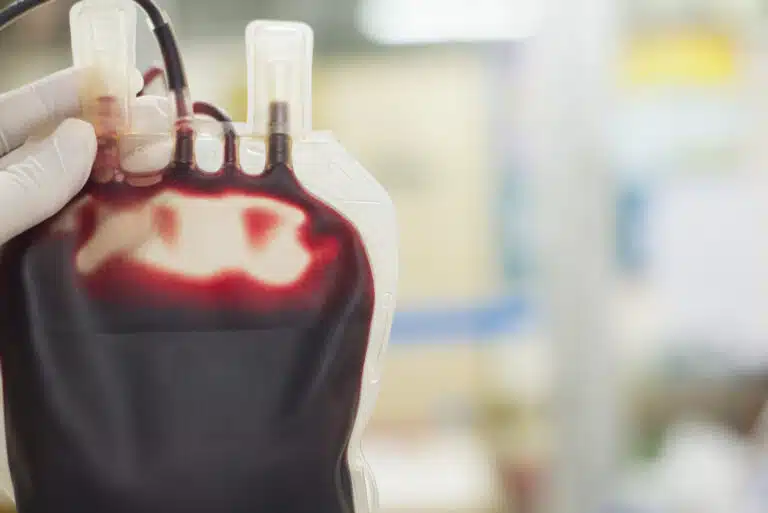
Human Blood Products for Research: A Complete Guide to Whole Blood, Plasma, Serum, PBMCs, and Biospecimens
Human blood is one of the most information-dense materials in biomedical research. A single blood draw yields many distinct research-grade products. Each has different cellular, molecular, and biochemical content, and each suits different experimental questions.
Human whole blood, human plasma, human serum, peripheral blood mononuclear cells (PBMCs), leukapheresis products, and CD34+ progenitor cells all come from blood. But they are not interchangeable. Choosing the wrong one is a common and avoidable cause of experimental failure in translational research.
This guide covers every major human blood product used in research. For each, it explains what the product is, what it contains, what it is used for, and how to source qualified specimens.
Human Whole Blood
What Is Human Whole Blood?
Human whole blood is peripheral blood collected into an anticoagulant tube (EDTA, heparin, or sodium citrate, depending on use) with no further processing.
It contains every cellular component of blood — red blood cells, platelets, granulocytes, and mononuclear cells. It also holds the full set of plasma proteins, clotting factors, hormones, metabolites, and circulating cytokines. This makes it the most physiologically complete blood material and the closest in vitro match to the in vivo immune environment.
What Is Human Whole Blood Used For?
Human whole blood samples are used across many applications:
- Whole blood stimulation assays — Measure innate and adaptive immune responses while keeping the input of granulocytes, platelets, and plasma factors (e.g., TruCulture, LPS challenge assays).
- Hematology and complete blood count reference panels — Baseline immunophenotyping by lyse-no-wash flow cytometry, which needs intact whole blood.
- Neutrophil and granulocyte function studies — Oxidative burst, phagocytosis, and NET formation need the granulocytes lost in PBMC isolation.
- Platelet-immune interaction research — Studies of thromboinflammation and platelet-leukocyte aggregates.
- Nucleic acid extraction — Whole blood in PAXgene or Tempus tubes is the starting material for RNA and DNA isolation in gene expression and genomics work.
- Clinical chemistry and biomarker reference standards — Whole blood specimens act as matrix-matched reference materials for assay development and validation.
Key limitation: Human whole blood cannot be cryopreserved and must be used within hours of collection — usually within 24–48 hours for cell-based assays. That rules it out for longitudinal studies, multi-site standardization, or banked, lot-controlled material.
Human Blood Plasma
What Is Human Plasma?
Human blood plasma is the cell-free, protein-rich liquid part of blood — the medium that holds blood cells in suspension. It is obtained by spinning anticoagulated whole blood (or a leukopak fraction) to pellet the cells, leaving the plasma on top.
Human plasma is about 92% water and 7% protein (albumin, globulins, fibrinogen, and clotting factors). The rest is a mix of small molecules: hormones, cytokines, metabolites, lipids, glucose, and electrolytes.
Two plasma types are common in research. EDTA plasma uses a chelator that binds calcium to prevent clotting. Heparin plasma uses heparin instead. The anticoagulant matters downstream: EDTA can interfere with calcium-dependent assays, and heparin can inhibit PCR and some enzyme-linked assays. Citrate plasma is used mainly for platelet function and coagulation studies.
What Is Human Plasma Used For?
Human blood plasma is used as:
- Biomarker discovery substrate — Plasma proteomics, metabolomics, and cytokine profiling use plasma as the main analyte matrix. Its many secreted proteins and signaling molecules make it the primary liquid biopsy matrix for biomarker research.
- ctDNA and cfDNA source — Plasma carries cell-free nucleic acids shed by dying cells, including tumor-derived DNA. This makes it the primary matrix for liquid biopsy cancer diagnostics research.
- Assay matrix matching — Antibody, ELISA, and immunoassay development need matrix-matched calibration materials. Plasma serves as the matrix for plasma-based clinical assay development.
- Cell culture supplement — Human plasma supplements support research needing serum-free but human protein-containing conditions.
For sourcing specifications and detailed specs, see our human plasma page.
Human Serum
What Is Human Serum?
Human serum is the cell-free, protein-rich liquid left after blood clots and the clot is removed by centrifugation. The clot contains fibrin, platelets, and clotting factors.
Unlike human plasma, which keeps fibrinogen and clotting factors, human serum has no fibrinogen. It is depleted of the coagulation proteins used up during clotting. Normal human serum, from healthy donors, differs from disease-state serum used in biomarker research.
Human serum and human plasma are often confused, but their compositions differ. Clotting releases platelet-derived growth factors, cytokines from platelet granules, and other intracellular contents. So serum is richer in certain growth factors and activated signaling molecules than plasma from the same donor. That difference matters for any assay sensitive to these factors.
What Is Human Serum Used For?
Human serum — especially normal human serum from healthy, screened donors — is used as:
- Blocking agent in immunoassays — Normal human serum blocks non-specific antibody binding in ELISA, immunofluorescence, and flow cytometry. It saturates non-specific protein-binding sites with human proteins, cutting background from secondary antibodies raised against human Ig.
- Complement source — Serum holds fully active complement proteins. Human serum samples serve as complement sources in CDC (complement-dependent cytotoxicity) assays.
- Cell culture supplement — Human AB serum replaces fetal bovine serum in T cell culture when a human protein environment is needed for primary immune cell maintenance and expansion.
- Serology and antibody titer reference — Serum samples are the standard matrix for antibody titers in vaccine immunogenicity studies, infectious disease serology, and autoantibody detection.
- Biomarker discovery — Serum proteomics and metabolomics identify disease-associated changes in secreted proteins. Serum is preferred over plasma for some biomarker classes because it is enriched in platelet-released factors.
Key fact: A serum sample from a healthy, fully characterized donor — with defined age, sex, health status, and disease-free confirmation — is very different from a pooled, uncharacterized commercial serum. For biomarker discovery, assay validation, or any work where donor biology is a variable, characterized individual-donor human serum is required.
For sourcing specifications and detailed specs, see our human serum page.
Human PBMCs and Leukopaks
What Are Human PBMCs?
Human PBMCs (peripheral blood mononuclear cells) are the immune cell fraction of peripheral blood — T cells, NK cells, B cells, monocytes, and dendritic cells — isolated by density gradient centrifugation.
They are the gold-standard preparation for T cell activation assays, cytokine profiling, NK cytotoxicity, vaccine immunogenicity testing, and immunomodulator drug screening. Unlike whole blood, human PBMCs can be cryopreserved, banked, and standardized across lots and sites.
SanguineBio’s human PBMCs are isolated from healthy, screened donors under controlled conditions. They are viability-tested, characterized, and available fresh or cryopreserved.
What Are Leukopaks?
Leukopaks are leukapheresis products that yield 5–30 billion mononuclear cells per collection. They are used when a project needs more cells than a standard blood draw provides: CAR-T process development, NK cell expansion, large-scale drug screening, and high-input single-cell genomics. SanguineBio’s leukopaks come in fresh and cryopreserved formats from characterized donors.
CD34+ Cells: Hematopoietic Stem and Progenitor Cells
What Are CD34 Positive Cells?
CD34 positive cells are hematopoietic stem and progenitor cells (HSPCs), identified by the CD34 surface antigen. They are the multipotent precursors from which all blood cell lineages arise.
They are rare in adult peripheral blood (~0.01% of mononuclear cells in non-mobilized donors). They are far more frequent in umbilical cord blood and in mobilized peripheral blood after G-CSF or plerixafor treatment.
CD34 positive cells can self-renew and differentiate into many lineages. Under the right conditions, they give rise to all myeloid cells (neutrophils, monocytes, dendritic cells, platelets, red blood cells) and lymphoid cells (T cells, B cells, NK cells). The CD34+ fraction of a preparation is the key specification for hematopoietic reconstitution capacity — in clinical transplantation and in humanized mouse model generation.
What Are CD34+ Cells Used For?
- Humanized mouse model generation — CD34 positive cells from cord blood or mobilized blood engraft in immunodeficient mice and rebuild a human immune system. This creates the most complete humanized models for in vivo immunology, oncology, and infectious disease research.
- Gene therapy and gene editing — Their primitive state makes CD34 positive cells the preferred target for CRISPR gene correction in sickle cell disease, beta-thalassemia, and SCID. High lentiviral transduction efficiency and good response to CRISPR RNP delivery are key for gene editing programs.
- Ex vivo HSPC expansion — Protocols using small molecules (StemRegenin-1, UM171) or cytokine cocktails to expand CD34+ cells are in active development for transplants that need larger cell doses than one cord blood unit provides.
- Hematopoietic differentiation research — CD34 positive cells are the starting population for in vitro differentiation into NK cells, dendritic cells, megakaryocytes, and erythrocytes — for mechanistic research and cell therapy manufacturing.
Key fact: The most accessible research-grade source of CD34 positive cells is healthy cord blood. It carries CD34+ HSPCs at much higher frequencies than adult blood and provides a primitive, highly engraftable progenitor population well-suited for gene editing and humanized mouse models. SanguineBio’s healthy cord blood is collected from screened donors and characterized for CD34+ content and viability.
Choosing the Right Human Blood Product for Your Research
| Research Need | Recommended Product | Key Reason |
|---|---|---|
| T cell activation, cytokine profiling, drug screening | Human PBMCs | Standardized, cryopreservable, multi-cellular context |
| CAR-T manufacturing, NK expansion, large-scale screening | Human Leukopak | Billions of cells from a single characterized donor |
| Granulocyte assays, full blood cell complexity | Human Whole Blood | Only format retaining neutrophils and full plasma |
| Biomarker discovery, proteomics, ctDNA, liquid biopsy | Human Plasma | Cell-free, retains clotting factors, preferred for cfDNA |
| Antibody titer, complement assays, cell culture supplement | Normal Human Serum | Depleted of clotting factors; active complement; Ig-rich |
| Humanized mouse models, gene therapy, HSPC research | CD34+ Cells / Cord Blood | Primitive HSPCs with high engraftment and edit efficiency |
What Makes a Human Blood Specimen Research-Grade?
Not all human blood specimens are equal. The difference between a research-grade product and an uncharacterized commercial sample comes down to five parameters. Require all five from your supplier:
- Donor health confirmation — The donor should be confirmed healthy at collection, off relevant medications, and free from infections or inflammation that would alter the product. For normal human serum, this is what makes a true “normal” reference specimen.
- Infectious disease screening — HIV-1/2, HBsAg, HCV, HTLV-I/II, syphilis, and CMV serostatus, tested at a CLIA-certified lab, for any human blood product for research.
- Defined collection and processing documentation — Tube type, anticoagulant, time from draw to processing, and processing method should all be recorded. These variables strongly affect plasma composition, serum complement activity, and the functional state of cell preparations.
- Donor metadata — Age, sex, ethnicity, BMI, fasting status (for plasma/serum metabolomics), and relevant medical history. The more defined the donor, the more the specimen works as a controlled variable rather than a source of noise.
- Lot-level traceability — A deidentified lot or donor ID so results from different experiments on the same donor can be cross-referenced. This is essential for multi-timepoint and multi-assay studies.
Frequently Asked Questions About Human Blood Products for Research
What is the difference between human serum and human plasma?
Human plasma comes from anticoagulated blood and keeps fibrinogen and all clotting factors. Human serum comes from blood that has clotted; the clot is removed, leaving a fibrinogen-free fluid enriched in platelet-derived growth factors and activated signaling molecules. Neither is strictly better — it depends on your application. Serum suits complement assays and serology. Plasma suits clotting factor studies, cfDNA extraction, and most biomarker proteomics.
What is normal human serum used for in research?
Normal human serum, from healthy, disease-free, characterized donors, is used as a blocking agent in immunoassays, a complement source in CDC assays, a human protein supplement for primary cell culture, and a reference matrix for antibody titer and serology assays. “Normal” means the donor was confirmed healthy at collection, which sets it apart from serum from people with active disease.
What are CD34 positive cells and where do they come from?
CD34 positive cells are hematopoietic stem and progenitor cells that give rise to all blood cell lineages. They are found in adult bone marrow, in mobilized peripheral blood (after G-CSF/plerixafor), and at higher frequencies in umbilical cord blood. Cord blood is the most accessible research-grade source of primitive CD34+ cells with high engraftment potential.
Can I buy whole blood for research?
Yes. Research-grade human whole blood is available from qualified biospecimen suppliers, collected into defined anticoagulant tubes from characterized donors with full infectious disease screening. Because whole blood cannot be cryopreserved, it must ship fresh and be used within your assay’s stability window.
What human blood products does SanguineBio supply?
SanguineBio supplies research-grade human PBMCs, leukopaks, healthy cord blood, and other human biospecimens from healthy, screened donors — with full donor characterization, defined quality specs, and same-week availability.
Summary: Key Facts About Human Blood Products for Research
- Human whole blood holds all cellular and soluble components — used for granulocyte assays, TLR stimulation, hematology, and platelet studies; not cryopreservable.
- Human blood plasma is the cell-free, anticoagulated liquid fraction — used for biomarker proteomics, ctDNA/cfDNA extraction, and assay matrix matching; retains clotting factors.
- Human serum (including normal human serum) is clotting-factor-depleted — used for complement assays, serology, blocking reagents, and cell culture supplementation.
- Human PBMCs are the mononuclear immune cell fraction — the gold-standard substrate for T cell assays, cytokine profiling, NK cytotoxicity, and drug screening.
- Leukopaks provide billions of mononuclear cells from a single donor for CAR-T manufacturing, NK expansion, and large-scale research.
- CD34 positive cells are hematopoietic stem/progenitor cells — sourced most accessibly from cord blood — used for humanized mouse models, gene therapy, and HSPC differentiation research.
- Research-grade specimens require confirmed donor health, full infectious disease screening, processing documentation, and defined donor metadata — whatever the product type.
SanguineBio supplies characterized, donor-screened human specimens for immunology, oncology, and cell therapy research — including human PBMCs, leukopaks, human whole blood, human plasma, human serum, and cord blood.

