RESISTANCE TO ANTI-EGFR THERAPIES IN COLORECTAL CANCER
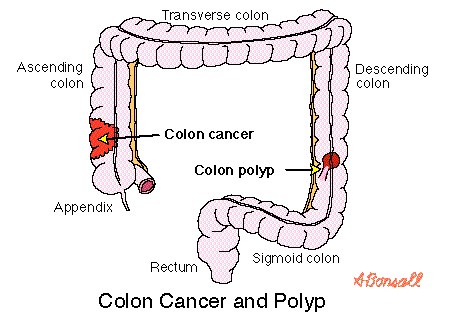
Colorectal cancer (CRC) starts in the tissues of the colon (the longest part of the large intestine), rectum, or appendix, and is also known as colon cancer. Most CRCs are adenocarcinomas — cancers that begin in cells that make and release mucus and other fluids. According to the National Cancer Institute (NCI), the US will see an estimated 102,480 new cases of colorectal cancer in 2013.
Three Types of Colorectal Cancer
Based on the disease’s genetics and origin, doctors usually classify CRC into three types: sporadic, inherited, or familial.
Sporadic colorectal carcinomas account for approximately 70% of CRC cases. These carcinomas have no familial or inherited predisposition and are common in people over 50.
Inherited colorectal carcinomas include cases where colonic polyps (extra tissue growths in the colon) are a major sign of disease, as well as cases where they aren’t. The nonpolyposis predominant syndromes include hereditary nonpolyposis CRC (HNPCC, or Lynch syndrome I) and cancer family syndrome (Lynch syndrome II).
Familial colorectal carcinomas are the least understood pattern of CRC. In affected families, CRC develops too often to be considered sporadic, but doesn’t follow a pattern consistent with an inherited syndrome. Up to 25% of all CRC cases may fall into this category.
Genetic Drivers of CRC
Like many other cancers, several studies suggest that an accumulation of genetic changes is associated with CRC’s development. Each of these changes gives cells a selective growth advantage, which ultimately leads to uninhibited cell growth, proliferation, and clonal tumor development. The two major mechanisms of genomic alterations implicated in CRC’s development and progression are chromosomal instability and microsatellite instability. Genes implicated in CRC tumorigenesis include p53, p16, p14, APC, β-catenin, E-cadherin, Transforming Growth Factor (TGF)–β, SMADs, MLH1, MSH2, MSH6, PMS2, AXIN, STK11, PTEN, DCC, and KRAS.
Among these, oncogenic mutation of KRAS serves as a standard molecular biomarker that predicts whether a patient will benefit from targeted inhibition with epidermal growth factor receptor (EGFR) inhibitors. The EGFR-targeted monoclonal antibodies cetuximab and panitumumab are only effective in a subset of metastatic CRC cases, and 50% of patients who initially respond to cetuximab or panitumumab develop resistance through KRAS mutations. Researchers have also linked secondary resistance to anti-EGFR antibodies to expression of EGFR ligands, HER2 amplification, and deregulation of the EGFR recycling process. Together, these account for 70-80% of resistance cases to anti-EGFR antibodies — suggesting there may be additional resistance mechanisms in CRC that researchers haven’t yet identified.
A New Resistance Mechanism Discovered
A recent study by Bardelli et al. (Cancer Discovery, June 6, 2013) examined the molecular basis of resistance to anti-EGFR therapy in CRC patients who didn’t develop KRAS mutations. Bardelli and colleagues identified amplification of the MET proto-oncogene as responsible for this acquired resistance. They detected the MET amplicon 3 months after starting therapy in circulating cell-free DNA from CRC patients. Preclinical CRC models and patient-derived colorectal cancer xenografts further confirmed MET amplification’s role in limiting anti-EGFR antibody efficacy. These models showed marked tumor regression when researchers combined the MET inhibitor JNJ-38877605 with cetuximab. Together, this study suggests that CRC patients who develop resistance through MET amplification could benefit from combining a MET inhibitor with an anti-EGFR monoclonal antibody.
Related reading: Multidrug resistance in cancer: ABC transporters
REFERENCES:
Bardelli A, Corso S, Bertotti A, Hobor S, Valtorta E, Siravegna G, Sartore-Bianchi A, Scala E, Cassingena A, Zecchin D, Apicella M, Migliardi G, Galimi F, Lauricella C, Zanon C, Perera T, Veronese S, Corti G, Amatu A, Gambacorta M, Diaz LA, Jr., Sausen M, Velculescu VE, Comoglio P, Trusolino L, Di Nicolantonio F, Giordano S, Siena S (2013) Amplification of the MET Receptor Drives Resistance to Anti-EGFR Therapies in Colorectal Cancer. Cancer Discov 3: 658-673.
Center MM, Jemal A, Smith RA, Ward E (2009) Worldwide variations in colorectal cancer. CA Cancer J Clin 59: 366-378.
Misale S, Yaeger R, Hobor S, Scala E, Janakiraman M, Liska D, Valtorta E, Schiavo R, Buscarino M, Siravegna G, Bencardino K, Cercek A, Chen CT, Veronese S, Zanon C, Sartore-Bianchi A, Gambacorta M, Gallicchio M, Vakiani E, Boscaro V, Medico E, Weiser M, Siena S, Di Nicolantonio F, Solit D, Bardelli A (2012) Emergence of KRAS mutations and acquired resistance to anti-EGFR therapy in colorectal cancer. Nature 486: 532-536.
Sameer AS (2013) Colorectal cancer: molecular mutations and polymorphisms. Front Oncol 3: 114.