
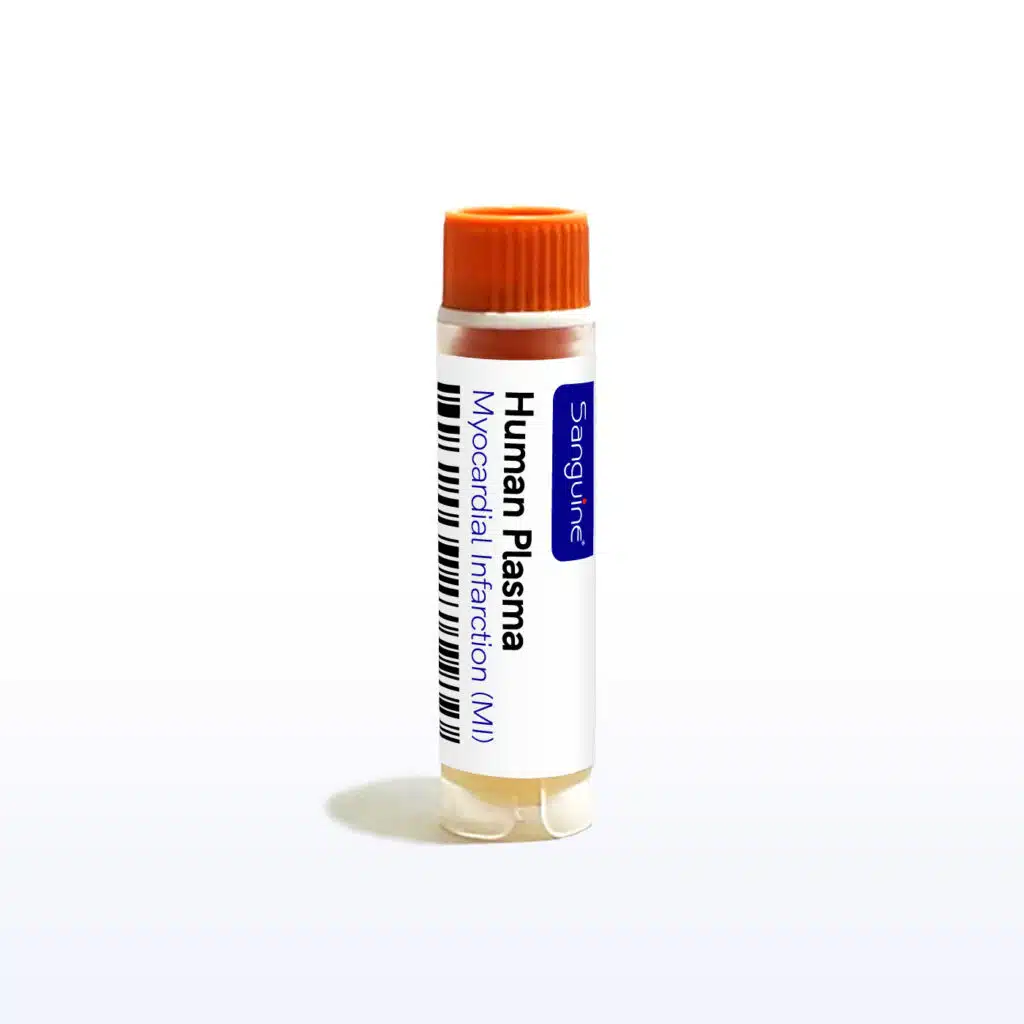
Myocardial Infarction Plasma
 Powered by Bioz
About:Myocardial Infarction Plasma from consented donors with confirmed MI, an atherothrombotic event caused by coronary plaque disruption and thrombotic occlusion. Suitable for cardiac troponin and NT-proBNP assay development, coagulation and antithrombotic research, and cardiovascular risk proteomics. STEMI/NSTEMI and time-since-event stratification available.
About Myocardial Infarction Plasma
Myocardial Infarction Plasma for Cardiovascular and Atherothrombosis Research
Myocardial Infarction Plasma is collected from IRB-consented donors clinically diagnosed with myocardial infarction and processed within one day of collection to preserve key analytes such as cytokines, proteins and metabolites. Myocardial infarction is an atherothrombotic vascular event: rupture or erosion of an atherosclerotic coronary plaque triggers platelet activation and thrombus formation, occluding blood flow and causing ischaemic necrosis of downstream myocardium. This human plasma supports cardiovascular biomarker discovery, thrombosis research and diagnostic assay development.
Atherothrombosis, Myocardial Injury and Why Plasma
- Cardiomyocyte necrosis releases structural proteins into circulation. Cardiac troponin I and T are the reference biomarkers of myocardial injury and are central to the diagnosis of myocardial infarction.
- Neurohormonal strain markers, notably BNP and NT-proBNP, reflect ventricular wall stress and are widely measured alongside injury markers to characterise post-infarct remodelling.
- The precipitating event is thrombotic. Plasma retains coagulation factors, fibrinogen, D-dimer and platelet-derived analytes, which serum does not, making plasma the appropriate matrix for haemostasis and thrombosis work.
- Atherosclerosis is an inflammatory as well as a lipid-driven process, and circulating inflammatory mediators including CRP and IL-6 are established correlates of atherothrombotic risk.
- Because collection timing relative to symptom onset determines the analyte profile, time-since-event metadata is essential for interpreting kinetics of injury and inflammatory markers.
- Plasma is acellular. It supports high-sensitivity immunoassay, coagulation assay, proteomic, lipidomic, metabolomic and circulating nucleic acid work — but not flow cytometry or other cell-based assays.
Donor Stratification Available
- Infarct type: ST-elevation (STEMI) versus non-ST-elevation (NSTEMI) myocardial infarction
- Time since event: acute presentation versus convalescent or post-infarct follow-up collections
- Revascularisation status: percutaneous coronary intervention, coronary artery bypass grafting, or medical management
- First versus recurrent event
- Cardiometabolic comorbidity: diabetes, hypertension, dyslipidaemia, chronic kidney disease
- Antiplatelet, anticoagulant and lipid-lowering therapy status
- Matched healthy controls available
Product Features
- Research Use Only (RUO)
- Plasma collected from clinically confirmed myocardial infarction donors
- Processed within one day of collection
- Anticoagulant selection available on request
- IRB-approved protocols and informed consent
- Custom aliquot volumes available upon request
De-identified Donor Data
- Verified myocardial infarction diagnosis, with infarct type where documented
- Demographic data: age, sex assigned at birth, race/ethnicity
- Donor-reported medications, allergies, and comorbidities
- Time from symptom onset to collection where available
- Additional myocardial infarction-specific metadata available
Applications
- High-sensitivity cardiac troponin assay development and validation
- NT-proBNP and natriuretic peptide biomarker research
- Coagulation, fibrinolysis and D-dimer assay work
- Antiplatelet and antithrombotic pharmacodynamic studies
- Inflammatory mediator profiling in atherothrombosis
- Lipidomic and lipoprotein characterisation of cardiovascular risk
- Plasma proteomic and metabolomic discovery for risk prediction
- Circulating microRNA and cell-free nucleic acid biomarker research
Other Myocardial Infarction Specimen Types
- Myocardial Infarction Serum
- Myocardial Infarction Whole Blood
- Myocardial Infarction PBMC
- Myocardial Infarction Leukopak
Compliance and Quality Assurance
- IRB-approved and HIPAA-compliant protocols
- Electronic informed consent with 21 CFR Part 11 – compliant e-signatures
- Documentation support available for regulatory review
Ordering & Customization
Myocardial infarction plasma is available in standard and custom volumes. For pricing, current availability, international orders or documentation requirements, please email learnmore@sanguinebio.com to ensure compatibility with your country’s regulations. To browse donor cohorts across our full inventory, visit our human plasma page.
Applications
- Immunology and translational research
- Biomarker discovery and validation
- Drug screening and assay development
- Vaccine and infectious disease research
Product Features
- Research Use Only (RUO), Plasma
- Sourced from screened, consented donors
- Processed under validated SOPs
- QC tested for purity, viability, and sterility
- Processed within 24 hours of collection
- IRB-approved protocols with electronic informed consent
Donor Metadata
- Verified diagnosis and clinical history
- Demographic data: age, sex assigned at birth, race/ethnicity
- Medication and treatment background when available
Compliance and Quality Assurance
- IRB-approved collections and standardized procedures
- 21 CFR Part 11-compliant e-consent system
- HIPAA-compliant data management
Ordering & Customization
Human Plasma are available in customizable aliquot sizes. For international orders or documentation needs, please contact learnmore@sanguinebio.com to confirm requirements and availability. We also work with multiple ordering platforms and distributors, learn more here.
Protocols & Documentation
-
Download
Plasma Isolation
Protocol for plasma separation from anticoagulated whole blood, including processing, storage, and traceability requirements.
-
Informed Consent Form (ICF)
Available upon request — confirms donor consent for research use and downstream commercialization.
Plasma
Where can I find your complete catalog?
You can find our full product catalog here.
How long can samples be stored?
Storage depends on sample type but often cryopreserved samples stored in liquid nitrogen can be stored for years.
What customization options are available?
Extensive customization is available. To discuss your project request a quote or email us at learnmore@sanguinebio.com.
Do you offer prospective collections?
Sanguine offers flexible prospective collection services tailored to fit your research. For more information and to request a quote, please see: our prospective biospecimen collection services page.
What is the turnaround time for custom collections?
Timelines depend on condition, sample type, and I/E criteria but we often start collection within 2 weeks of signed agreement.
Do you have samples in stock?
YES - we have in-stock inventory. You can also email us at learnmore@sanguinebio.com as we continually get new samples in our inventory.
What does unique donor mean?
Each sample from a different individual - Unique donor means each sample comes from a different person, ensuring biological diversity in your study.
Are samples collected under IRB-approved protocols?
YES - "IRB-approved collection protocols" and IRB approval documentation available upon request. Sanguine utilizes two internationally-recognized IRBs (Advarra and WCG IRB) for review and approval.
Frequently Asked Questions
Ask a Question
Pair with a Healthy Control
Match your Myocardial Infarction Plasma with normal donor samples for comparison
Healthy Plasma
207 In Stock View InventoryNeed a custom Plasma cohort?
Our scientific team can scope prospective collections with donor-specific I/E criteria, typically starting within 2 weeks of agreement.