
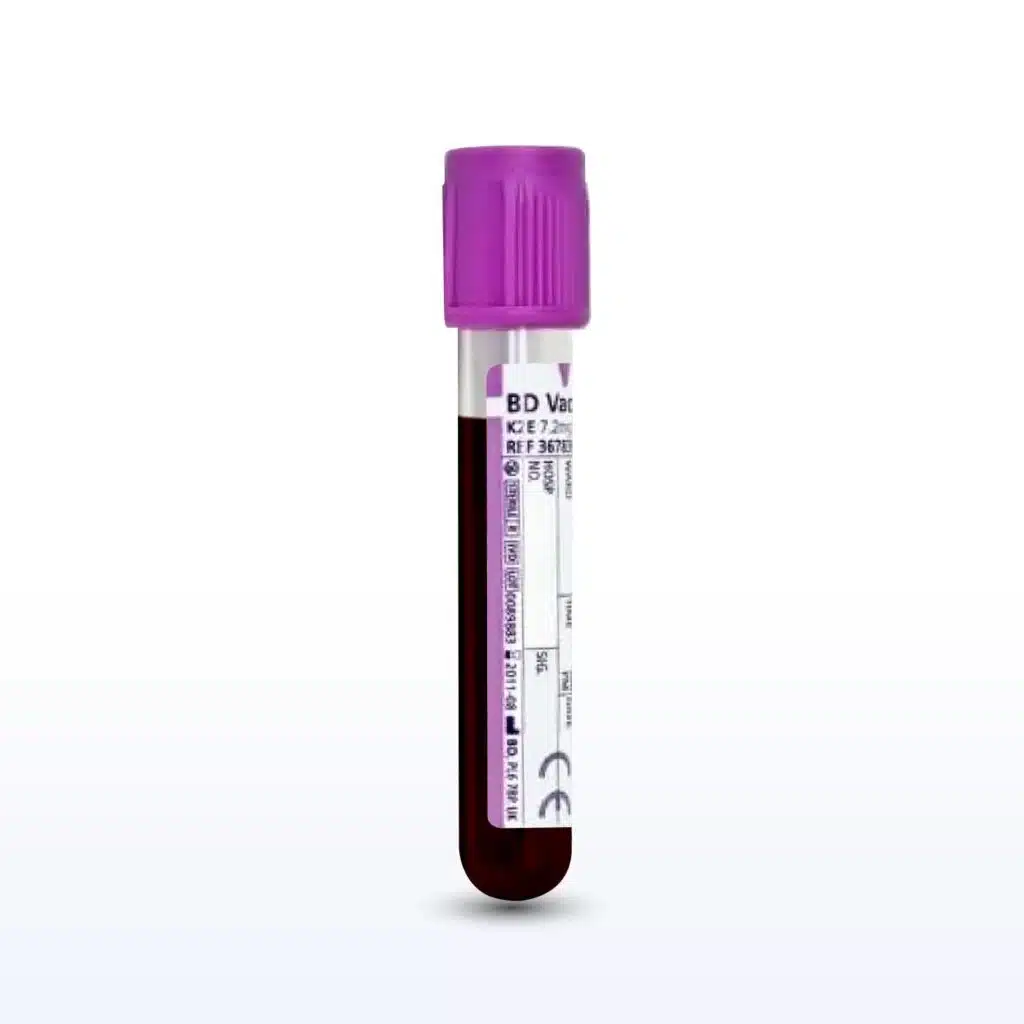
Sickle Cell Disease Whole Blood
 Powered by Bioz
About:Sickle Cell Disease Whole Blood from consented donors with confirmed sickle cell disease (HbSS, HbSC, HbS/beta-thalassaemia). Useful for HBB variant analysis, HbS polymerisation and sickling assays, haemolysis biomarkers, and gene therapy or hydroxyurea response studies. Distinct from sickle cell trait.
About Sickle Cell Disease Whole Blood
Sickle Cell Disease Whole Blood for Haematology and Genetic Research
Sanguine collects fresh Sickle Cell Disease Whole Blood from IRB-consented donors with a clinically confirmed sickle cell disease diagnosis, with same-day collection and shipment. Sickle cell disease is an inherited monogenic haemoglobinopathy caused by the HBB Glu6Val (HbS) variant: on deoxygenation, HbS polymerises, deforming red cells and producing vaso-occlusion, chronic haemolysis, and endothelial activation. Whole blood preserves intact red cells, leukocytes, and platelets together, which is essential for sickling, rheology, and haemolysis work.
Disease Biology and Why Whole Blood
- Defined molecular defect: a single HBB point mutation substituting valine for glutamic acid at position 6 of the beta-globin chain produces HbS.
- Polymerisation and sickling: deoxygenated HbS forms intracellular polymers, causing red cell rigidity, membrane damage, and dehydration — measurable only in intact cells, which whole blood preserves.
- Vaso-occlusion and chronic haemolysis: haemolysis releases free haemoglobin and arginase, depletes nitric oxide, and drives endothelial activation, contributing to pulmonary hypertension, stroke, nephropathy, and leg ulceration.
- Inflammation and adhesion: activated neutrophils, monocytes, platelets, and adhesion molecules participate in vaso-occlusive events, making paired cellular and plasma readouts valuable.
- Fetal haemoglobin (HbF) modulation is the central therapeutic axis; whole blood supports haemoglobin fractionation, F-cell measurement, and treatment-response studies.
- Genomic DNA for HBB genotyping and for genetic modifiers of severity (including BCL11A and alpha-thalassaemia co-inheritance) is recoverable from the same draw.
Donor Stratification Available
- Genotype: HbSS, HbSC, HbS/beta-thalassaemia, and other compound heterozygous states where available
- Treatment status: hydroxyurea, chronic transfusion, exchange transfusion, or treatment-naive
- Newer disease-modifying therapy exposure where available
- Clinical severity: vaso-occlusive crisis frequency, history of acute chest syndrome, stroke, or avascular necrosis
- Steady-state versus recent crisis collection
- Comorbid organ involvement: sickle nephropathy, pulmonary hypertension, retinopathy
- Paediatric and adult donors
- Matched healthy controls available
Product Features
- Fresh whole blood from clinically diagnosed sickle cell disease donors
- Custom anticoagulants and collection tubes available
- Same-day collection and shipment
- Research Use Only (RUO)
- IRB-approved protocols with documented electronic consent
- Custom volumes available on request
De-identified Donor Data
- Physician-confirmed diagnosis, including genotype (HbSS, HbSC, etc.) where available
- Demographics: age, sex assigned at birth, race/ethnicity
- Relevant medical and treatment history, including hydroxyurea and transfusion status
- Additional sickle cell disease-specific metadata available on request
Applications
- HBB gene variant analysis and haemoglobin polymerisation research
- Sickling assays, red cell deformability, and blood rheology studies
- Haemoglobin fractionation, HbF quantification, and F-cell measurement
- Vaso-occlusion, adhesion, and haemolysis biomarker studies
- Gene expression and transcriptomic analysis of circulating cells
- Gene therapy and gene editing research, including base editing and HbF induction strategies
- Hydroxyurea and disease-modifying therapy response research
- Genetic modifier discovery and severity prediction
Sickle Cell Disease vs Sickle Cell Trait
This product is the disease page: donors carry two abnormal beta-globin alleles (HbSS, HbSC, HbS/beta-thalassaemia) and have clinically manifest sickle cell disease. It should not be confused with sickle cell trait, the heterozygous carrier state (HbAS), which is typically asymptomatic and is not sickle cell disease. If you need carrier-state material, see our Sickle Cell Trait Whole Blood product.
Other Sickle Cell Disease Specimen Types
Sickle cell disease donor material is also available as Sickle Cell Disease Plasma, Sickle Cell Disease Serum, and Sickle Cell Disease PBMC.
Compliance and Quality Assurance
- IRB-approved protocols and electronic informed consent
- HIPAA-compliant donor data handling
- Documentation support available for regulatory review
Ordering & Customization
Sickle cell disease whole blood is available in standard and custom volumes. For pricing, international orders, or documentation requirements, email learnmore@sanguinebio.com. For the full specimen range, see our human whole blood collection.
Applications
- Hematology and clinical chemistry research
- Plasma, serum, and PBMC isolation
- Flow cytometry and biomarker studies
- Drug-spike and ex vivo stimulation assays
Product Features
- Research Use Only (RUO), human whole blood
- Collected from screened, consented donors
- Available in EDTA, sodium heparin, ACD, or citrate anticoagulants
- Shipped fresh under temperature-controlled conditions
- Drawn and shipped same day of collection
- IRB-approved protocols with electronic informed consent
Donor Metadata
- Verified diagnosis and clinical history
- Demographic data: age, sex assigned at birth, race/ethnicity
- Medication and treatment background when available
Compliance and Quality Assurance
- IRB-approved collections and standardized procedures
- 21 CFR Part 11-compliant e-consent system
- HIPAA-compliant data management
Ordering & Customization
Human Whole Blood are available in customizable aliquot sizes. For international orders or documentation needs, please contact learnmore@sanguinebio.com to confirm requirements and availability. We also work with multiple ordering platforms and distributors, learn more here.
Whole Blood
Where can I find your complete catalog?
You can find our full product catalog here.
How long can samples be stored?
Storage depends on sample type but often cryopreserved samples stored in liquid nitrogen can be stored for years.
What customization options are available?
Extensive customization is available. To discuss your project request a quote or email us at learnmore@sanguinebio.com.
Do you offer prospective collections?
Sanguine offers flexible prospective collection services tailored to fit your research. For more information and to request a quote, please see: our prospective biospecimen collection services page.
What is the turnaround time for custom collections?
Timelines depend on condition, sample type, and I/E criteria but we often start collection within 2 weeks of signed agreement.
Do you have samples in stock?
YES - we have in-stock inventory. You can also email us at learnmore@sanguinebio.com as we continually get new samples in our inventory.
What does unique donor mean?
Each sample from a different individual - Unique donor means each sample comes from a different person, ensuring biological diversity in your study.
Are samples collected under IRB-approved protocols?
YES - "IRB-approved collection protocols" and IRB approval documentation available upon request. Sanguine utilizes two internationally-recognized IRBs (Advarra and WCG IRB) for review and approval.
Frequently Asked Questions
Ask a Question
Pair with a Healthy Control
Match your Sickle Cell Disease Whole Blood with normal donor samples for comparison
Healthy Whole Blood
View InventoryNeed a custom Whole Blood cohort?
Our scientific team can scope prospective collections with donor-specific I/E criteria, typically starting within 2 weeks of agreement.