
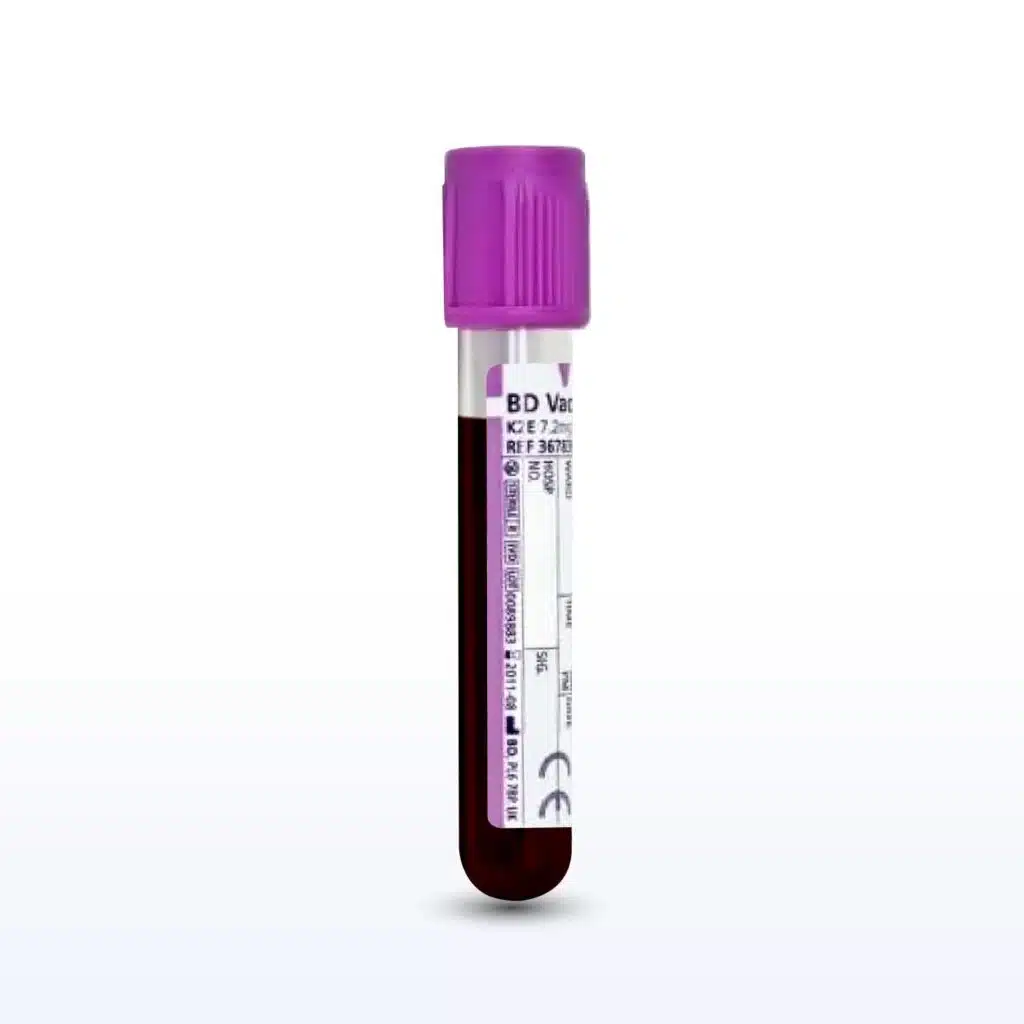
Sickle Cell Trait Whole Blood
 Powered by Bioz
About:Fresh whole blood from consented donors with a confirmed HbAS genotype. Sickle cell trait is a heterozygous carrier state, not sickle cell disease, and carriers are generally asymptomatic. Useful for HBB genotyping, haemoglobin electrophoresis and HPLC method development, carrier screening assay validation, population genetics and normal-range comparator cohorts.
About Sickle Cell Trait Whole Blood
Sickle Cell Trait Whole Blood for Population Genetics and Haematology Research
Sickle Cell Trait Whole Blood is collected from IRB-consented donors with a confirmed HbAS genotype and shipped same day. Sickle cell trait is a heterozygous carrier state: the donor carries one normal beta-globin allele and one HBB sickle allele, and therefore produces both HbA and HbS. It is a carrier state, not sickle cell disease. Individuals with sickle cell trait are generally healthy and largely asymptomatic, and our donors are consented as carriers rather than as patients. These fresh samples support population genetics, screening assay development and comparator-cohort research.
Carrier Genetics, HbS/HbA Ratio and Why Whole Blood
- Sickle cell trait is defined by heterozygosity for the HBB sickle variant. One functional beta-globin allele is retained, so haemoglobin polymerisation does not occur under ordinary physiological conditions and red cell lifespan is essentially preserved.
- On haemoglobin electrophoresis or HPLC, carriers show both HbA and HbS, with HbA the predominant fraction. This characteristic two-peak pattern is what distinguishes trait from homozygous disease and is the basis of confirmatory testing.
- Distinguishing HbAS from HbSS and from compound heterozygous states is precisely the analytical challenge that carrier screening and newborn screening assays must solve, which makes genotype-confirmed trait material valuable reference material.
- The high carrier frequency in populations with historical malaria exposure is one of the best-documented examples of balancing selection in humans, and HbAS red cells remain a widely used system in malaria-resistance research.
- Carrier status is relevant to reproductive genetic counselling, since two carriers may have a child with sickle cell disease — supporting demand for robust, well-characterised carrier detection assays.
- Whole blood supplies genomic DNA for HBB genotyping, intact red cells for electrophoresis, HPLC and isoelectric focusing, and the plasma compartment, all from a single collection.
Donor Stratification Available
- Confirmation method: haemoglobin electrophoresis, HPLC, or molecular HBB genotyping
- Documented HbS and HbA fraction where available
- Self-reported ancestry and geographic origin for population genetics cohorts
- Co-inherited haemoglobin or red cell traits where documented, such as alpha-thalassaemia trait or G6PD deficiency
- Age and sex assigned at birth for demographically balanced cohort assembly
- Matched healthy controls available, including HbAA donors for assay comparison, and sickle cell disease donors where a disease comparator is required
Product Features
- Fresh whole blood from donors with confirmed sickle cell trait
- Custom anticoagulants and collection tubes available
- Same-day collection and shipment
- Custom volumes available on request
- Research Use Only (RUO)
De-identified Donor Data
- Confirmed HbAS genotype by haemoglobin electrophoresis or genetic testing
- Demographics: age, sex assigned at birth, ethnicity
- Relevant medical and family history
- Confirmation method and documented haemoglobin fractions where available
Applications
- HBB gene variant detection and genotyping assay development
- Haemoglobin electrophoresis, HPLC and isoelectric focusing method development
- Carrier screening and newborn screening assay validation
- Reference and control material for haemoglobinopathy diagnostic panels
- Population genetics and allele frequency studies
- Malaria resistance and host genetic protection research
- Normal-range comparator cohort for sickle cell disease studies
- Gene expression and transcriptomic analysis in a heterozygous background
- Red cell biology and exercise physiology research in carriers
Other Sickle Cell Trait Specimen Types
- Sickle Cell Trait Plasma
- Sickle Cell Trait Bulk Plasma
- Sickle Cell Trait Serum
- Sickle Cell Trait PBMC
- Sickle Cell Trait Leukopak
Looking for sickle cell disease specifically, rather than the carrier state? See our Sickle Cell Disease Whole Blood product.
Compliance and Quality Assurance
- IRB-approved protocols and electronic informed consent
- HIPAA-compliant donor data handling
Ordering & Customization
Sickle cell trait whole blood is available in standard and custom volumes. For pricing, current availability, international orders or documentation requirements, email learnmore@sanguinebio.com. To browse donor cohorts across our full inventory, visit our human whole blood page.
Applications
- Hematology and clinical chemistry research
- Plasma, serum, and PBMC isolation
- Flow cytometry and biomarker studies
- Drug-spike and ex vivo stimulation assays
Product Features
- Research Use Only (RUO), human whole blood
- Collected from screened, consented donors
- Available in EDTA, sodium heparin, ACD, or citrate anticoagulants
- Shipped fresh under temperature-controlled conditions
- Drawn and shipped same day of collection
- IRB-approved protocols with electronic informed consent
Donor Metadata
- Verified diagnosis and clinical history
- Demographic data: age, sex assigned at birth, race/ethnicity
- Medication and treatment background when available
Compliance and Quality Assurance
- IRB-approved collections and standardized procedures
- 21 CFR Part 11-compliant e-consent system
- HIPAA-compliant data management
Ordering & Customization
Human Whole Blood are available in customizable aliquot sizes. For international orders or documentation needs, please contact learnmore@sanguinebio.com to confirm requirements and availability. We also work with multiple ordering platforms and distributors, learn more here.
Whole Blood
Where can I find your complete catalog?
You can find our full product catalog here.
How long can samples be stored?
Storage depends on sample type but often cryopreserved samples stored in liquid nitrogen can be stored for years.
What customization options are available?
Extensive customization is available. To discuss your project request a quote or email us at learnmore@sanguinebio.com.
Do you offer prospective collections?
Sanguine offers flexible prospective collection services tailored to fit your research. For more information and to request a quote, please see: our prospective biospecimen collection services page.
What is the turnaround time for custom collections?
Timelines depend on condition, sample type, and I/E criteria but we often start collection within 2 weeks of signed agreement.
Do you have samples in stock?
YES - we have in-stock inventory. You can also email us at learnmore@sanguinebio.com as we continually get new samples in our inventory.
What does unique donor mean?
Each sample from a different individual - Unique donor means each sample comes from a different person, ensuring biological diversity in your study.
Are samples collected under IRB-approved protocols?
YES - "IRB-approved collection protocols" and IRB approval documentation available upon request. Sanguine utilizes two internationally-recognized IRBs (Advarra and WCG IRB) for review and approval.
Frequently Asked Questions
Ask a Question
Pair with a Healthy Control
Match your Sickle Cell Trait Whole Blood with normal donor samples for comparison
Healthy Whole Blood
View InventoryNeed a custom Whole Blood cohort?
Our scientific team can scope prospective collections with donor-specific I/E criteria, typically starting within 2 weeks of agreement.