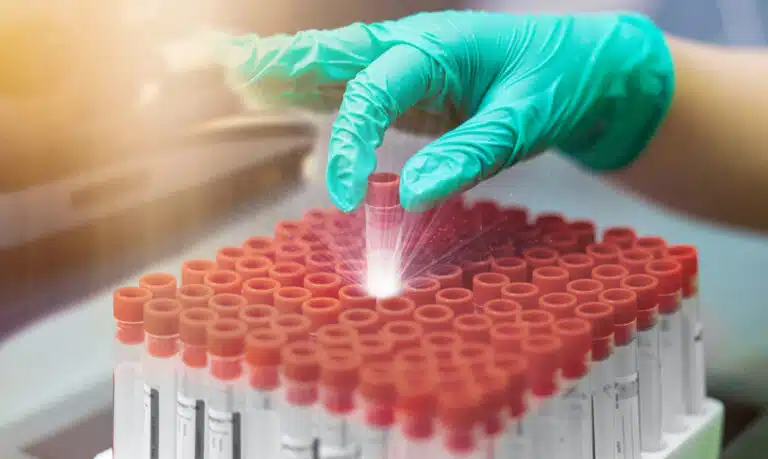
Blood-Based Biomarkers Across Neurodegenerative Diseases

Revolutionizing Neurodegeneration Detection Through Blood Biomarkers
Neurodegenerative diseases affect over 6 million people across the United States. Alzheimer’s disease, Parkinson’s disease, frontotemporal dementia, and amyotrophic lateral sclerosis together place a heavy burden on patients, families, and healthcare systems. Prevalence is expected to triple by 2050 as populations age.
Traditional diagnostic approaches only catch these disorders after substantial neuron loss has already happened. Clinical assessments, cognitive testing, and neuroimaging identify disease once damage is advanced. That limits how effective treatment can be during the stages when it might help most.
Blood-based biomarkers are changing that. Detecting them in plasma, serum, and peripheral blood cells allows minimally invasive assessment of CNS pathology — a core focus of our neuroscience & neurodegenerative disease biospecimen portfolio. Clinicians can collect peripheral blood routinely, in a wide range of locations.
Neurodegenerative diseases unfold over decades. Molecular and cellular changes build up for years before symptoms appear. In Alzheimer’s, amyloid-beta deposition starts 15-20 years before dementia onset. Tau pathology, neuroinflammation, synaptic dysfunction, and neuron loss follow.
Blood biomarkers that reflect these processes enable preclinical detection. Early detection algorithms, treatment monitoring, and mechanistic research all depend on high-quality plasma and serum from patients with confirmed diagnoses. Thorough clinical workups — neuropsychological testing, biomarker studies, and neuroimaging — give this work essential context.
From study design through receipt of samples, choosing the right biospecimens is what makes research valid. Healthy controls and disease control comparators strengthen diagnostic algorithm development. Longitudinal collections document how disease progresses over time.
Alzheimer’s Disease Plasma Biomarkers
Ultra-sensitive immunoassay platforms make robust quantification possible. Single-molecule enzyme-linked immunosorbent assay (Simoa) and immunoprecipitation mass spectrometry detect amyloid-beta peptides and phosphorylated tau isoforms, down to picogram-per-milliliter levels in plasma.
The plasma Aβ42/Aβ40 ratio moves inversely with brain amyloid burden, which PET imaging measures as plaque buildup. Lower ratios mean more plaque. Aβ42 gets trapped in brain plaques and drops in circulation.
Diagnostic accuracy for identifying amyloid-positive people reaches 85-90% in research cohorts. Performance varies across ethnic populations, comorbidity profiles, and assay platforms. Careful validation across diverse study populations throughout the United States is essential for generalizability.
Phosphorylated tau species show better specificity for Alzheimer’s. P-tau217 discriminates impressively well between AD and non-AD dementias. In head-to-head comparisons against other neurodegenerative conditions, areas under the ROC curve exceed 0.95.
The biology behind why specific p-tau isoforms get released isn’t fully understood. Differential blood-brain barrier transport may play a role. Certain phosphorylation states might also be more stable in circulation, or selective packaging into extracellular vesicles could help them cross the vascular barrier.
Researchers studying these mechanisms need longitudinally collected plasma samples with thorough genomic annotation. Cognitive trajectories, neuroimaging findings, CSF biomarker results, APOE genotype, and clinical variables all support multivariable modeling. Testing performance across diverse populations confirms clinical usefulness.
Neurofilament light chain, measured in serum or plasma, reflects axonal damage. It rises across multiple neurodegenerative conditions. This non-specific marker shows how fast neurons are being injured, but it doesn’t point to a specific disease on its own.
Combining NfL with disease-specific markers improves diagnostic algorithms:
- The Aβ42/Aβ40 ratio identifies amyloid pathology
- P-tau varieties confirm Alzheimer’s-specific tau changes
- NfL quantifies how intense the neurodegeneration is
Multi-marker panels outperform any single analyte.
Parkinson’s Disease Blood-Based Biomarkers
Alpha-synuclein pathology defines Parkinson’s disease. Lewy bodies and Lewy neurites contain aggregated α-synuclein. Seed amplification assays can detect misfolded protein conformers in accessible biospecimens including plasma and serum.
Real-time quaking-induced conversion (RT-QuIC) and protein misfolding cyclic amplification (PMCA) amplify trace amounts of pathological seeds. These ultrasensitive methods reach diagnostic sensitivities above 90% for detecting Parkinson’s-specific α-synuclein conformers.
Diagnostic specificity reaches 95% for telling Parkinson’s disease apart from atypical parkinsonian syndromes. These include multiple system atrophy, progressive supranuclear palsy, and corticobasal degeneration. Such conditions show different α-synuclein conformations, or lack α-synuclein pathology entirely. Blood-based α-synuclein seed amplification could transform Parkinson’s diagnosis by confirming it without autopsy.
Inflammatory markers in plasma, including cytokines and chemokines, reflect neuroinflammation in Parkinson’s. TNF-α, IL-6, and IL-1β show modest elevations that correlate with disease progression and motor symptom severity. Anti-inflammatory cytokines like IL-10 show more complicated patterns.
Dopamine metabolites measured in plasma reflect degeneration of the nigrostriatal pathway. Homovanillic acid and 3-methoxy-4-hydroxyphenylglycol come from dopamine metabolism, and lower levels correlate with striatal dopamine depletion. These give functional markers that complement protein aggregation biomarkers.
Researchers studying Parkinson’s mechanisms need plasma and serum samples from patients with confirmed diagnoses per UK Brain Bank criteria. Motor symptom documentation, Hoehn and Yahr staging, medication history, and longitudinal follow-up support correlation analyses. From study design through receipt of samples, thorough annotation keeps the research valid.
Essential Blood Biomarker Quality Specifications
When sourcing blood biospecimens for neurodegenerative disease research, key quality parameters include:
Sample Collection and Processing Standards:
- Standardized fasting status controlling metabolic confounders
- Consistent morning collection times accounting for circadian rhythms
- Anticoagulant type documentation (EDTA, heparin, citrate) affecting measurements
- Proper centrifugation protocols removing cellular material
- Single freeze-thaw cycle maximum for most protein analytes
- Hemolysis absence verified through visual inspection or hemoglobin measurement
Clinical Annotation Requirements:
- Confirmed diagnoses per established criteria (NINCDS-ADRDA, UK Brain Bank)
- Disease duration from symptom onset enabling staging
- Cognitive assessment scores (MMSE, MoCA) at collection timepoint
- Motor symptom severity ratings (UPDRS, Hoehn & Yahr)
- Neuroimaging results when available (amyloid PET, tau PET, MRI)
- Medication lists affecting biomarker interpretation
- Comorbidities potentially confounding measurements
- Family history documenting genetic contributions
- APOE genotype from whole blood DNA
Biomarker Measurement Validation:
- Platform-specific reference ranges established for assay type
- Inter-laboratory validation when multiple sites involved
- Calibrators and quality controls run with patient samples
- Batch effects minimized through randomized sample processing
- Technical replicates demonstrating measurement precision
- Pre-analytical variable documentation enabling standardization
- Longitudinal samples analyzed together reducing temporal variation
- Certified assays when regulatory compliance required
Sanguine Bio’s Comprehensive Neuroscience Biospecimen Solutions
At Sanguine, we’ve built specialized capabilities to support neurodegenerative disease research across the United States, as part of our neuroscience & neurodegenerative disease biospecimen portfolio. Our direct-to-donor model gives us access to well-characterized patient populations with confirmed diagnoses. Custom collection services accommodate unique study needs, including longitudinal sampling and multi-modal biospecimen integration.
Our expanded donor network reaches diverse geographic locations and patient populations. We coordinate collections from specialty neurology clinics, memory disorder centers, and movement disorder programs. Access to hard-to-find populations — early-stage patients, specific genetic variants (APOE ε4 carriers), and treatment-naïve cohorts — helps researchers work around recruitment challenges. Those challenges limit many studies.
Plasma, serum, PBMCs, and whole blood collections come with thorough genomic annotation. Clinical phenotypes, cognitive assessments, neuroimaging results, genetic data, medication histories, and longitudinal follow-up give researchers the context they need for sophisticated biomarker studies.
From study design through receipt of samples that meet exact specifications, we keep quality, compliance, and scientific validity front and center. Standardized collection protocols minimize pre-analytical variability. Validated processing methods preserve biomarker integrity. Rigorous quality control confirms sample specifications.
Check Our Inventory of neuroscience biospecimens featuring Alzheimer’s disease, Parkinson’s disease, and related conditions with the clinical annotation depth your research demands.
Ethical Sourcing and Regulatory Compliance
All biospecimens come from ethically sourced collections conducted under institutional review board approval. Donors give informed consent and understand how researchers will use their samples. Collections follow Good Clinical Practice guidelines that protect participant rights and welfare.
We maintain thorough quality management systems that meet regulatory requirements. Standard operating procedures govern every step of collection, processing, and distribution. Chain of custody documentation provides complete traceability. Regular audits verify compliance with ethical and quality standards.
Patient privacy gets the highest level of protection through HIPAA-compliant de-identification. We remove protected health information under controlled conditions before researchers get access. Re-identification safeguards prevent unauthorized linkage back to patient identities. These measures balance research needs with privacy obligations.
Advancing Neuroscience Through Superior Biospecimens
Blood-based biomarkers are transforming neurodegenerative disease research, enabling earlier detection, better monitoring, and faster therapeutic development. Plasma, serum, PBMCs, and whole blood give accessible windows into CNS pathology, supporting research that other approaches simply can’t match.
As ultrasensitive detection technologies keep advancing, specimen quality and thorough annotation matter more than ever. From study design through receipt of samples, partnering with an experienced biospecimen provider determines whether research succeeds — and whether it leads to discoveries that help patients across the United States and around the world who face these devastating neurodegenerative diseases.
References
- Palmqvist S, et al. Discriminative accuracy of plasma phospho-tau217 for Alzheimer disease vs other neurodegenerative disorders. JAMA. 2020;324(8):772-781. Discriminative accuracy of plasma phospho-tau217 for Alzheimer disease vs other neurodegenerative disorders
- Hansson O, et al. The Alzheimer’s Association appropriate use recommendations for blood biomarkers in Alzheimer’s disease. Alzheimers Dement. 2022;18(12):2669-2686. The Alzheimer’s Association appropriate use recommendations for blood biomarkers in Alzheimer’s disease
- Janelidze S, et al. Plasma P-tau181 in Alzheimer’s disease: relationship to other biomarkers, differential diagnosis, neuropathology and longitudinal progression to Alzheimer’s dementia. Nat Med. 2020;26(3):379-386. Plasma P-tau181 in Alzheimer’s disease: relationship to other biomarkers, differential diagnosis, neuropathology and longitudinal progression to Alzheimer’s dementia
- Mattsson-Carlgren N, et al. Aβ deposition is associated with increases in soluble and phosphorylated tau that precede a positive Tau PET in Alzheimer’s disease. Sci Adv. 2020;6(16):eaaz2387. Aβ deposition is associated with increases in soluble and phosphorylated tau that precede a positive Tau PET in Alzheimer’s disease
- Gaetani L, et al. Neurofilament light chain as a biomarker in neurological disorders. J Neurol Neurosurg Psychiatry. 2019;90(8):870-881. Neurofilament light chain as a biomarker in neurological disorders
- Concha-Marambio L, et al. Seed amplification assay for the detection of pathologic alpha-synuclein aggregates in cerebrospinal fluid. Nat Protoc. 2023;18(4):1179-1196. Seed amplification assay for the detection of pathologic alpha-synuclein aggregates in cerebrospinal fluid
- Shahnawaz M, et al. Development of a biochemical diagnosis of Parkinson disease by detection of α-synuclein misfolded aggregates in cerebrospinal fluid. JAMA Neurol. 2017;74(2):163-172. Development of a biochemical diagnosis of Parkinson disease by detection of α-synuclein misfolded aggregates in cerebrospinal fluid
- Ashton NJ, et al. Plasma and CSF biomarkers in a memory clinic: Head-to-head comparison of phosphorylated tau immunoassays. Alzheimers Dement. 2023;19(5):1913-1924. Plasma and CSF biomarkers in a memory clinic: Head-to-head comparison of phosphorylated tau immunoassays
- Lleó A, et al. Changes in synaptic proteins precede neurodegeneration markers in preclinical Alzheimer’s disease cerebrospinal fluid. Mol Cell Proteomics. 2019;18(3):546-560. Changes in synaptic proteins precede neurodegeneration markers in preclinical Alzheimer’s disease cerebrospinal fluid
- Teunissen CE, et al. Blood-based biomarkers for Alzheimer’s disease: towards clinical implementation. Lancet Neurol. 2022;21(1):66-77. Blood-based biomarkers for Alzheimer’s disease: towards clinical implementation
- Simrén J, et al. The diagnostic and prognostic capabilities of plasma biomarkers in Alzheimer’s disease. Alzheimers Dement. 2021;17(7):1145-1156. The diagnostic and prognostic capabilities of plasma biomarkers in Alzheimer’s disease
- Karikari TK, et al. Blood phospho-tau in Alzheimer disease: analysis, interpretation, and clinical utility. Nat Rev Neurol. 2022;18(7):400-418. Blood phospho-tau in Alzheimer disease: analysis, interpretation, and clinical utility
- Barthélemy NR, et al. A soluble phosphorylated tau signature links tau, amyloid and the evolution of stages of dominantly inherited Alzheimer’s disease. Nat Med. 2020;26(3):398-407. A soluble phosphorylated tau signature links tau, amyloid and the evolution of stages of dominantly inherited Alzheimer’s disease
- Moscoso A, et al. Time course of phosphorylated-tau181 in blood across the Alzheimer’s disease spectrum. Brain. 2021;144(1):325-339. Time course of phosphorylated-tau181 in blood across the Alzheimer’s disease spectrum
- Zetterberg H, Burnham SC. Blood-based molecular biomarkers for Alzheimer’s disease. Mol Brain. 2019;12(1):26. Blood-based molecular biomarkers for Alzheimer’s disease