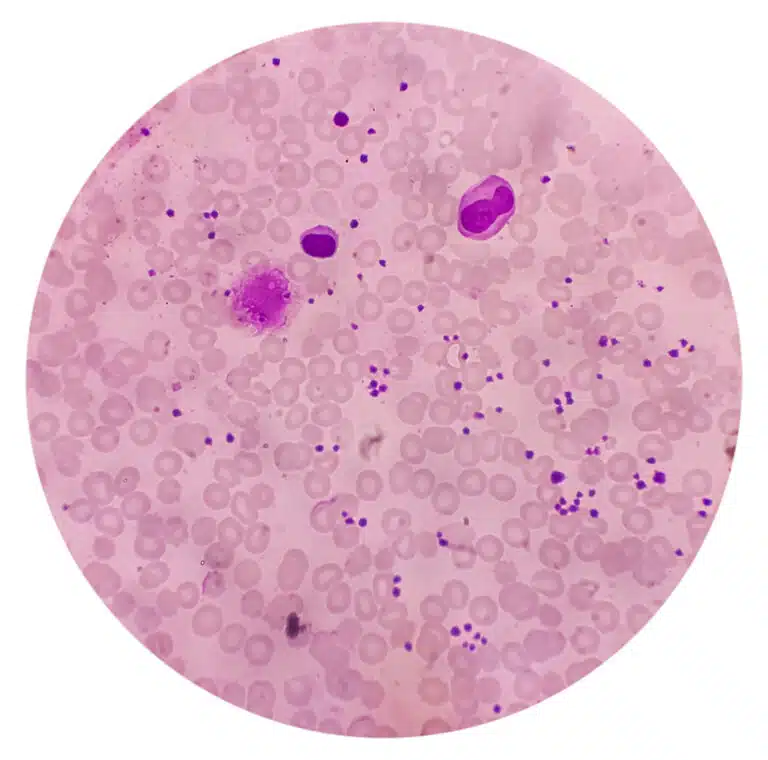
Donor Variability in PBMC Collections: The Hidden Risk That’s Costing Your Study Power
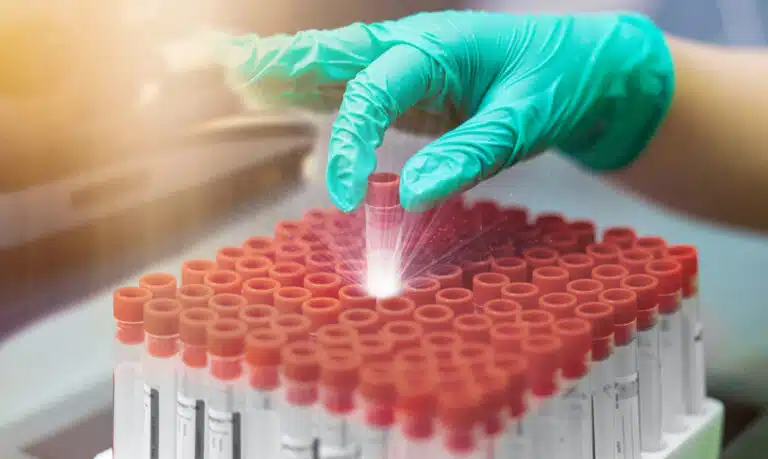
The problem most PBMC studies don’t notice until it’s too late
When a flow cytometry panel comes back noisier than expected, or a functional assay fails to replicate across batches, the first instinct is usually to interrogate the assay.
Reagents, gating strategy, and instrument calibration are all reasonable suspects. But in PBMC-dependent research, the variability that’s actually swamping your signal often started long before the sample reached the bench. It started with the donors themselves: who they are, what condition they have, what they were taking the morning of thedraw, and how their blood was handled in the hours after collection. This is donor variability, and for clinical studies that depend on PBMC quality and consistency, it’s the single most underestimated source of risk. Below, we break down where donor variability comes from, why it disproportionately hurts oncology and rare-disease research, and what you can do at the sourcing stage to shrink it.
What is donor variability in PBMC collections?
Donor variability is the cumulative biological and procedural difference between the cells you receive from one donor versus another, regardless of how well your assay is designed.
It splits cleanly into four categories:
- Intrinsic biological variability. Two patients with the same diagnosis can have wildly different immune profiles depending on age, sex, genetic background, time since diagnosis, and treatment history. A “metastatic colorectal cancer” cohort that’s 80% male and post-chemotherapy will produce different baseline immunophenotypes than one that’s evenly mixed and treatment-naïve.
-

Donor Variability on PBMC Collection
State-dependent variability. The same donor on two different mornings is not the same donor. Acute infection, recent vaccination, sleep, exercise, fasting status, circadian phase, and even acute stress shift PBMC composition and function. A donor who reports “feeling fine” but is two weeks post-COVID will not yield the cytokine profile your protocol expects.

- Diagnostic variability. This is the failure mode most people don’t talk about: the donor’s reported diagnosis may not match their actual diagnosis. Self-reported disease states without medical records verification quietly poisons cohorts. A “treatment-naïve metastatic NSCLC” cohort where 15% of donors are actually on a tyrosine kinase inhibitor they forgot to mention is a different cohort than the one your protocol describes.
- Procedural variability. Even with a perfectly matched donor pool, what happens between the venipuncture and the freezer determines whether you get usable cells. Time-to-processing, anticoagulant choice, ambient temperature during transport, density gradient technique, freezing rate, and DMSO concentration all shift downstream viability, recovery, and functional readouts.
If your study design assumes any of these are constant across donors and across days, your variance is being absorbed by your error bars instead of accounted for in your model.
Why donor variability hits oncology trials the hardest
In oncology and immuno-oncology, especially PBMC studies are usually trying to detect something subtle: a shift in T-cell exhaustion markers, a change in MDSC frequency, a treatment-induced swing in cytokine production. These signals live in the same range as the biological noise between donors.
A few specific failure modes:
- Pharmacodynamic studies comparing pre- and post-treatment cytokine responses are confounded by donors whose treatment history was misclassified.

- Biomarker discovery panels assembled from off-the-shelf inventory rarely have the demographic balance to support multivariate modeling.
- CAR-T and TIL workflows that depend on starting-material quality are sensitive to viability variation that a single bad collection site can introduce across an entire batch.
- Companion diagnostic development programs need the donor’s actual mutation status verified.
The cost of getting this wrong isn’t just a noisy result. It’s months of follow-up experiments, a delayed go/no-go decision, and in some cases a misallocated bet on a candidate whose true effect was masked by donor noise.
Why rare-disease research is even more exposed
Rare-disease cohorts have a particularly cruel version of this problem: there are so few eligible donors in the world that traditional sourcing channels including, commercial blood centers and clinic walk-ins, can’t reach enough of them to assemble a defensible cohort at all. Researchers end up doing one of two things:
- Loosening inclusion criteria to hit a target N, which dilutes the very specificity the study needed.
- Pulling from heterogeneous sources across vendors, geographies, and collection protocols, resulting in procedural variability.
For ultra-rare indications, the only viable path is a sourcing model that can recruit patients individually, verify their condition, and collect on their terms, which usually means going to the donor rather than asking the individual to come to a collection site. Networks built on donor self-recruitment, in-home phlebotomy, and longitudinal consent are the only model that consistently solves this. (Disclosure: this is the model Sanguine is built on. We’re describing it here because it’s the structural answer to the problem, regardless of vendor.)
Five ways to control donor variability before the cells arrive
Donor variability is never zero, but it’s manageable when you treat it as a sourcing-stage problem instead of an analysis-stage problem. Concrete tactics:
1. Verify diagnosis against medical records, not donor self-report.
Self-report alone introduces a contamination rate that’s silent but real. Insist on EHR-verified condition for any donor selected against a clinical criterion.If your vendor can’tdo this, you’re not buying a clinical cohort, you’re buying a self-described one.
2. Specify treatment status, not just diagnosis.
“Stage IV NSCLC” is not a cohort spec. “Stage IV NSCLC, EGFR wild-type, no systemic therapy in the prior 90 days, ECOG 0–1” is. Every layer of specificity removes a source of variability you would otherwise have to model out.
3. Lock collection-to-freeze timing across all sites.
Procedural variability often comes from a single collection site whose handoff timing slips by 2–3 hours. Define a maximum time-to-processing in the SOW, require chain-of-custody timestamps with each sample, and audit them.
4. Match demographics deliberately, not by accident.
If your downstream analysis is sensitive to age, sex, race, or BMI, build that into the cohort spec from day one. Reweighting after the fact only works whenthe variance is small enough to begin with.
5. Use the same donors longitudinally where treatment-effect questions matter.
For pre/post comparisons, paired samples from the same donor remove the largest single source of between-subject variance. Choose a sourcing partner whose donor model can return to the same patients at later timepoints.
What “good” looks like in a PBMC sourcing partner
The vendors who can actually deliver low-variability cohorts share a few characteristics. When you’re comparing PBMC suppliers, look for:
- A patient-recruited donor network, not just walk-in commercial blood centers
- EHR-verified diagnosis confirmation before donors are matched to a study
- In-home and clinic-based collection options to widen the patient pool
- Longitudinal donor access for paired-timepoint protocols
- Integrated donor metadata delivered with each sample, not as an upsell
- Standardized processing protocols with auditable chain-of-custody
A vendor checklist that focuses only on price-per-vial will reliably select the partner most likely to introduce the variability you’re trying to design out.
Bottom line
Donor variability is not a sample-handling problem you can fix in the lab. It’s a sourcing problem that has to be solved before the first vial ships. The teams that take this seriously at the protocol-design stage — by specifying donor criteria precisely, verifying conditions, locking procedural timing, and selecting a sourcing partner whose network model fits the question they’re asking — get cleaner data, faster decisions, and fewer rerun experiments.
If you’re scoping a PBMC study right now and want to talk through how to design the cohort to minimize variability from the start, request a feasibility assessment.
Explore Sanguine’s ready-to-ship PBMC inventory or learn more about designing a custom cohort. For PBMC fundamentals, see What Are PBMCs? A Guide to Human Peripheral Blood Mononuclear Cells.