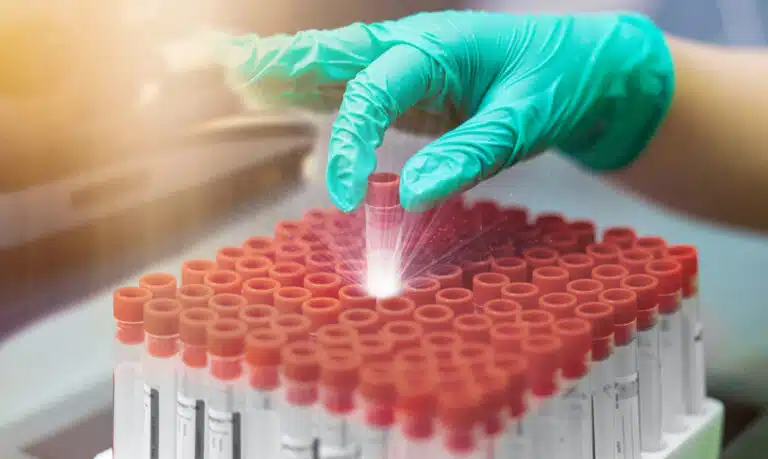
Coagulation Research Biospecimens | Hemostasis Studies

Featured Image Credit: https://commons.wikimedia.org/wiki/Blood_coagulation
Plasma Fractionation and Coagulation Factor Research
Large-volume plasma collections represent essential starting materials for plasma fractionation industries producing life-saving therapeutics. Clotting factor concentrates treat hemophilia patients. Immunoglobulin preparations address immunodeficiency disorders. Albumin solutions support critical care applications across the United States.
The plasma fractionation process separates plasma proteins based on differential solubility. Variations in pH, ionic strength, temperature, and ethanol concentration yield multiple therapeutic fractions from single donor units. Edwin Cohn pioneered this approach during World War II, followed by decades of biochemical engineering refinement.
Researchers investigating novel fractionation methods require access to bulk plasma volumes. Those characterizing plasma proteomes need comprehensive samples. Scientists developing recombinant coagulation factor alternatives utilize patient-derived biospecimens. Viral inactivation procedure validation demands appropriate biological controls.
The natural history of coagulation disorders, particularly hemophilia A and hemophilia B, demonstrates the continued importance of plasma-derived therapeutics. Factor VIII deficiency causes hemophilia A, while factor IX deficiency results in hemophilia B. Untreated disease leads to spontaneous bleeding episodes, progressive joint damage, and life-threatening hemorrhage.
Understanding molecular composition, stability, immunogenicity, and manufacturing consistency requires research using bulk plasma accompanied by comprehensive genomic annotation. Donor health status, blood type, infectious disease screening, and processing parameters influence product quality and are carefully documented.
From study design to receipt of samples collected under standardized conditions, proper biospecimen selection ensures research validity for therapeutic development applications.
Coagulation Cascade Biochemistry
The coagulation cascade comprises a tightly regulated series of enzymatic reactions. Sequential activation converts proenzymes into active serine proteases, culminating in thrombin generation and conversion of fibrinogen to fibrin. This process stabilizes platelet plugs into durable hemostatic clots.
The intrinsic pathway initiates through contact activation, while the extrinsic pathway begins with tissue factor exposure. The common pathway proceeds from factor X activation through thrombin generation. Multiple positive and negative feedback loops ensure effective hemostasis while limiting pathological thrombosis.
Congenital factor deficiencies disrupt this balance. Clinical severity ranges from mild bleeding tendencies to severe hemorrhagic disease. Residual factor activity levels and specific factor involvement determine phenotype.
Plasma from hemophilia A patients demonstrates prolonged activated partial thromboplastin time with normal prothrombin time. This pattern differentiates factor VIII deficiency from disorders affecting other coagulation cascade components.
Von Willebrand disease involves quantitative or qualitative deficiency of von Willebrand factor, a multimeric glycoprotein mediating platelet adhesion and serving as a carrier protein for factor VIII. Loss of this protective function leads to secondary factor VIII deficiency.
Type 1 VWD reflects partial quantitative deficiency, Type 2 includes functional defects, and Type 3 represents complete absence with severe bleeding. Plasma biospecimens from confirmed VWD patients enable research into disease mechanisms and therapeutic development.
Bulk Plasma Applications Across the United States
Bulk plasma collections enable research applications requiring large volumes of starting material.
Plasma Fractionation Research
- Novel separation method development
- Process optimization improving yield and purity
- Viral inactivation and clearance validation
- Nanofiltration efficiency testing
- Chromatographic purification studies
- Regulatory quality control method development
Therapeutic Protein Characterization
- Clotting factor concentrate analysis
- Immunoglobulin preparation characterization
- Albumin purity assessment
- Alpha-1 antitrypsin evaluation
- Antithrombin and protein C testing
- Fibrinogen concentrate verification
Coagulation Research Applications
- Thrombin generation assays
- Clot formation and lysis kinetics
- Platelet function testing
- Fibrin polymerization studies
- Complement activation assays
- Protease inhibitor evaluations
Manufacturing Process Development
- Pilot-scale fractionation batches
- Contaminating protein removal strategies
- Stabilization formulation optimization
- Lyophilization protocol development
- Reconstitution kinetics assessment
- Long-term storage stability studies
Sanguine Bio’s Coagulation Research Biospecimen Expertise
Sanguine Bio provides specialized coagulation and hemostasis biospecimens through a direct-to-donor model and expanded donor network across the United States. This approach enables access to hemophilia patients, von Willebrand disease patients, and individuals with rare coagulation factor deficiencies.
Custom collection services accommodate unique research requirements, including bulk plasma volumes for fractionation research and longitudinal sampling from treatment-naïve patients to document natural disease history.
Access to hard-to-find populations distinguishes our capabilities, including severe hemophilia A, hemophilia B, and rare factor deficiencies (V, VII, X, XI, XIII). Comprehensive genomic annotation accompanies all biospecimens.
Check Our Inventory for available coagulation biospecimens or discuss custom collection projects addressing specific research needs from study design to receipt of samples.
Ethical Sourcing and Quality Assurance
All biospecimens are ethically sourced under IRB-approved protocols. Donors provide fully informed consent. HIPAA compliance protects patient privacy across the United States.
Quality management systems govern collection, processing, storage, and shipment. Third-party infectious disease testing, bacterial screening, and chain-of-custody documentation ensure biospecimen integrity and researcher safety.
References
- Srivastava A, et al. Haemophilia. 2020;26(Suppl 6):1–158.
- Castaman G, Linari S. J Clin Med. 2017;6(4):45.
- Marquez-Casas E, et al. Transfus Apher Sci. 2019;58(1):4–10.
- Franchini M, Mannucci PM. Orphanet J Rare Dis. 2012;7:24.
- Berntorp E, Shapiro AD. Lancet. 2012;379:1447–1456.
- Peyvandi F, et al. Blood Transfus. 2011;9(Suppl 2):s3–s8.
- Burnouf T, Radosevich M. Haemophilia. 2003;9(1):24–37.
- Gouw SC, et al. Blood. 2012;119(12):2922–2939.