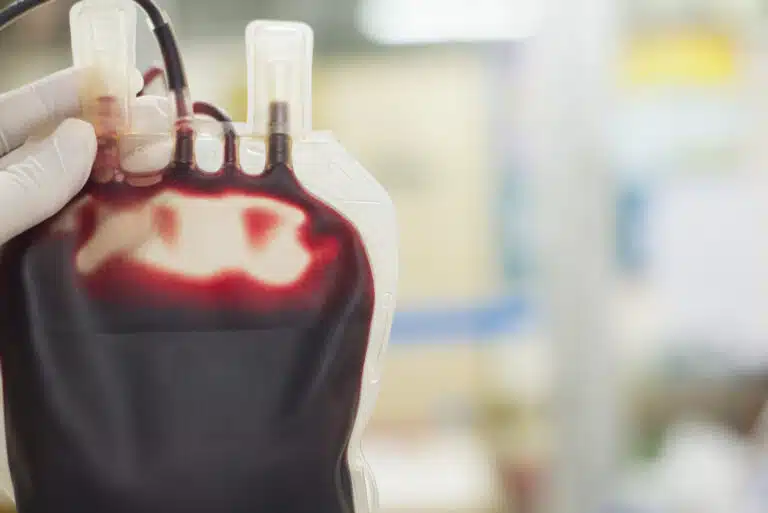
Cytomegalovirus Leukopaks: Why CMV Serostatus Matters for Your Research

Cytomegalovirus Leukopaks: Why CMV Serostatus Matters for Your Research
When researchers order leukopaks for immunology or cell therapy studies, cytomegalovirus (CMV) serostatus is one of the most consequential donor characteristics they can specify — yet it is frequently treated as an afterthought in procurement, or overlooked entirely until unexpected results prompt a retrospective review of the source material. Cytomegalovirus is a herpesvirus that infects approximately 50–80% of adults in the United States, establishes lifelong latency, and leaves a permanent, deeply imprinted mark on the human immune system. A leukopak from a CMV-seropositive donor contains a fundamentally different immune cell composition than one from a CMV-seronegative donor — different in ways that directly affect the biology of NK cells, T cells, and memory lymphocyte populations, and that have real consequences for experimental outcomes across adoptive cell therapy development, cancer immunotherapy research, and viral immunology studies. This guide explains what cytomegalovirus does to the immune system, why it matters when selecting a leukopak, and how to decide whether you need a CMV-positive or CMV-negative donor for your specific application.
What Is Cytomegalovirus and How Does It Affect the Immune System?
Cytomegalovirus (CMV) is a member of the Herpesviridae family — a double-stranded DNA virus that, like all herpesviruses, establishes lifelong latency in the host following primary infection. In healthy immunocompetent adults, primary CMV infection is typically asymptomatic or causes a mild mononucleosis-like illness. The virus then establishes latency primarily in monocytes, myeloid progenitors, and endothelial cells, undergoing periodic reactivation that is kept in check by a robust and durable CMV-specific immune response.
That immune response is what makes cytomegalovirus so biologically interesting — and so experimentally significant. CMV drives one of the largest antigen-specific T cell and NK cell expansions of any human pathogen. In CMV-seropositive individuals, up to 10–30% of the entire circulating CD8+ T cell pool and significant fractions of the NK cell compartment can be CMV-specific or CMV-imprinted, representing a massive, permanent remodeling of the immune landscape that is detectable in leukopaks and other primary cell products derived from CMV-positive donors.
How CMV Serostatus Changes the Immune Composition of a Leukopak
The differences between a leukopak from a CMV-seropositive donor and one from a CMV-seronegative donor are not subtle — they are measurable at the population level and functionally significant across multiple cell types.
NK Cell Differentiation: The CMV-Adapted NK Cell
CMV infection drives a profound and irreversible remodeling of the NK cell compartment. In CMV-seropositive donors, a population of highly differentiated NK cells — characterized by surface expression of NKG2C, CD57, CD56dim, and absence of NKG2A — accumulates and can represent 10–50% of total NK cells in some individuals. These “adaptive” or “memory-like” NK cells arise in response to CMV and persist long-term, carrying epigenetic modifications that distinguish them from conventional NK cells.
CMV-adapted NK cells from a cytomegalovirus leukopak (a leukopak from a CMV-seropositive donor) have several functionally distinct properties compared to NK cells from CMV-seronegative leukopaks:
- Enhanced antibody-dependent cellular cytotoxicity (ADCC) via higher CD16 (FcγRIIIa) expression and signaling capacity
- Reduced cytokine production (lower IFN-γ and TNF-α output per cell) compared to conventional NK cells
- Superior persistence and resistance to activation-induced cell death under repeated stimulation
- Distinct responses to cytokine stimulation — reduced responsiveness to IL-12/IL-18-driven cytokine production but maintained cytotoxic function
- Altered expression of activating and inhibitory receptors, including upregulation of LILRB1 and downregulation of NKp30 and NKp46
For NK cell biology researchers and CAR-NK development programs, these differences are not peripheral — they directly affect expansion kinetics, cytotoxic potency profiles, cytokine secretion readouts, and persistence in co-culture and in vivo models. Using a CMV-seropositive leukopak when a CMV-negative product is appropriate (or vice versa) is a systematic source of experimental variability that can confound results across an entire study.
CD8+ T Cell Memory: Inflation and Repertoire Narrowing
Cytomegalovirus drives a phenomenon called T cell memory inflation — a progressive, lifelong accumulation of CMV-specific CD8+ cytotoxic T cells that is unique among human pathogens. Unlike the typical immune response where memory T cell pools contract to a small, stable fraction after antigen clearance, CMV-specific CD8+ T cells expand continuously throughout the host’s life in response to periodic CMV reactivation events.
In older CMV-seropositive adults, CMV-specific CD8+ T cells can constitute 10–40% of the total CD8+ T cell pool — a massive clonal expansion that occupies T cell niche space at the expense of naïve T cells and cells with other antigen specificities. This memory inflation has consequences for the overall T cell repertoire that are directly detectable in a cytomegalovirus leukopak:
- Reduced naïve CD8+ T cell frequency compared to CMV-seronegative leukopaks
- Higher proportion of terminally differentiated effector memory cells (TEMRA phenotype: CD45RA+CCR7−) that are antigen-experienced and less amenable to further differentiation
- Narrowed TCR repertoire diversity in the CD8+ compartment
- Altered baseline expression of exhaustion markers — CMV-specific T cells express high PD-1 without being functionally exhausted, which can confound flow cytometric exhaustion readouts in studies that do not account for CMV serostatus
CD4+ T Cell Composition
The CD4+ T cell compartment is also significantly shaped by CMV serostatus, though less dramatically than the CD8+ compartment. CMV-seropositive donors show higher frequencies of CMV-specific CD4+ T cells with a Th1 effector phenotype, and a relative reduction in naïve CD4+ T cells — particularly evident in older donors, where the cumulative effect of decades of CMV reactivation on the immune system is most pronounced.
SanguineBio reports CMV serostatus for all human leukopak donors and can source collections from CMV-positive or CMV-negative donors to match your specific experimental requirements.
CMV+ vs. CMV− Leukopaks: Which Do You Need?
The right cytomegalovirus leukopak serostatus for your research depends entirely on your experimental question. Here is a practical breakdown by application:
| Research Application | CMV− Leukopak | CMV+ Leukopak |
|---|---|---|
| Naïve T cell biology, primary immune response studies | ✅ Preferred — higher naïve T cell frequency | ⚠️ Reduced naïve compartment |
| CAR-T manufacturing with naïve/SCM input cells | ✅ Preferred — less TEMRA, more stem-like progenitors | ⚠️ Higher TEMRA fraction may reduce product quality |
| NK cell expansion for off-the-shelf therapy | ✅ Conventional NK cells, higher cytokine production | ✅ Adaptive NK cells — superior ADCC, persistence |
| Studying CMV-specific T cell or NK cell responses | ❌ No CMV-specific cells present | ✅ Required — CMV-specific populations present |
| Checkpoint inhibitor assays using PD-1 as exhaustion marker | ✅ Preferred — lower baseline PD-1 unrelated to exhaustion | ⚠️ CMV-specific T cells elevate PD-1 without exhaustion |
| CMV reactivation and transplant immunology research | ✅ CMV-naïve cells for controlled reinfection models | ✅ CMV-experienced cells for reactivation and memory studies |
| T cell repertoire diversity studies | ✅ Preferred — broader TCR repertoire | ⚠️ Narrowed repertoire due to CMV-driven inflation |
CMV Leukopaks in Specific Research Contexts
Adaptive NK Cell Research and CAR-NK Development
The CMV-driven expansion of NKG2C+CD57+ adaptive NK cells has attracted intense interest in the cell therapy field. These cells are being evaluated as starting material for CAR-NK programs on the basis of their superior persistence and ADCC capacity, and several academic and industry programs specifically source cytomegalovirus leukopaks — from CMV-seropositive donors with high NKG2C+ NK cell fractions — as the preferred input for adaptive NK cell expansion protocols.
If your CAR-NK program relies on the distinctive biology of adaptive NK cells, specifying a CMV-seropositive leukopak with confirmed high NKG2C+ NK frequency is essential. A CMV-seronegative leukopak will not contain meaningful numbers of these cells, and protocol results from CMV-positive material will not transfer to CMV-negative starting material without significant re-optimization.
T Cell Exhaustion and Checkpoint Inhibitor Research
PD-1 is the canonical marker of T cell exhaustion in cancer immunology — but in leukopaks from CMV-seropositive donors, PD-1 is also highly expressed on functional, non-exhausted CMV-specific CD8+ T cells. This creates a significant confound in assays that use PD-1 expression as a proxy for exhaustion without accounting for CMV serostatus.
A study that observes high baseline PD-1 expression in CD8+ T cells from a CMV-positive donor, then measures responsiveness to anti-PD-1 treatment, risks misinterpreting the contribution of CMV-specific (PD-1-high but functional) cells to the overall population response. For checkpoint inhibitor screening and exhaustion modeling assays where PD-1 expression is a primary readout, using CMV-seronegative leukopaks — or explicitly stratifying by CMV serostatus — is necessary for clean data interpretation.
Hematopoietic Stem Cell Transplant Research
In the context of allogeneic HSCT research, CMV serostatus of both donor and recipient is a major clinical variable. CMV reactivation following transplant is one of the leading causes of transplant-related morbidity in immunosuppressed recipients, and CMV-seropositive donors confer a degree of protective T cell and NK cell immunity to CMV-seronegative recipients. Research programs studying CMV-specific immune reconstitution post-transplant, or developing adoptive T cell therapies targeting CMV to prevent reactivation, specifically require cytomegalovirus leukopaks from CMV-seropositive donors as the source of CMV-experienced immune cells.
Aging and Immunosenescence Research
CMV serostatus is a confounding variable in almost all aging and immunosenescence research, because the immune remodeling driven by lifelong CMV carriage mimics and accelerates many of the phenotypic hallmarks of immune aging: increased TEMRA cells, decreased naïve T cell frequency, narrowed TCR repertoire, and increased NK cell differentiation. Studies comparing immune parameters between older and younger donors — or between healthy aging and disease states — must control for CMV serostatus, typically by stratifying donor groups into CMV+ and CMV− cohorts and analyzing separately. Leukopaks with confirmed serostatus are a prerequisite for this type of controlled analysis.
Frequently Asked Questions About CMV and Leukopaks
What is a cytomegalovirus leukopak?
A cytomegalovirus leukopak is a leukopak from a donor whose CMV serostatus has been confirmed — either CMV-seropositive (CMV+, indicating prior infection and latent viral carriage) or CMV-seronegative (CMV−, indicating no prior exposure). The term is most commonly used to refer specifically to a leukopak from a CMV-positive donor, sourced because the CMV-imprinted immune composition — particularly adaptive NK cells and memory-inflated CMV-specific CD8+ T cells — is the research target.
How common is CMV seropositivity in leukopak donors?
CMV seroprevalence in the US adult population is approximately 50–60% overall, rising to over 80% in individuals over 60 and in populations with higher rates of early childhood exposure. In a typical leukopak donor pool, roughly half of donors will be CMV-seropositive, though this varies by donor demographics.
Does CMV serostatus affect leukopak total cell yield?
CMV serostatus does not meaningfully affect total nucleated cell yield from a leukopak collection. The major effect is on cell subset composition and phenotype — particularly NK cell differentiation state, CD8+ T cell memory fraction, and TCR repertoire — rather than total cell numbers.
Can I get a leukopak with a specific CMV serostatus?
Yes. SanguineBio reports CMV serostatus for all leukopak donors and can source collections from CMV-positive or CMV-negative donors on request. Turnaround for custom CMV-defined specifications depends on donor availability in the collection network.
Should I always specify CMV serostatus when ordering a leukopak?
For any research application involving NK cell biology, T cell memory phenotyping, exhaustion marker analysis, or aging-related immunology, yes — specifying CMV serostatus is strongly recommended. For applications where these populations are not the primary readout, CMV serostatus is still worth recording as a donor metadata variable to enable retrospective stratification if unexpected results arise.
Summary: Key Facts About Cytomegalovirus Leukopaks
- Cytomegalovirus infects approximately 50–80% of adults and permanently remodels the NK cell and T cell compartments — making CMV serostatus one of the most important donor variables in leukopak selection.
- CMV-seropositive leukopaks contain adaptive (NKG2C+CD57+) NK cells with superior ADCC and persistence — important for CAR-NK development programs targeting these cells specifically.
- CMV+ donors show memory inflation of CMV-specific CD8+ T cells, reduced naïve T cell frequency, higher TEMRA fractions, and narrowed TCR repertoire diversity versus CMV− donors.
- PD-1 expression is elevated in CMV-specific T cells from CMV+ leukopaks independently of exhaustion — a confound to account for in checkpoint inhibitor assays.
- CMV-seronegative leukopaks are preferred for naïve T cell studies, primary immune response modeling, CAR-T manufacturing from naïve input cells, and clean exhaustion marker assays.
- CMV-seropositive leukopaks are required for CMV-specific immune response research, adaptive NK cell studies, and transplant immunology programs.
- Always record and report CMV serostatus of leukopak donors as standard metadata — even when it is not the primary experimental variable.
Explore Sanguine’s human leukopak product page to check CMV serostatus availability and current inventory — SanguineBio includes confirmed CMV serostatus for every donor, with custom CMV+ or CMV− collections available in fresh and cryopreserved formats.