Early Detection and Preclinical Neurodegeneration: Blood-Based Screening
Detecting Neurodegeneration Before Symptoms Emerge
The therapeutic landscape in Alzheimer’s disease and related dementias faces a fundamental challenge. By the time clinical symptoms manifest across the United States, substantial irreversible neuronal loss has occurred. This timing potentially limits disease-modifying treatment effectiveness during stages when interventions might prove most beneficial.
Autopsy and biomarker studies reveal Alzheimer’s pathology accumulates over 15-20 years before dementia onset. Amyloid-beta deposition initiates cascades involving tau phosphorylation, neuroinflammation, synaptic dysfunction, and progressive neuron death. These processes collectively produce cognitive decline characterizing clinical dementia.
This prolonged preclinical phase represents a critical therapeutic window. Treatments administered when pathology remains limited might prevent or delay clinical manifestation. This motivates intensive research into early detection strategies identifying at-risk individuals during asymptomatic stages.
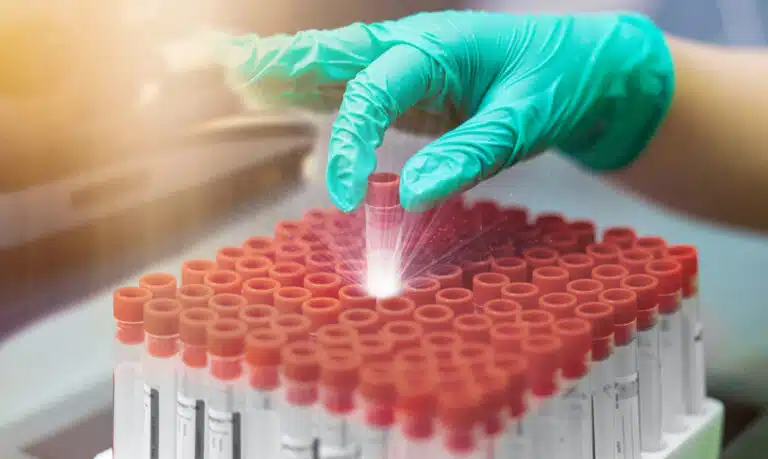
Blood-based biomarkers measured in plasma, serum, and peripheral blood cells offer scalable screening approaches. Minimally invasive sampling enables large populations access to testing.
Preclinical Alzheimer’s Stages and Blood Biomarkers
The natural history of preclinical Alzheimer’s progresses through defined stages. Stage 1 features isolated amyloid positivity. Stage 2 adds tau biomarker elevations. Stage 3 includes subtle cognitive changes not meeting MCI criteria. Each stage shows characteristic blood biomarker profiles.
P-tau181 in plasma shows good but slightly lower accuracy than p-tau217. Combining multiple markers improves performance. NfL measured in serum indicates neurodegeneration intensity but lacks disease specificity. The Aβ42/Aβ40 ratio provides additional information about amyloid accumulation.
Longitudinal plasma collections from cognitively normal individuals demonstrate biomarker trajectories preceding clinical onset. P-tau elevates gradually over 5-10 years before diagnosis. Rates of change predict progression timing more accurately than single timepoint measurements. Serial sampling enables trajectory modeling improving risk stratification.
Blood Collection Protocols for Early Detection Studies
Early detection research requires optimized blood collection protocols minimizing pre-analytical variability. Fasting status affects metabolite and lipid measurements. Morning collection controls circadian biomarker fluctuations. EDTA plasma preserves Aβ peptides optimally compared to other anticoagulants.
Processing timing critically impacts biomarker stability. Plasma separation within 2 hours prevents ex vivo protein degradation and cellular metabolite release. Centrifugation at 2000g for 10 minutes provides optimal separation. Immediate aliquoting into 0.5-1.0 mL volumes prevents repeated freeze-thaw cycles damaging proteins. Storage at -80°C maintains long-term stability exceeding 10 years for most biomarkers.
Whole blood enables genomic DNA extraction for APOE genotyping and polygenic risk scoring. PBMCs isolated from whole blood support gene expression profiling and cellular immunophenotyping complementing plasma protein measurements in multi-modal investigations.
Analytical Platform Selection and Validation
Multiple analytical platforms measure blood-based neurodegenerative biomarkers with varying performance characteristics. Electrochemiluminescence immunoassays demonstrate clinical validation and FDA approval pathways. Single molecule array technology achieves ultra-sensitive detection enabling earlier identification. Mass spectrometry provides multiplexing and structural characterization.
Platform selection depends on research objectives and regulatory requirements. Clinical translation favors validated automated platforms with established quality control programs. Discovery studies benefit from multiplexed approaches surveying multiple candidate biomarkers simultaneously. Successful validation requires demonstrating analytical precision, accuracy, linearity, and clinical performance across intended use populations.
Blood biomarkers enable preclinical screening at population scales. Plasma collection through simple venipuncture requires minimal training. Automated immunoassay platforms process hundreds of samples daily. Cost-effectiveness supports widespread implementation when disease-modifying therapies emerge.
Key Longitudinal Design Considerations
Researchers implementing preclinical studies should plan:
Collection Strategy Elements:
- Annual or biannual sampling intervals
- Consistent protocols across all timepoints
- Same laboratory processing reducing batch effects
- Adequate aliquots for current and future analyses
- Documentation enabling retrospective studies
- Backup samples protecting against loss
Clinical Data Integration:
- Cognitive assessment batteries at each visit
- Neuroimaging results when scans performed
- Medication tracking throughout follow-up
- Incident dementia adjudication using criteria
- Comorbidity monitoring excluding confounds
- Lifestyle factors affecting risk trajectories
Sanguine Bio: Your Early Detection Research Partner
Sanguine Bio provides premium-quality neuroscience biospecimens supporting early detection research across the United States. Our direct-to-donor model and expanded donor network enable access to cognitively normal at-risk populations including APOE ε4 carriers and individuals with dementia family history.
Custom collection services address preclinical study requirements. We implement your specified protocols. Collections occur at investigator-defined intervals. Processing follows validated timing. Comprehensive genomic annotation captures cognitive status, risk factors, and progression data.
Access to hard-to-find populations distinguishes our offerings. Preclinical cohorts, longitudinally-followed aging populations, and incident dementia cases become accessible. From study design through receipt of samples, we support your screening research.
Ethical Standards in Preclinical Research
Sanguine Bio operates under rigorous ethical frameworks. Informed consent explains research purposes and biomarker limitations. IRB oversight ensures compliance. De-identification protects confidentiality. Transparent compensation follows ethical guidelines.
Advancing Early Detection
Early detection biomarkers promise transformative impact. Identifying at-risk individuals enables prevention trial enrollment. Screening asymptomatic populations could shift diagnosis paradigms. Blood-based approaches overcome traditional limitations through minimally invasive, accessible testing.
Check Out Neurodegenerative Disease Inventory
References
- Jack CR Jr, et al. NIA-AA Research Framework: Toward a biological definition of Alzheimer’s disease. Alzheimers Dement. 2018;14(4):535-562. NIA-AA Research Framework: Toward a biological definition of Alzheimer’s disease
- Palmqvist S, et al. Prediction of future Alzheimer’s disease dementia using plasma phospho-tau combined with other accessible measures. Nat Med. 2021;27(6):1034-1042. Prediction of future Alzheimer’s disease dementia using plasma phospho-tau combined with other accessible measures
- Mattsson-Carlgren N, et al. Prediction of longitudinal cognitive decline in preclinical Alzheimer disease using plasma biomarkers. JAMA Neurol. 2023;80(4):360-369. Prediction of longitudinal cognitive decline in preclinical Alzheimer disease using plasma biomarkers
- Janelidze S, et al. Detecting amyloid positivity in early Alzheimer’s disease using combinations of plasma Aβ42/Aβ40 and p-tau. Alzheimers Dement. 2022;18(2):283-293. Detecting amyloid positivity in early Alzheimer’s disease using combinations of plasma Aβ42/Aβ40 and p-tau
- Ashton NJ, et al. Plasma p-tau231: a new biomarker for incipient Alzheimer’s disease pathology. Acta Neuropathol. 2021;141(5):709-724. Plasma p-tau231: a new biomarker for incipient Alzheimer’s disease pathology
- Thijssen EH, et al. Plasma phosphorylated tau 217 and phosphorylated tau 181 as biomarkers in Alzheimer’s disease and frontotemporal lobar degeneration. JAMA Neurol. 2021;78(9):1146-1154. Plasma phosphorylated tau 217 and phosphorylated tau 181 as biomarkers in Alzheimer’s disease and frontotemporal lobar degeneration
- Karikari TK, et al. Blood phospho-tau in Alzheimer disease: analysis, interpretation, and clinical utility. Nat Rev Neurol. 2022;18(7):400-418. Blood phospho-tau in Alzheimer disease: analysis, interpretation, and clinical utility
- Chatterjee P, et al. Plasma Aβ42/40 ratio, p-tau181, GFAP, and NfL across the Alzheimer’s disease continuum. Neurology. 2023;100(12):e1234-e1244. Plasma Aβ42/40 ratio, p-tau181, GFAP, and NfL across the Alzheimer’s disease continuum
- Brickman AM, et al. Plasma p-tau181, p-tau217, and other blood-based Alzheimer’s disease biomarkers in a multi-ethnic, community study. Alzheimers Dement. 2021;17(8):1353-1364. Plasma p-tau181, p-tau217, and other blood-based Alzheimer’s disease biomarkers in a multi-ethnic, community study
- Nakamura A, et al. High performance plasma amyloid-β biomarkers for Alzheimer’s disease. Nature. 2018;554(7691):249-254. High performance plasma amyloid-β biomarkers for Alzheimer’s disease
- Schindler SE, et al. High-precision plasma β-amyloid 42/40 predicts current and future brain amyloidosis. Neurology. 2019;93(17):e1647-e1659. High-precision plasma β-amyloid 42/40 predicts current and future brain amyloidosis
- Ovod V, et al. Amyloid β concentrations and stable isotope labeling kinetics of human plasma specific to central nervous system amyloidosis. Alzheimers Dement. 2017;13(8):841-849. Amyloid β concentrations and stable isotope labeling kinetics of human plasma specific to central nervous system amyloidosis
- Hansson O, et al. The Alzheimer’s Association appropriate use recommendations for blood biomarkers in Alzheimer’s disease. Alzheimers Dement. 2022;18(12):2669-2686. The Alzheimer’s Association appropriate use recommendations for blood biomarkers in Alzheimer’s disease
- Simrén J, et al. The diagnostic and prognostic capabilities of plasma biomarkers in Alzheimer’s disease. Alzheimers Dement. 2021;17(7):1145-1156. The diagnostic and prognostic capabilities of plasma biomarkers in Alzheimer’s disease
- Teunissen CE, et al. Blood-based biomarkers for Alzheimer’s disease: towards clinical implementation. Lancet Neurol. 2022;21(1):66-77. Blood-based biomarkers for Alzheimer’s disease: towards clinical implementation
- Preische O, et al. Serum neurofilament dynamics predicts neurodegeneration and clinical progression in presymptomatic Alzheimer’s disease. Nat Med. 2019;25(2):277-283. Serum neurofilament dynamics predicts neurodegeneration and clinical progression in presymptomatic Alzheimer’s disease
- Hansson O, et al. The Alzheimer’s Association appropriate use recommendations for blood biomarkers in Alzheimer’s disease. Alzheimers Dement. 2022;18(12):2669-2686. The Alzheimer’s Association appropriate use recommendations for blood biomarkers in Alzheimer’s disease
- Simrén J, et al. The diagnostic and prognostic capabilities of plasma biomarkers in Alzheimer’s disease. Alzheimers Dement. 2021;17(7):1145-1156. The diagnostic and prognostic capabilities of plasma biomarkers in Alzheimer’s disease