Fresh Leukopak: Collection, Quality, and Research Applications Explained
Fresh Leukopak: Collection, Quality, and Research Applications Explained
A fresh leukopak is one of the most powerful primary human cell products available to immunology and cell therapy researchers. It is also one of the most time-sensitive.
Unlike cryopreserved leukopaks, which can be banked and thawed on demand, a fresh leukopak must be processed and used within a defined window after collection. That makes the quality of the leukopak collection process — from the moment the apheresis needle is placed to the moment cells arrive in your lab — a direct determinant of whether your experiment succeeds.
This guide answers the key questions about fresh leukopaks: how they are collected, what affects their quality, when to choose fresh over cryopreserved, and what specifications to demand from a supplier.
What Is a Fresh Leukopak?
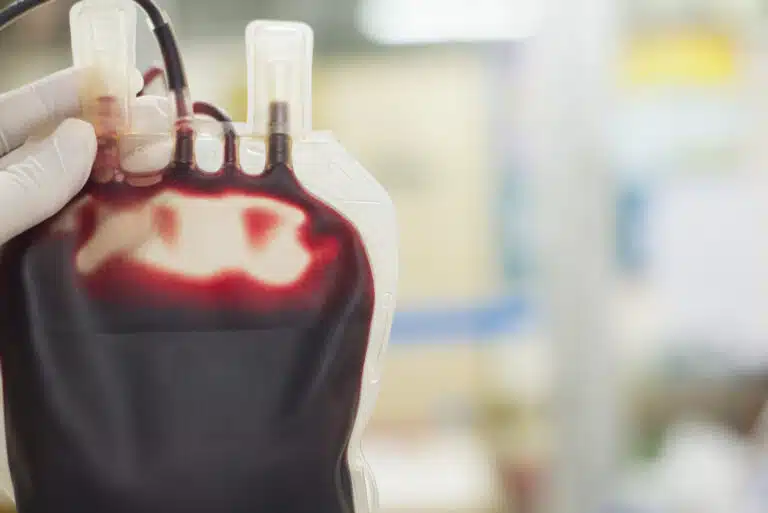
A fresh leukopak is a leukocyte-enriched preparation collected by leukapheresis and shipped to the researcher without a cryopreservation step. It is processed, quality-tested, and delivered within 24–48 hours of collection, which preserves the full functional integrity of the immune cells inside.
Fresh leukopaks contain the same immune cell populations as their cryopreserved counterparts — T cells, NK cells, B cells, monocytes, and dendritic cells. But they arrive in a native, non-frozen state that maintains optimal T cell activation capacity, NK cell cytotoxicity, monocyte cytokine responsiveness, and dendritic cell stimulatory function. When cell functional state at time of use is a critical variable, a fresh leukopak is the preferred format.
Key fact: A fresh leukopak from a healthy adult typically contains 5–30 billion total mononuclear cells — 50 to 150 times more than a standard blood draw — all collected in a single leukapheresis session from one characterized donor.
How Does Leukopak Collection Work?
Leukopak collection is performed by leukapheresis, an automated apheresis procedure. Blood is drawn from a donor through a peripheral IV line and passed through a centrifuge-based cell separator that isolates the leukocyte-rich buffy coat layer. Red blood cells and plasma return to the donor continuously throughout the procedure. A single session usually lasts two to three hours and processes several liters of blood to concentrate the leukocyte fraction into a manageable volume.
The key steps in a research-grade leukopak collection are:
- Donor screening and qualification. Before collection, the donor undergoes infectious disease testing (HIV, HBV, HCV, HTLV, CMV serostatus, and others) and a health assessment. Only donors who meet defined criteria proceed — confirmed absence of relevant infections, adequate peripheral white blood cell counts, and general health. This is what separates a research-grade leukopak from an uncharacterized apheresis product.
- Apheresis collection. The donor is connected to the apheresis instrument and the automated run begins. Collection parameters — target volume and the settings that balance leukocyte yield against red cell/platelet contamination — are optimized for research-grade cell quality.
- Processing and quality testing. Right after collection, the leukopak is processed, typically with a density gradient step to remove red blood cells and granulocytes and enrich the mononuclear cell fraction. It is then tested for total nucleated cell count, viability, and, where specified, subset composition. This step must happen quickly to minimize cell stress and activation artifact.
- Shipping under temperature-controlled conditions. Fresh leukopaks ship at controlled temperature (typically 2–8°C for processed MNC preparations, or ambient with appropriate buffering for some products), with defined maximum transit times to protect cell integrity.
Ideally, the window from needle placement to cells-in-use is 24–36 hours for a fresh leukopak. Every extra hour of transit or processing delay is a potential source of cell degradation.
What Factors Affect Fresh Leukopak Quality?
The quality of a fresh leukopak — its cell viability, functional integrity, and phenotypic stability — is set by variables at every stage of the collection and logistics chain. Understanding them is essential for evaluating suppliers and for interpreting any variability traced back to the starting material.
Donor Biology
The donor’s peripheral white blood cell count and immune subset composition at collection directly set total yield and the proportions of T cells, NK cells, and monocytes in the final product. Donors with higher baseline lymphocyte counts yield leukopaks with more total cells and higher T cell fractions. Donor age, sex, CMV serostatus, and recent immune activation all influence composition. That is why donor metadata is a quality attribute, not optional background.
Time from Collection to Processing
This is one of the most consequential and least-controlled variables in leukopak quality. Blood held at room temperature for extended periods after collection changes progressively: monocytes begin activating, granulocytes degranulate and release inflammatory mediators into the suspension, and T cells show signs of activation-induced cell death.
For fresh leukopaks, processing should begin within 4–6 hours of collection. Suppliers who collect and ship whole blood for processing at the destination — rather than processing at or near the collection site — add substantial exposure to these degradation processes.
Processing Method
Density gradient centrifugation (using Ficoll or equivalent media) is the standard method for isolating the mononuclear cell fraction from a leukopak collection. The centrifugation parameters, temperature control, and the wash and resuspension steps all affect viability and activation state. Excessive force, non-optimal temperatures, or prolonged exposure to separation media add mechanical and chemical stress that lowers post-processing viability and can induce low-level activation of monocytes and T cells.
Shipping Conditions and Transit Time
Fresh leukopaks are living cell products that keep changing during transit. Temperature excursions, too warm or too cold, cause viability losses and functional impairment that cannot be reversed on receipt. A maximum transit time of 24 hours from processing to delivery is a reasonable standard; longer transit raises the risk of meaningful degradation. Suppliers with geographically distributed processing, or access to expedited shipping, are better positioned to deliver consistent fresh leukopak quality.
Explore Sanguine’s Human Leukopak Product product page for current specifications and availability.
When Should You Choose a Fresh Leukopak Over Cryopreserved?
The choice between a fresh leukopak and a cryopreserved one is not simply about convenience. It has direct implications for data quality in specific applications. Here is a practical framework.
| Application | Fresh Leukopak | Cryopreserved Leukopak |
|---|---|---|
| CAR-T transduction & manufacturing development | ✅ Preferred — optimal T cell phenotype at transduction | ⚠️ Acceptable if freeze-thaw validated |
| NK cell expansion for CAR-NK development | ✅ Preferred — maximal NK viability and expansion potential | ⚠️ Acceptable with high-quality cryopreservation |
| Monocyte cytokine / innate immune assays | ✅ Preferred — monocyte function sensitive to freeze-thaw | ⚠️ Variable — monocyte recovery post-thaw can be low |
| High-throughput T cell drug screening | ✅ Preferred for maximal assay sensitivity | ✅ Acceptable — scheduling flexibility often outweighs cost |
| Longitudinal / multi-timepoint studies | ❌ Not practical — cells cannot be held between timepoints | ✅ Required — banked units thawed at each timepoint |
| Sample banking / retrospective studies | ❌ Not applicable | ✅ Required |
Rule of thumb: Choose a fresh leukopak when the functional state of the cells at the moment they enter your assay is a primary quality attribute. Choose cryopreserved leukopaks when scheduling flexibility, sample banking, or longitudinal consistency are the main operational needs.
Research Applications That Specifically Benefit from Fresh Leukopaks
Several applications show meaningfully better results with fresh leukopaks than with cryopreserved alternatives. This is not because cryopreserved cells are inherently inferior, but because the specific cellular functions involved are especially sensitive to the freeze-thaw cycle.
- CAR-T manufacturing process development. The differentiation state of CD8+ T cells and CD4+ T cells at activation and transduction is a critical determinant of product quality. Cells that enter the protocol with minimal prior stress — the state best approximated by a well-collected, rapidly processed fresh leukopak — generate CAR-T products with superior stemness, lower pre-existing exhaustion markers, and better in vivo persistence potential.
- Dendritic cell generation and function. Monocyte-to-DC differentiation is especially sensitive to the activation state of the starting monocytes. Pre-activated monocytes — a common artifact of delayed processing or freeze-thaw — form DCs with altered cytokine profiles and reduced allostimulatory capacity. Fresh leukopak monocytes, processed quickly, provide the quiescent starting state that yields the most reproducible, functionally reliable moDCs.
- NK cell cytotoxicity and expansion assays. NK cytotoxic function is measurably reduced after cryopreservation in most studies, and post-thaw NK cells need a recovery culture before returning to baseline killing. For assays where NK function at setup is the readout — not after a recovery period — a fresh leukopak is the right source. For expansion protocols where cells are cultured for several days before functional testing, cryopreserved leukopaks are generally adequate.
What to Demand from a Fresh Leukopak Supplier
Not all suppliers of fresh leukopaks deliver equal quality. These are the minimum specs a research-grade leukopak collection and delivery should meet:
- Defined minimum total nucleated cell count — guaranteed per collection, not a range with no lower bound.
- Viability ≥85% at release from the processing facility, by validated method (7-AAD or DAPI flow cytometry is more sensitive than trypan blue for stressed cells).
- Processing within 6 hours of collection — a documented SOP, not an aspiration.
- Delivery within 24 hours of processing — with temperature monitoring data for the shipping leg.
- Full infectious disease screening — HIV-1/2, HBsAg, anti-HCV, HTLV-I/II, syphilis, and CMV serostatus, all by a CLIA-certified lab.
- Donor metadata — age range, sex, health status, and deidentified donor ID for lot tracking.
- Same-week availability — for time-sensitive programs, the supplier must have enough donor network depth to fulfill orders within one to three business days.
Frequently Asked Questions About Fresh Leukopaks
How long is a fresh leukopak viable after collection?
A well-processed fresh leukopak is typically viable and functionally intact for 24–48 hours after collection, as long as it is kept at the correct temperature during transit. Most researchers use fresh leukopaks within 24 hours of receipt. Functional assays run on cells held beyond 48 hours post-collection should be interpreted with caution.
How is a leukopak collection different from a buffy coat?
A buffy coat is the leukocyte layer separated from a standard whole blood donation — a byproduct of blood banking, not a dedicated research collection. A leukopak collection is a purpose-made research product: the donor is recruited and qualified for research, the apheresis is optimized for leukocyte yield and quality, and the product undergoes research-grade testing. Buffy coats lack defined donor characterization, research-standard infectious disease screening, and the cell yield of a dedicated leukopak.
Can you get a leukopak from a specific donor type?
Yes. Suppliers with broad donor registries can fulfill orders for leukopaks with specific donor attributes, including CMV serostatus, HLA type, age range, sex, and ethnicity. Turnaround for custom specifications depends on donor availability in the supplier’s network.
What is the typical cell composition of a fresh leukopak?
A typical fresh leukopak from a healthy adult contains about 60–80% T cells (split roughly 2:1 between CD4+ and CD8+ subsets), 5–15% NK cells, 10–20% monocytes, 5–15% B cells, and less than 2% dendritic cells, by proportion of total mononuclear cells. Absolute numbers vary with total yield, which typically ranges from 5 to 30 billion total mononuclear cells.
Summary: Key Facts About Fresh Leukopaks and Leukopak Collection
- A fresh leukopak is a non-cryopreserved leukapheresis product that must be processed and used within 24–48 hours of collection.
- Leukopak collection involves leukapheresis from a screened, characterized donor, followed by rapid processing and temperature-controlled shipping.
- Fresh leukopaks are preferred over cryopreserved for CAR-T manufacturing, NK cell expansion, monocyte assays, and DC generation — where functional cell state at assay setup is critical.
- Quality is set by donor health, time-to-processing, processing method, and cold-chain logistics — every step matters.
- Research-grade leukopaks require defined minimum cell yield guarantees, infectious disease screening, and full donor metadata.
- For applications needing scheduling flexibility or longitudinal sample matching, cryopreserved leukopaks are a practical, reliable alternative.
Explore Sanguine’s Human Leukopaks product page for current specifications and availability.