Inherited Disease Research: Genetic Biospecimen Solutions
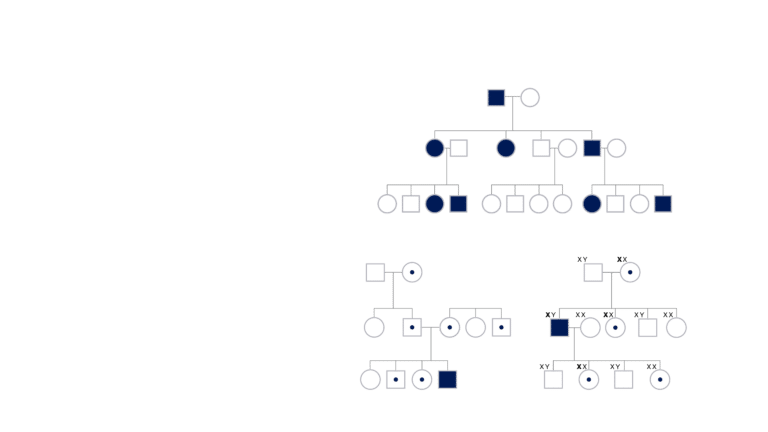
Featured Image Credit: https://www.genome.gov/ – Genetic inheritance (Public Domain – NIH NHGRI)
Why Inherited Disease Research Requires Purpose-Built Biospecimen Strategies
Inherited diseases cover thousands of conditions caused by harmful variation in a single gene, multiple genes, or a mix of genes and environment. Together they place a real burden on people across the United States, affecting children and adults with neurological, blood-related, metabolic, cardiovascular, and multi-system symptoms. Many inherited conditions are individually rare, but they often share molecular pathways. That opens the door to mechanism-based therapies — gene replacement, gene editing, RNA-targeted treatments, and precision pharmacology.
Rigorous inherited disease research depends on biospecimens that support accurate variant discovery, confident interpretation, and functional validation. Genetic studies often need coordinated samples from affected patients and their relatives, along with precise symptom definitions, family structure information, and clinically grounded genomic annotation. Blood-based biospecimens remain central, because they support combined genomics, transcriptomics, proteomics, and metabolomics work using scalable methods suited to both discovery and clinical use.
Multi-modal study designs commonly use Human Whole Blood for genomic DNA extraction and select RNA applications, and Human PBMCs for immune-cell transcriptomics and functional assays. They also use Human Plasma for protein biomarkers and metabolites, and Human Serum for biochemical screening and immunoassays. Together, these sample types give researchers a coherent, mechanistic view of inherited disease biology and how it unfolds over time.
Mendelian Inheritance, Penetrance, and Genetic Heterogeneity
Mendelian disorders come from harmful variants in a single gene, and follow inheritance patterns including autosomal dominant, autosomal recessive, X-linked, and mitochondrial transmission. Real-world family trees often don’t match textbook expectations, though, due to incomplete penetrance, age-related symptom onset, modifier genes, and environmental factors. This complexity shows up most clearly in disorders with incomplete penetrance, late onset, or symptoms that overlap with non-genetic conditions.
Genetic heterogeneity adds another layer of complexity to discovery and interpretation. Locus heterogeneity happens when variants in different genes cause similar symptoms, while allelic heterogeneity happens when different variants in the same gene cause different severity or subtypes. These features are why researchers use broad sequencing strategies like whole exome sequencing (WES) and whole genome sequencing (WGS), backed by solid family-based study designs that boost interpretive power.
Because inherited disease research often relies on comparing affected and unaffected relatives, consistently collecting biospecimens paired with thorough genomic annotation is essential. Family structure, ancestry, reproductive history, and clear symptom definitions all strengthen statistical inference and reduce false-positive interpretations in variant discovery.
Blood-Based Genomics: Whole Blood as a Foundation for Variant Discovery
Genomic DNA extracted from whole blood remains a cornerstone for WGS and WES. High-quality DNA supports sensitive detection of single-nucleotide variants, small insertions/deletions, and copy number variants. It also supports confirming results using other methods like Sanger sequencing, MLPA, and targeted qPCR. For disorders driven by structural variation, genome-wide approaches paired with careful quality control can improve detection of complex rearrangements and variants in non-coding regulatory regions.
Human Whole Blood is a common choice for DNA workflows, since it’s compatible with standard extraction methods and yields enough material for large studies, re-analysis, and multi-assay programs. In family-based studies, matched whole blood from patients and relatives supports trio analysis, checking whether a variant is inherited as expected, and inferring family trees across generations. This strengthens the case that a variant actually causes disease.
When WGS or WES turns up a candidate variant, researchers weigh how common it is in the population and its predicted effect on function. They also check whether it’s inherited as expected and how well it matches the patient’s symptoms. Increasingly, researchers add multi-omic evidence — gene expression, protein biomarkers, and functional immune readouts — to move beyond predictions based on sequence alone, toward real biological validation.
Transcriptomics and Functional Readouts: PBMCs and Whole Blood RNA Workflows
RNA-based approaches are critical for understanding the function of inherited disease variants, especially when a variant affects splicing, transcript stability, or gene regulation. Expression profiling can reveal disruption at the pathway level and identify targets worth pursuing, even when the causal variant is uncertain. RNA evidence can also help classify a variant by showing abnormal splicing, allele-specific expression, or transcript loss consistent with a loss-of-function mutation.
Human PBMCs provide cell populations suited to gene expression profiling, immune phenotyping, and functional assays relevant to immunodeficiency, autoimmunity, and inflammatory genetic syndromes. PBMC-based studies can test cytokine responsiveness, signaling pathway activation, and immune cell subset distributions that may reflect genotype-specific mechanisms. This data is especially valuable when inherited disorders show up as immune dysfunction, recurrent infections, or autoinflammatory symptoms.
Human Whole Blood can also support RNA workflows when the right stabilization protocols are used. Whole blood transcriptomics may capture body-wide signatures relevant to metabolic and inflammatory genetic disorders, while PBMC transcriptomics gives a sharper, immune-cell-focused view.
Plasma and Serum: Biomarkers, Metabolites, and Biochemical Phenotyping
Many inherited disorders involve disrupted metabolic pathways, enzyme deficiencies, or altered protein levels — problems best studied using circulating biomarkers. Plasma and serum support analyzing proteins, metabolites, cytokines, and standard chemistry results that can correlate with disease severity and predict progression. These same markers can also serve as indicators of drug activity in intervention studies.
Human Plasma supports measuring soluble mediators, protein profiles, and metabolic signatures relevant to inborn errors of metabolism, mitochondrial disorders, lysosomal storage diseases, and inherited inflammatory syndromes. Plasma-based proteomics can identify disrupted pathways and provide candidate biomarkers for tracking natural history and treatment response.
Human Serum is widely used for biochemical screening and immunoassays that can support diagnosis, disease staging, and monitoring response. In newborn screening and carrier screening programs, biochemical and immune markers from serum can complement genetic testing by capturing the functional, downstream consequences of harmful variants.
Combining genomic variants with plasma/serum biomarkers can clarify whether a variant is truly disease-causing. This is especially useful when the genotype-phenotype relationship is complex, or a variant is of uncertain significance and needs independent supporting evidence. This combined approach is playing a growing role in translational pipelines that support gene therapy development and biomarker-informed clinical trial design.
Family-Based Study Designs: Trios, Segregation, Linkage, and Founder Populations
Family-based designs strengthen genetic studies by making it possible to trace inheritance patterns and test whether a variant segregates with disease. Trio analysis (a patient plus both parents) is especially effective for identifying new (de novo) variants. It also helps identify cases where a patient carries two different harmful variants in the same gene, and recessive inheritance patterns. Studying extended family trees supports linkage analysis, and can be uniquely powerful for disorders that run strongly in families with clear symptom definitions.
Testing whether a variant segregates with disease across multiple affected and unaffected relatives strengthens the case for causality, and reduces reliance on computer predictions alone. Families with intermarriage can increase discovery of autosomal recessive conditions, because they have larger stretches of matching DNA and a higher chance of carrying rare recessive variants. Founder populations may carry a higher rate of specific disease-causing alleles, creating natural opportunities to study how genotype relates to symptoms and guide treatment.
These study designs depend on consistent, high-quality biospecimens collected across family members using standardized methods. Coordinated collection of Human Whole Blood for DNA, Human PBMCs for functional immune assays, and Human Plasma or Human Serum for biomarker profiling supports integrated interpretation across multiple layers of biology.
Genetic Information for Inherited Disease Studies
- Pedigree structure including affected/unaffected status across generations and relationship mapping
- Inheritance hypothesis (autosomal dominant/recessive, X-linked, mitochondrial) aligned to family history
- Ancestry background and potential founder effects influencing allele frequency interpretation
- Penetrance and age-of-onset documentation to interpret unaffected carriers and late-onset phenotypes
- Variant type and genomic context (coding, splice-site, regulatory, structural variation) with QC metrics
- Trio or extended-family sequencing availability to support de novo discovery and segregation evidence
- Phenotype definitions mapped to standardized terms (e.g., HPO) to support cross-study harmonization
- Clinical laboratory confirmation status for key findings and availability of orthogonal validation assays
Sample Considerations for Familial Disease Research
- Consistent collection timing across family members to reduce confounding from acute illness or treatment changes
- Whole blood collected under standardized conditions for high-integrity genomic DNA extraction
- PBMC isolation timing and cryopreservation protocols optimized for transcriptomics and functional assays
- Plasma processing workflows aligned to intended analytes (proteomics, cytokines, metabolites)
- Serum clotting and centrifugation conditions standardized for biochemical assay reproducibility
- Aliquoting plans designed to minimize freeze–thaw cycles and preserve analyte stability
- Documentation of medication exposures, supplements, and diet that may alter biomarkers and expression profiles
- Longitudinal sampling capability to map natural history and intervention response trajectories
Sanguine Bio: Enabling Inherited Disease Research from Discovery to Translation
Sanguine Bio supports inherited disease research across the United States through a direct-to-donor model and expanded donor network. This approach makes it easier to recruit affected patients and their relatives, including multi-generation families and specialized cohorts needed to power segregation testing and genotype-phenotype discovery. Thorough genomic annotation supports rigorous interpretation of variants in context, helping research teams move efficiently from sequence-level findings to mechanistic validation.
Custom collection services support study designs tailored to inherited disease programs, including coordinated family-based sampling, longitudinal collections that capture natural history, and protocol-specific processing for multi-omic workflows. From study design to receipt of samples, end-to-end support helps standardize collection timing, tube types, and processing windows to reduce pre-analytical variability.
Access to hard-to-find populations includes rare familial disorders with limited clinical prevalence, families with intermarriage that support recessive discovery, and founder-population cohorts enriched for specific alleles. It also includes affected individuals suited for gene therapy or RNA-targeted intervention studies. These capabilities support both early discovery programs and translational development pipelines.
Genetic Disease Biospecimens gives you one place to explore inherited disease biospecimen solutions aligned to genomic research and functional validation.
Check Our Inventory to explore inherited disease biospecimen solutions.
References
- Richards S, et al. Standards and guidelines for the interpretation of sequence variants. Genet Med. 2015;17(5):405-424.
- MacArthur DG, et al. Guidelines for investigating causality of sequence variants in human disease. Nature. 2014;508(7497):469-476.
- Posey JE. Genome sequencing and implications for rare disease. Nat Rev Genet. 2019;20(6):1-16.
- Bamshad MJ, et al. Exome sequencing as a tool for Mendelian disease gene discovery. Nat Rev Genet. 2011;12(11):745-755.
- Boycott KM, Vanstone MR, Bulman DE, MacKenzie AE. Rare-disease genetics in the era of next-generation sequencing. Nat Rev Genet. 2013;14(10):681-691.
- Strande NT, et al. Evaluating the clinical validity of gene–disease associations. Genet Med. 2017;19(11):1-9.
- Cooper GM, Shendure J. Needles in stacks of needles: finding disease-causal variants in a wealth of genomic data. Nat Rev Genet. 2011;12(9):628-640.
- Manolio TA, et al. Finding the missing heritability of complex diseases. Nature. 2009;461(7265):747-753.
- Ng SB, et al. Exome sequencing identifies the cause of a Mendelian disorder. Nat Genet. 2010;42(1):30-35.
- Stark Z, et al. Integrating genomics into healthcare: a global perspective. Nat Rev Genet. 2019;20(7):1-12.
- Biesecker LG, Green RC. Diagnostic clinical genome and exome sequencing. N Engl J Med. 2014;370(25):2418-2425.
- Frésard L, Montgomery SB. Diagnosing rare diseases after the exome. Cold Spring Harb Mol Case Stud. 2018;4(6):1-15.