Liquid Biopsy Biospecimens: Blood-Based Cancer Detection and Monitoring
The Liquid Biopsy Revolution in Cancer Detection
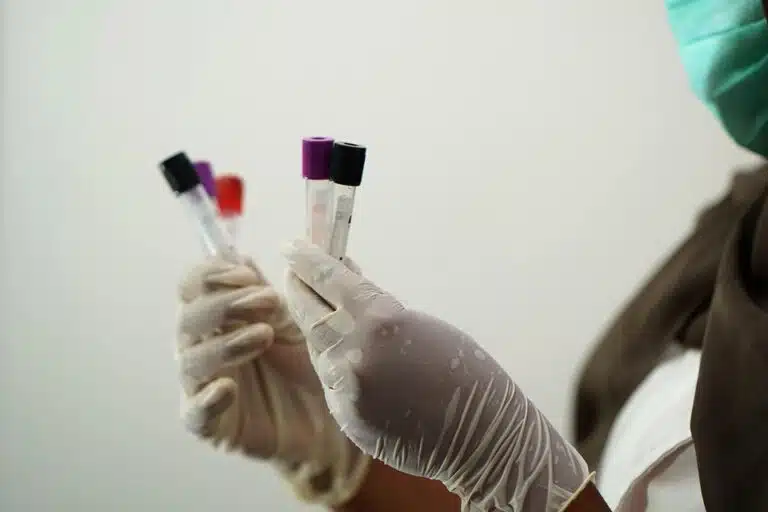
Liquid biopsy technologies analyze tumor-derived material in blood, as part of our broader oncology biospecimen portfolio. This enables non-invasive cancer detection, molecular characterization, treatment monitoring, and surveillance for minimal residual disease — all across the United States, without tissue biopsies.
Tumors constantly shed cellular and molecular material into the bloodstream. Each analyte offers a different window into tumor biology, and all are accessible through a simple blood draw:
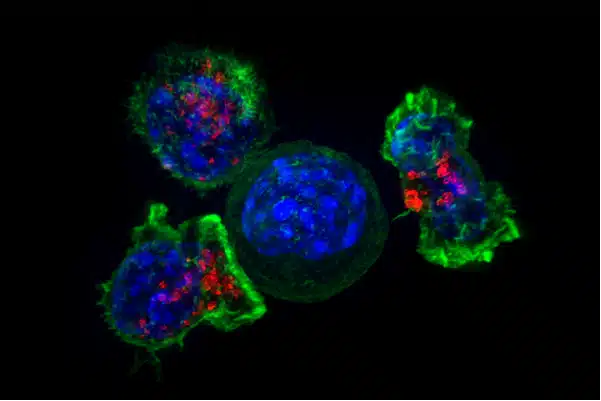
- Circulating tumor cells (CTCs)
- Circulating tumor DNA (ctDNA)
- Tumor-derived extracellular vesicles
- Tumor-educated platelets
These analytes are transforming precision oncology. Precision approaches that require full tumor genomic profiling are becoming standard of care. Early cancer detection programs aim to catch malignancies while they’re still curable. Demand for high-quality plasma, serum, and whole blood keeps growing.
Researchers developing liquid biopsy assays need biospecimens from cancer patients with confirmed diagnoses. Healthy controls establish a specificity baseline. Benign disease controls help rule out false positives. Longitudinal collections document how the tumor’s molecular profile evolves and how it responds to treatment over time.
Cancer’s natural progression shows up directly in liquid biopsy results:
- Early-stage cancers shed very little circulating material
- Advanced tumors release more CTCs and ctDNA
- Metastatic disease shows the highest levels
- Treatment response causes a rapid drop
- Resistance causes levels to rise again
From study design through receipt of samples collected at the right timepoints, careful biospecimen selection captures these dynamics. Pre-treatment samples establish a baseline. On-treatment samples monitor response. Samples taken at progression reveal resistance mechanisms, enabling real-time tracking of how the tumor is evolving.
Circulating Tumor DNA Analysis
Circulating tumor DNA is made up of fragmented DNA molecules that tumor cells release into the bloodstream. Cell death through apoptosis or necrosis releases genomic DNA, and active secretion adds to that. ctDNA makes up just 0.01–10% of the total cell-free DNA in plasma, depending on tumor burden and biology.
Several detection methods reveal different levels of molecular detail:
- Next-generation sequencing detects tumor-specific mutations, copy number changes, and epigenetic changes
- Digital PCR quantifies specific mutations with high sensitivity
- Targeted sequencing panels profile mutations that are actionable in the clinic
- Whole exome or genome sequencing gives comprehensive molecular detail, though at lower depth
ctDNA levels track closely with how much tumor a patient has. Advanced cancers show higher ctDNA levels than early-stage disease, and metastatic tumors release more DNA than localized disease. This lets ctDNA serve as a stand-in for tumor volume, useful for tracking treatment response and detecting minimal residual disease.
Mutation profiling in ctDNA reveals how varied a tumor really is. Different metastatic sites can carry different mutations. Serial sampling captures how the tumor evolves over time. Resistance mutations that emerge under treatment pressure can show up in plasma before they’re visible on imaging.
Methylation patterns in ctDNA can reveal which tissue a tumor came from. Cancer-specific methylation signatures make it possible to identify the tumor type from a blood sample alone. This supports screening approaches that can detect multiple cancer types at once, from a single blood draw, across diverse patient populations.
Pre-analytical factors have a big impact on ctDNA recovery and analysis:
- The type of collection tube affects cell-free DNA yield
- Centrifugation settings affect how much cellular DNA contaminates the sample
- Storage conditions affect DNA fragmentation
Researchers need plasma samples processed under standardized conditions.
Sanguine’s Comprehensive Liquid Biopsy Biospecimen Solutions
Sanguine Bio provides end-to-end support for liquid biopsy research, from study design through receipt of samples. Our direct-to-donor model and expanded donor network give access to cancer patients across the United States with diverse tumor types, stages, and treatment histories.
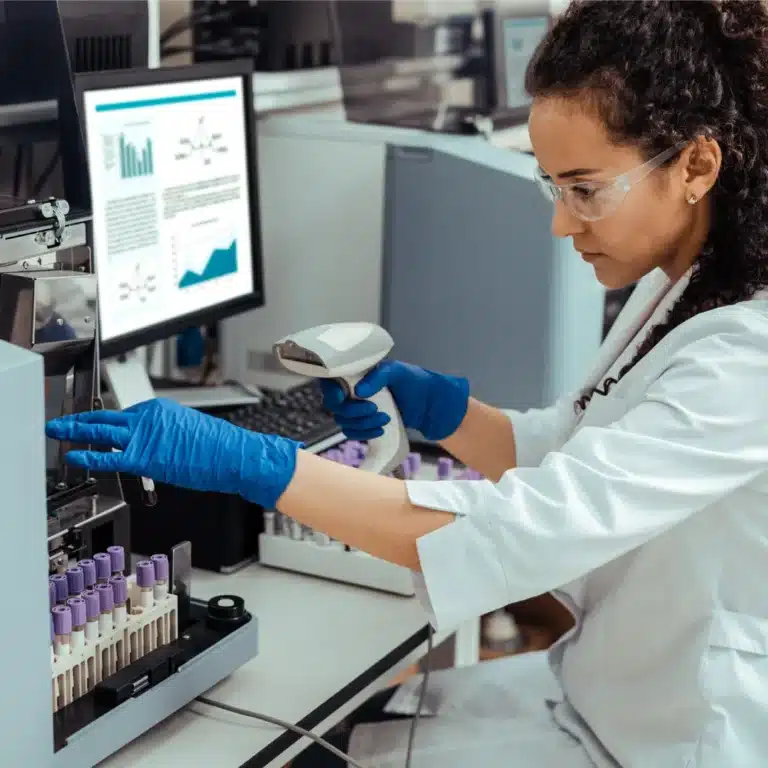
Custom collection services accommodate specialized needs. Plasma collection protocols for ctDNA analysis use cell-free DNA preservation tubes with standardized processing. Whole blood for CTC counting uses validated collection and transport methods that keep cells viable.
Access to hard-to-find populations sets our offerings apart. Rare cancer types with few patients get targeted recruitment. Specific disease stages, from newly diagnosed through treatment-refractory, give comprehensive coverage of the disease’s natural history. Serial collections document how a tumor evolves over the long term.
Thorough genomic annotation comes with every sample. Tumor pathology reports, treatment histories, imaging findings, and clinical outcomes provide research context. Electronic medical record integration keeps data complete and accurate, supporting correlative analyses.
Explore our oncology biospecimen portfolio or Check Our Inventory for available liquid biopsy biospecimens. Or contact our scientific team to discuss a custom collection project for your specific oncology research needs.
Ethical Sourcing and Compliance
All biospecimens go through rigorous ethical sourcing procedures. Donors give fully informed consent, understanding how their samples will be used in research. IRB approval covers every collection activity. HIPAA compliance protects patient privacy throughout the United States.
Quality management systems keep results consistent. SOPs govern collection, processing, and storage. Regular audits confirm compliance. Staff training maintains quality standards. Chain-of-custody documentation tracks each specimen from collection through delivery.
Third-party testing validates infectious disease screening. Viral markers are assessed. Bacterial contamination testing takes place. Quality certificates accompany every shipment. This protects both researcher safety and experimental validity across every application.
References
- Wan JCM, Massie C, Garcia-Corbacho J, et al. Liquid biopsies come of age: towards implementation of circulating tumour DNA. Nat Rev Cancer. 2017;17(4):223-238. doi:10.1038/nrc.2017.7
- Siravegna G, Marsoni S, Siena S, Bardelli A. Integrating liquid biopsies into the management of cancer. Nat Rev Clin Oncol. 2017;14(9):531-548. doi:10.1038/nrclinonc.2017.14
- Rolfo C, Mack P, Scagliotti GV, et al. Liquid biopsy for advanced NSCLC: a consensus statement from the International Association for the Study of Lung Cancer. J Thorac Oncol. 2021;16(10):1647-1662. doi:10.1016/j.jtho.2021.06.017
- Cristiano S, Leal A, Phallen J, et al. Genome-wide cell-free DNA fragmentation in patients with cancer. Nature. 2019;570(7761):385-389. doi:10.1038/s41586-019-1272-6
- Lennon AM, Buchanan AH, Kinde I, et al. Feasibility of blood testing combined with PET-CT to screen for cancer and guide intervention. Science. 2020;369(6499):eabb9601. doi:10.1126/science.abb9601
- Zviran A, Schulman RC, Shah M, et al. Genome-wide cell-free DNA mutational integration enables ultra-sensitive cancer monitoring. Nat Med. 2020;26(7):1114-1124. doi:10.1038/s41591-020-0915-3
- Esfahani MS, Hamilton EG, Mehrmohamadi M, et al. Inferring gene expression from cell-free DNA fragmentation profiles. Nat Biotechnol. 2022;40(4):585-597. doi:10.1038/s41587-021-01115-0
- Lianidou ES, Strati A, Markou A. Circulating tumor cells as promising novel biomarkers in solid cancers. Crit Rev Clin Lab Sci. 2014;51(3):160-171. doi:10.3109/10408363.2014.896316
- Mohme M, Riethdorf S, Pantel K. Circulating and disseminated tumour cells – mechanisms of immune surveillance and escape. Nat Rev Clin Oncol. 2017;14(3):155-167. doi:10.1038/nrclinonc.2016.144
- Cohen JD, Li L, Wang Y, et al. Detection and localization of surgically resectable cancers with a multi-analyte blood test. Science. 2018;359(6378):926-930. doi:10.1126/science.aar3247
- Mouliere F, Chandrananda D, Piskorz AM, et al. Enhanced detection of circulating tumor DNA by fragment size analysis. Sci Transl Med. 2018;10(466):eaat4921. doi:10.1126/scitranslmed.aat4921
- Phallen J, Sausen M, Adleff V, et al. Direct detection of early-stage cancers using circulating tumor DNA. Sci Transl Med. 2017;9(403):eaan2415. doi:10.1126/scitranslmed.aan2415
- Garcia-Murillas I, Schiavon G, Weigelt B, et al. Mutation tracking in circulating tumor DNA predicts relapse in early breast cancer. Sci Transl Med. 2015;7(302):302ra133. doi:10.1126/scitranslmed.aab0021
- Abbosh C, Birkbak NJ, Wilson GA, et al. Phylogenetic ctDNA analysis depicts early-stage lung cancer evolution. Nature. 2017;545(7655):446-451. doi:10.1038/nature22364
- Newman AM, Bratman SV, To J, et al. An ultrasensitive method for quantitating circulating tumor DNA with broad patient coverage. Nat Med. 2014;20(5):548-554. doi:10.1038/nm.3519