The Immunoscore: bringing immunological parameters to the clinic for cancer patient prognosis
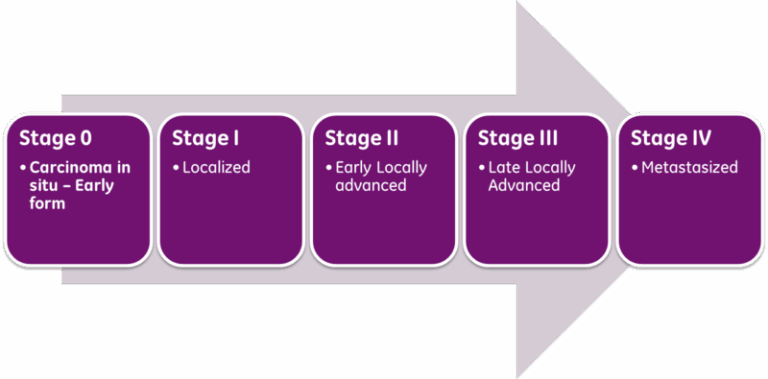
Classical cancer patient prognosis uses the AJCC/UICC (American Joint Committee on Cancer / International Union Against Cancer) “TNM” classification system:
- T (Tumor) — primary tumor size and invasion properties
- N (Nodes) — how far the tumor has invaded draining and regional lymph nodes
- M (Metastasis) — the presence and extent of metastatic lesions at diagnosis
Combining these parameters lets doctors assess a patient’s stage at diagnosis and predict outcome. The exact parameter definitions vary by cancer type.
However, researchers have long known that the TNM system gives a fairly good estimate for patient populations overall, but leaves a lot of variation within each stage in terms of tumor recurrence and final outcome. This isn’t surprising, since this staging system only evaluates tumor characteristics and ignores other patient factors. In particular, the strength of a patient’s immune system — our natural defense against tumor development — has a significant impact on disease progression and outcome.
CD8+ T Cell Infiltration Predicts Cancer Outcomes
In colorectal cancer and other cancer types, researchers have made real progress in showing the prognostic value of cytotoxic CD8+ T cell infiltration into the tumor microenvironment. The density of CD8+ T cells in the invasive margin (IM) and the center of the tumor (CT) carries significant prognostic value. In a study by Pages et al. (J Clin Oncol. 2009), measuring CD8+ T cells and CD45RO+ memory T cell densities in CT/IM tumor regions significantly predicted recurrence and overall survival in stage I and II colorectal cancer patients — showing this system is especially useful for guiding treatment in early-stage patients.
Multiple cytotoxic CD8+ T cell and TH1 phenotyping markers have shown prognostic value in human cancer patients, including CD8, CD3, CD45RO, and Granzyme B expression. However, as Dr. Jerome Galon discussed in the Oct 3, 2012 J Transl Med. article, CD8 and CD3 are the most robust markers for routine clinical use. CD45RO and Granzyme B expression are intensity-dependent measurements that are much harder to standardize.
How the Immunoscore Works
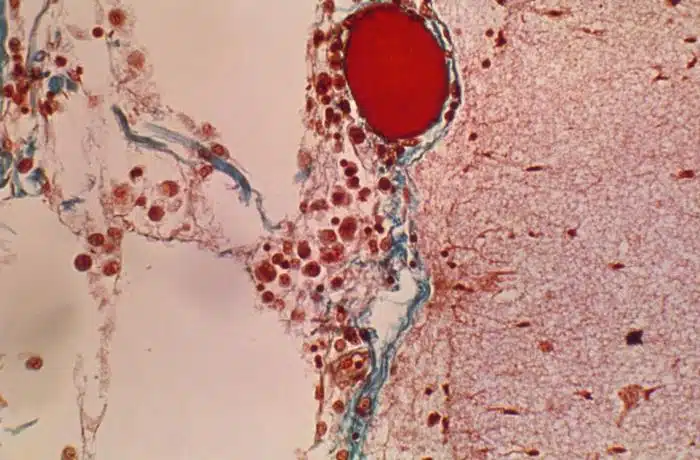
The proposed immunoscore relies on immunohistochemistry staining for CD8+ and CD3+ T cells in CT/IM tumor regions, using standardized antibodies and protocols. Researchers then measure these cell densities and score them on whole tissue slides, using specified slide scanning and staining analysis software.
In 2012, an international task force led by Dr. Galon formed to promote routine clinical use of this classification system. The task force’s goals include:
- Testing the feasibility of, and standardizing, the quantitative immunohistochemistry protocol used to derive the score
- Validating the immunoscore worldwide for colorectal cancer prognosis
- Extending the classification system to other cancer types
The immunoscore may soon become standard clinical practice, helping doctors better predict patient outcomes and guide therapy.
Further Reading:
https://www.immunescore.org/
Website: American Joint Committee on Cancer Staging
Cancer classification using the Immunoscore: a worldwide task force. Galon J, Pagès F, Marincola FM, Angell HK, Thurin M, Lugli A, Zlobec I, Berger A, Bifulco C, Botti G, Tatangelo F, Britten CM, Kreiter S, Chouchane L, Delrio P, Arndt H, Asslaber M, Maio M, Masucci GV, Mihm M, Vidal-Vanaclocha F, Allison JP, Gnjatic S, Hakansson L, Huber C, Singh-Jasuja H, Ottensmeier C, Zwierzina H, Laghi L, Grizzi F, Ohashi PS, Shaw PA, Clarke BA, Wouters BG, Kawakami Y, Hazama S, Okuno K, Wang E, O’Donnell-Tormey J, Lagorce C, Pawelec G, Nishimura MI, Hawkins R, Lapointe R, Lundqvist A, Khleif SN, Ogino S, Gibbs P, Waring P, Sato N, Torigoe T, Itoh K, Patel PS, Shukla SN, Palmqvist R, Nagtegaal ID, Wang Y, D’Arrigo C, Kopetz S, Sinicrope FA, Trinchieri G, Gajewski TF, Ascierto PA, Fox BA. J Transl Med. 2012 Oct 3;10:205.
The immune score as a new possible approach for the classification of cancer. Galon J, Pagès F, Marincola FM, Thurin M, Trinchieri G, Fox BA, Gajewski TF, Ascierto PA. J Transl Med. 2012 Jan 3;10:1.
The immune contexture in human tumours: impact on clinical outcome. Fridman WH, Pages F, Sautes-Fridman C, Galon J. Nat Rev Cancer 2012, 12:298-306.
In situ cytotoxic and memory T cells predict outcome in patients with early-stage colorectal cancer. Pagès F, Kirilovsky A, Mlecnik B, Asslaber M, Tosolini M, Bindea G, Lagorce C, Wind P, Marliot F, Bruneval P, Zatloukal K, Trajanoski Z, Berger A, Fridman WH, Galon J. J Clin Oncol. 2009 Dec 10;27(35):5944-51.
Image courtesy of simplyanon on Wikipedia