B Cells: Biology, Subsets & CD19+ B Cells for Research
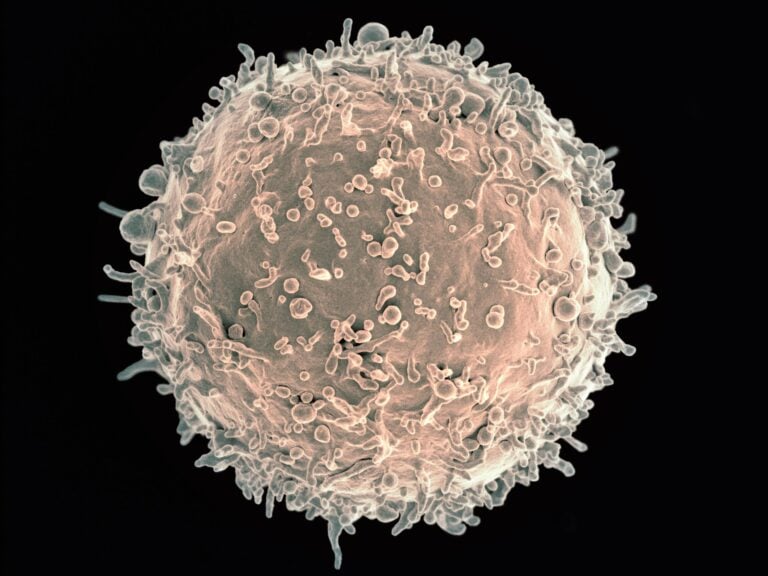
B cells are the immune system’s antibody factories. As the core of humoral immunity, they recognize antigens, differentiate into antibody-secreting plasma cells, and form the long-lived memory that underlies vaccine protection. CD19 is the marker that identifies nearly all of them — from the earliest committed progenitors through mature, antibody-secreting plasmablasts — which is why, for research, CD19+ B cells are the starting material of choice.
What Are B Cells?
B cells (B lymphocytes) are a type of white blood cell and one of the two major classes of lymphocytes, alongside T cells. They are the only cells in the body that produce antibodies. Each B cell displays a unique B cell receptor (BCR) on its surface; when that receptor binds its matching antigen, the B cell can activate, proliferate, and differentiate into plasma cells that secrete antibodies of the same specificity in soluble form.
Beyond antibody production, B cells also act as antigen-presenting cells, secrete cytokines that shape the wider immune response, and generate immunological memory. B cells make up roughly 5–10% of peripheral blood mononuclear cells (PBMCs) — a comparatively low frequency that shapes how researchers source them: a standard blood draw yields limited numbers, and a leukopak is often necessary for studies requiring B cells at scale.
Where Do B Cells Mature?
B cells get their name from the bone marrow, where they develop and undergo their initial maturation in humans. Hematopoietic stem cells give rise to progenitors that progress through pro-B, pre-B, and immature B cell stages, rearranging their immunoglobulin genes to build a functional, self-tolerant BCR. Cells that survive this selection leave the marrow as transitional B cells and complete their maturation into naïve B cells in the spleen.
Final, antigen-driven maturation happens later and elsewhere: once a naïve B cell encounters its antigen, it enters the germinal centers of secondary lymphoid organs (lymph nodes, spleen, tonsils), where somatic hypermutation and affinity maturation refine antibody quality — with help from T follicular helper (Tfh) cells. So B cells develop and mature in the bone marrow, but the affinity maturation that produces high-quality antibodies occurs in germinal centers.
What Do B Cells Do?
- Produce antibodies: Activated B cells differentiate into plasma cells that secrete antigen-specific immunoglobulins — the central function of humoral immunity.
- Present antigen: B cells internalize antigen via the BCR and present it on MHC Class II to CD4+ helper T cells, helping coordinate the adaptive response.
- Secrete cytokines: B cells release cytokines that modulate T cell, dendritic cell, and broader immune activity.
- Form immune memory: Memory B cells persist after an infection or vaccination and mount a faster, stronger antibody response on re-exposure.
What Is CD19? The Defining B Cell Marker
Human CD19+ B cells are identified by CD19, a component of the B cell co-receptor complex expressed continuously from the pro-B stage through the plasmablast stage — making it one of the most reliable pan-B-cell markers available. This continuous expression is what makes CD19 the standard target for isolating, quantifying, and depleting B cells in both research and therapy (for example, CD19-directed CAR-T and monoclonal antibody therapies).
B Cell Subsets
The CD19+ compartment isn’t a single population — it spans several functionally distinct subsets:
| Subset | Description |
|---|---|
| Naïve B cells | Antigen-inexperienced cells that have not yet encountered their cognate antigen. |
| Memory B cells | Antigen-experienced cells from prior immune responses, capable of rapid reactivation on re-exposure. |
| Transitional B cells | An intermediate stage between immature bone marrow emigrants and mature naïve B cells. |
| Plasmablasts | Actively antibody-secreting cells generated during an active immune response. |
Which subset dominates a given sample depends heavily on the donor’s recent immune history — a critical variable in vaccine and infection studies.
B Cells vs. T Cells
B cells and T cells are both lymphocytes, but they play different roles. B cells mature in the bone marrow, recognize free/native antigen through the BCR, and drive humoral immunity by producing antibodies. T cells mature in the thymus, recognize processed antigen presented on MHC molecules, and drive cell-mediated immunity — either coordinating responses (CD4+ helper T cells) or directly killing infected cells (CD8+ cytotoxic T cells). The two systems are deeply interconnected: most high-quality antibody responses require T cell help.
B Cells vs. Plasma Cells: A Sourcing Caveat
One detail that catches researchers off guard: fully differentiated plasma cells are CD19-dim or CD19-negative, meaning standard CD19+ selection does not reliably capture them. If your research question depends specifically on terminally differentiated plasma cell biology rather than the broader B cell compartment, CD138-based isolation is the more appropriate approach.
Research Applications
- Antibody production assays: CD19+ B cells are the direct substrate for studying antibody secretion, class-switching, and affinity maturation.
- Vaccine memory studies: Memory B cell frequency and specificity following vaccination are standard readouts for vaccine-induced humoral immunity.
- Autoimmune disease research: B cells are central to systemic lupus erythematosus, rheumatoid arthritis, and myasthenia gravis, making CD19+ cells a key population for studying disease mechanisms and B-cell-depletion therapies.
- BCR repertoire sequencing: Deep sequencing of the B cell receptor repertoire relies on isolated CD19+ populations to characterize clonal diversity and antigen-specific responses.
Sourcing Considerations
Because B cells are a relatively low-frequency population in peripheral blood, cell yield is often the limiting factor in study design. For applications requiring larger absolute numbers — multi-arm assays, repeated timepoint sampling from the same donor, or BCR repertoire studies needing broad clonal coverage — sourcing from a leukopak rather than a standard blood draw is usually the more practical path. Donor immune history also matters more for B cells than for many other immune populations, since recent infection or vaccination directly shifts the naïve/memory/plasmablast balance in a sample.
Frequently Asked Questions
What are B cells?
B cells (B lymphocytes) are white blood cells that produce antibodies. They recognize antigens through their B cell receptor, differentiate into antibody-secreting plasma cells, present antigen to T cells, and form immune memory. They are the foundation of humoral immunity.
What do B cells do?
B cells produce antibodies, present antigen to CD4+ helper T cells, secrete cytokines, and generate memory B cells that enable faster responses on re-exposure to a pathogen or vaccine.
Where do B cells mature?
B cells develop and undergo initial maturation in the bone marrow, then complete maturation into naïve B cells in the spleen. Antigen-driven affinity maturation occurs later in the germinal centers of secondary lymphoid organs.
What does CD19 positive mean?
CD19 is a pan-B-cell marker expressed from the pro-B developmental stage through the plasmablast stage. CD19+ identifies the B cell lineage broadly, though terminally differentiated plasma cells lose CD19 expression.
What percentage of PBMCs are B cells?
B cells typically represent about 5–10% of peripheral blood mononuclear cells, making them a lower-frequency population than T cells or monocytes.
Can CD19+ selection isolate plasma cells?
Not reliably. Plasma cells downregulate CD19 as they terminally differentiate. Research specifically targeting plasma cell biology should use CD138-based isolation instead.
Explore Sanguine’s human CD19+ B cells, isolated from healthy and disease-state donors for antibody, vaccine, and autoimmune disease research.