What Is a Human Leukopak? High-Yield Cell Source for Research
What Is a Human Leukopak? High-Yield Cell Source for Research
Are you designing a large-scale immune cell study, developing a cell therapy manufacturing process, or running a high-throughput drug screen? If you need more primary human immune cells than a standard blood draw provides, the answer is a human leukopak.
This guide answers the questions researchers ask most often about leukopaks in one place: what they are, what they contain, how they compare to standard PBMCs and blood draws, when to use them, and what to look for in a qualified supplier.
What Is a Human Leukopak?
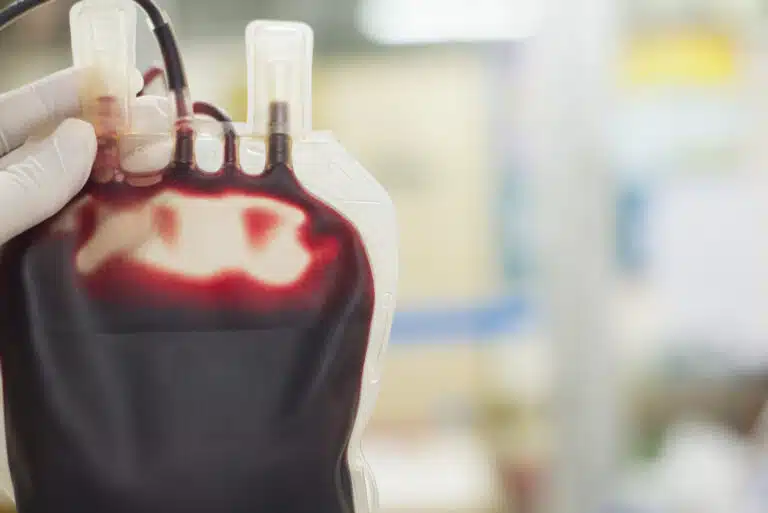
A human leukopak is a concentrated preparation of white blood cells (leukocytes) collected by leukapheresis. Blood is drawn from a donor and passed through an automated cell separator that retains the leukocyte-enriched buffy coat layer, then returns red blood cells and plasma to the donor. The result is a large-volume, leukocyte-rich product with billions of peripheral blood mononuclear cells from a single donor in one collection.
Leukopaks are also called leukapheresis products, leuko paks, or apheresis units. They are the primary cell source whenever research or manufacturing needs immune cell quantities that a standard blood draw cannot provide.
Key fact: A typical human leukopak contains 5 billion to 30 billion total nucleated cells. A standard 50 mL venipuncture yields about 100–200 million PBMCs — a 50- to 150-fold increase in cell yield per donor.
Why this matters in practice: A 50 mL blood draw yields roughly 150 million PBMCs. Only 10–15% (about 15–22 million cells) are NK cells — enough for maybe 15–20 wells of a basic cytotoxicity assay, barely a single dose-response curve. A 10-billion-cell leukopak yields that same 10–15% NK fraction as 1–1.5 billion cells — enough for hundreds of experimental conditions from a single characterized donor. The same arithmetic applies to monocyte-derived macrophage generation, dendritic cell differentiation, and any workflow where cell number is the limiting variable.
What Cells Does a Human Leukopak Contain?
The cellular makeup of a human leukopak mirrors that of peripheral blood mononuclear cells — the same populations found in a standard PBMC preparation — but at much greater absolute numbers. A typical leukopak from a healthy adult contains:
- T cells (60–80% of MNCs). Both CD4+ helper T cells and CD8+ cytotoxic T cells, spanning naïve, central memory, effector memory, and terminally differentiated subsets. A 10-billion-cell leukopak yields about 6–8 billion T cells.
- NK cells (5–15% of MNCs). Both cytokine-producing CD56bright and cytotoxic CD56dim subsets — about 500 million to 1.5 billion NK cells per 10-billion-cell collection, enough for large-scale ex vivo expansion and CAR-NK manufacturing.
- Monocytes (10–20% of MNCs). Classical, intermediate, and non-classical subsets — the precursors for macrophage and dendritic cell differentiation.
- B cells (5–15% of MNCs). Naïve, memory, and transitional populations relevant to antibody assays and vaccine immunogenicity research.
- Dendritic cells (<2% of MNCs). Conventional (cDC1, cDC2) and plasmacytoid (pDC) cells, present at low but functionally significant frequencies.
What leukopaks do not contain: Granulocytes (neutrophils, eosinophils, basophils) and red blood cells are substantially depleted during apheresis collection and downstream processing.
Leukopak vs. PBMC: What Is the Difference?
This is one of the most common questions when planning a large-scale immune cell study. The short answer: a leukopak is the raw leukapheresis product, and PBMCs are the mononuclear cell fraction isolated from either a standard blood draw or a leukopak. The key differences are scale, flexibility, and cost-per-cell at high volumes.
| Parameter | Standard PBMC (Blood Draw) | Human Leukopak |
|---|---|---|
| Typical cell yield | 100–200 million MNCs | 5–30 billion MNCs |
| Collection method | Standard venipuncture | Leukapheresis (apheresis) |
| Donor impact | Minimal | 2–3 hour apheresis session |
| Best for | Standard assays, small- to mid-scale experiments | CAR-T manufacturing, large-scale screens, multi-arm studies |
| Single-donor consistency | Limited by blood draw volume | Entire study from one donor collection |
| Cost per million cells at scale | Higher at large cell numbers | Lower at large cell numbers |
| Format availability | Fresh or cryopreserved | Fresh or cryopreserved |
Rule of thumb: If your experiment needs fewer than 500 million cells from a single donor, standard PBMCs are usually the more practical, cost-effective choice. If you need more — or need to run multiple parallel arms from the same donor — a leukopak is the right starting material.
For full sourcing specifications, see our human leukopak page.
Key Research Applications of Human Leukopaks
Human leukopaks are the primary cell source for applications that need large numbers of primary human immune cells from a single, characterized donor. The most common uses are below.
CAR-T Cell Manufacturing Process Development
Developing a reproducible CAR-T process means testing many variables in parallel — transduction conditions, expansion protocols, media formulations, and co-stimulatory domain combinations. A single leukopak provides enough T cells to run ten or more manufacturing arms at once, from one donor, with reserve cells for process characterization and functional validation. That removes the inter-donor variability that makes cross-collection comparisons so hard to interpret.
Off-the-Shelf CAR-NK Cell Development
NK cell-based off-the-shelf therapies need ex vivo expansion from a starting population large enough to reach manufacturing-relevant doses. Leukopak-scale NK yields — 500 million to 1.5 billion NK cells per collection — make large-scale expansion feasible from one donor, supporting preclinical studies, process characterization, and early-stage manufacturing development.
High-Throughput Immune Drug Screening
Screening compound libraries in primary human immune cells — hundreds or thousands of compounds in T cell activation, NK cytotoxicity, or monocyte cytokine assays — needs cell numbers impossible to source from standard blood draws without pooling donors, which adds confounding variability to every comparison. A leukopak enables entire screening campaigns from a single donor, sharply improving assay signal-to-noise.
Large-Scale Immune Cell Subset Isolation
Some downstream applications need billions of purified T cells, NK cells, or monocytes — bulk or single-cell RNA sequencing, ATAC-seq, proteomics, CRISPR screening, or multi-day functional assays. A leukopak is the only practical single-donor source. Negative selection isolation of CD8+ T cells from a leukopak can yield 2–4 billion high-purity cells in a single run.
Humanized Mouse Model Generation
Building a cohort of humanized mice needs large quantities of CD34+ HSPCs or peripheral blood mononuclear cells from a single donor, to keep the immune system consistent across animals. Leukopak-derived mononuclear cells supply the numbers to humanize an entire cohort from one collection, removing the donor-to-donor variability that compromises cross-animal comparisons.
Biomarker Discovery and Immune Profiling Studies
Biomarker programs applying bulk or single-cell RNA sequencing, mass cytometry (CyTOF), or ATAC-seq to immune cell populations benefit from large quantities of starting material from defined donors. Single-cell sequencing especially benefits from high cell inputs that capture rare populations at sufficient depth — a case where the yield advantage of leukopaks translates directly into data quality.
Fresh vs. Cryopreserved Leukopaks: Which Should You Order?
Both formats are appropriate for research use. The right choice depends on your application.
Choose a fresh leukopak if:
- You are running a time-sensitive CAR-T transduction protocol where T cell phenotype at transduction is a critical quality attribute.
- Your assay requires maximal NK cell cytotoxic function.
- You need monocytes at peak responsiveness for innate immune stimulation.
Fresh leukopaks must be processed within 24–48 hours of collection.
Choose a cryopreserved leukopak if:
- You need scheduling flexibility to thaw cells on demand.
- You are building a longitudinal sample bank from defined donors.
- You need matched donor cells across multiple experimental time points.
Cryopreserved leukopaks allow inventory management and remove the logistical constraints of fresh collections — provided the cryopreservation used controlled-rate freezing in validated media, which preserves functional integrity through the freeze-thaw cycle. Post-thaw viability alone (for example, trypan blue exclusion) is not enough to confirm quality — cells can look viable by trypan exclusion while carrying deficits in proliferation, cytokine production, and cytotoxicity. Always request functional validation data alongside viability specs.
For a deeper comparison, see our dedicated guides on fresh vs. cryopreserved leukopaks and fresh leukopak collection and quality standards.
Leukopaks vs. Standard Blood Draws: Choosing the Right Source
The choice between standard PBMCs from a conventional blood draw and cells from a leukopak comes down to a few experimental requirements:
- Cell volume requirements. If your experiment needs tens to hundreds of millions of cells from a single donor, standard PBMCs are usually enough. If it needs billions — for manufacturing development, large-scale screening, or high-input genomics — a leukopak is the right source.
- Donor consistency. In multi-arm experiments, inter-donor variability would confound comparisons across conditions. Enough cells from a single leukopak to complete all arms in one run removes that noise. Pooled or sequential standard blood draws cannot provide this consistency at scale.
- Cost efficiency at scale. A leukopak costs more per collection than a blood draw, but the cost per million cells — and especially per completed experimental arm — is much lower when high cell numbers are needed.
- Subset isolation at manufacturing scale. For purifying T cells, NK cells, or monocytes, magnetic bead or flow sorting is far more efficient with the concentrated, high-volume starting material a leukopak provides than with the low-volume, time-sensitive handling of multiple blood draws at once.
What Quality Specifications Should a Research-Grade Leukopak Meet?
A qualified human leukopak for research use should meet all of the following:
- Minimum total nucleated cell count. Defined and guaranteed per collection — typically at least 2–5 billion cells, with many collections yielding more.
- Viability at release. ≥85% for fresh, and ≥80% post-thaw for cryopreserved, measured under standardized conditions. Apheresis collection and processing add mechanical stress that can reduce viability if not managed well.
- T cell, NK cell, and monocyte composition. Knowing the approximate proportions of major subsets lets you plan isolation steps and estimate yields. Donor-to-donor variation in NK frequency, for example, has major implications for NK cell therapy manufacturing.
- Infectious disease screening. HIV-1/2 (Ab + NAT), HBsAg, anti-HCV (Ab + NAT), HTLV-I/II, syphilis serology, and CMV serostatus, tested by a CLIA-certified lab. CMV serostatus in particular is a meaningful variable for NK cell biology and T cell memory composition.
- Donor metadata. Age range, sex, and health status confirmed, plus a deidentified donor ID for lot-to-lot tracking.
- Processing and shipping documentation. Collection date, processing time from draw to final product, cryopreservation method (for frozen product), storage conditions, and — for fresh product — cold-chain logistics and defined maximum transit times.
Frequently Asked Questions About Human Leukopaks
How many T cells are in a leukopak?
A typical human leukopak with 10 billion total mononuclear cells yields about 6–8 billion T cells. Roughly two-thirds are CD4+ helper T cells and one-third are CD8+ cytotoxic T cells, depending on the donor.
How many NK cells are in a leukopak?
NK cells are usually 5–15% of mononuclear cells in peripheral blood. A 10-billion-cell leukopak therefore yields about 500 million to 1.5 billion NK cells — enough for large-scale ex vivo expansion and CAR-NK manufacturing.
Can I use a leukopak to make CAR-T cells?
Yes. Leukopaks are the standard input for CAR-T manufacturing process development. T cells isolated from a leukopak are activated, transduced with the CAR construct, expanded, and characterized using the same protocols applied in clinical manufacturing. The large cell numbers allow multiple manufacturing conditions to be tested in parallel from a single donor.
What is the difference between a leukopak and an apheresis product?
The terms are often used interchangeably. A leukopak is a type of apheresis product — specifically, the leukocyte-enriched fraction collected during leukapheresis. “Apheresis product” is broader and also covers plateletpheresis, plasmapheresis, and other apheresis-derived products.
Are leukopaks the same as buffy coats?
No. A buffy coat is the leukocyte-enriched layer separated from a standard whole blood donation during blood bank processing — a lower-yield, less controlled product. A leukopak is collected specifically by apheresis from a dedicated donor, giving much higher cell yields, full donor characterization, and research-grade quality specs that buffy coats typically do not meet.
How quickly can I receive a fresh leukopak?
From a qualified supplier with an established donor network and apheresis infrastructure, fresh leukopaks are typically available within one to three business days of ordering, depending on donor availability and shipping logistics.
Summary: Key Facts About Human Leukopaks
- A human leukopak is a concentrated white blood cell preparation collected by leukapheresis from a single donor.
- Typical yield: 5–30 billion total mononuclear cells per collection — 50–150× more than a standard blood draw.
- Contains T cells, NK cells, B cells, monocytes, and dendritic cells in physiological proportions.
- Available in fresh and cryopreserved formats; fresh product should be processed within 24–48 hours.
- The primary cell source for CAR-T manufacturing development, CAR-NK therapy research, high-throughput drug screening, large-scale subset isolation, humanized mouse models, and biomarker discovery.
- Quality specs should include minimum cell yield guarantees, viability testing, subset composition, full infectious disease screening, and donor metadata.
- For applications needing fewer cells, standard PBMCs from a blood draw are a more cost-effective alternative.
SanguineBio’s human leukopaks are collected from healthy, screened donors, characterized for total nucleated cell count and subset composition, and available in fresh and cryopreserved formats — see our human leukopak page for full specifications.