Expansion of NK cells from Human PBMC
Why NK Cell Expansion Matters
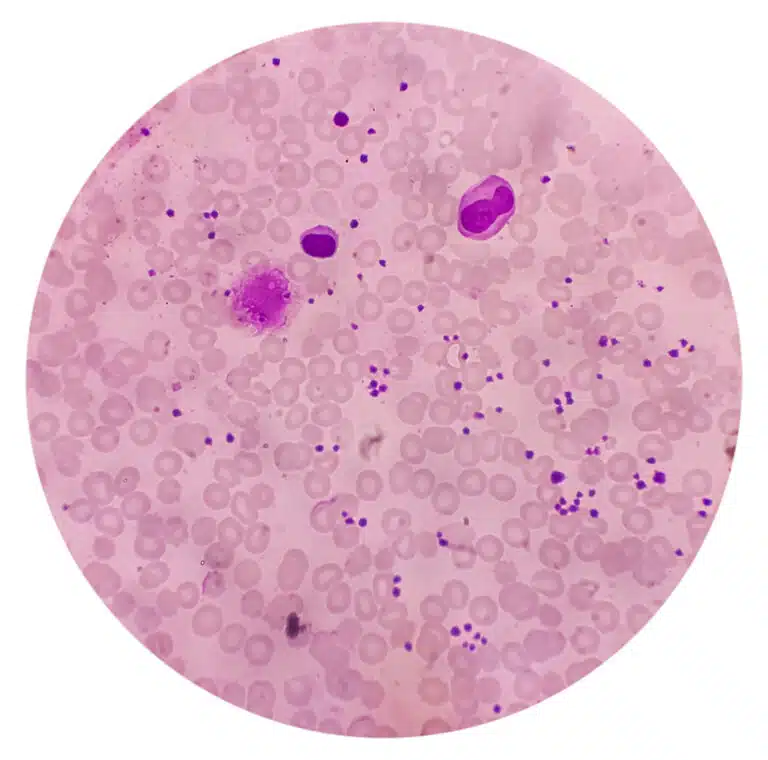
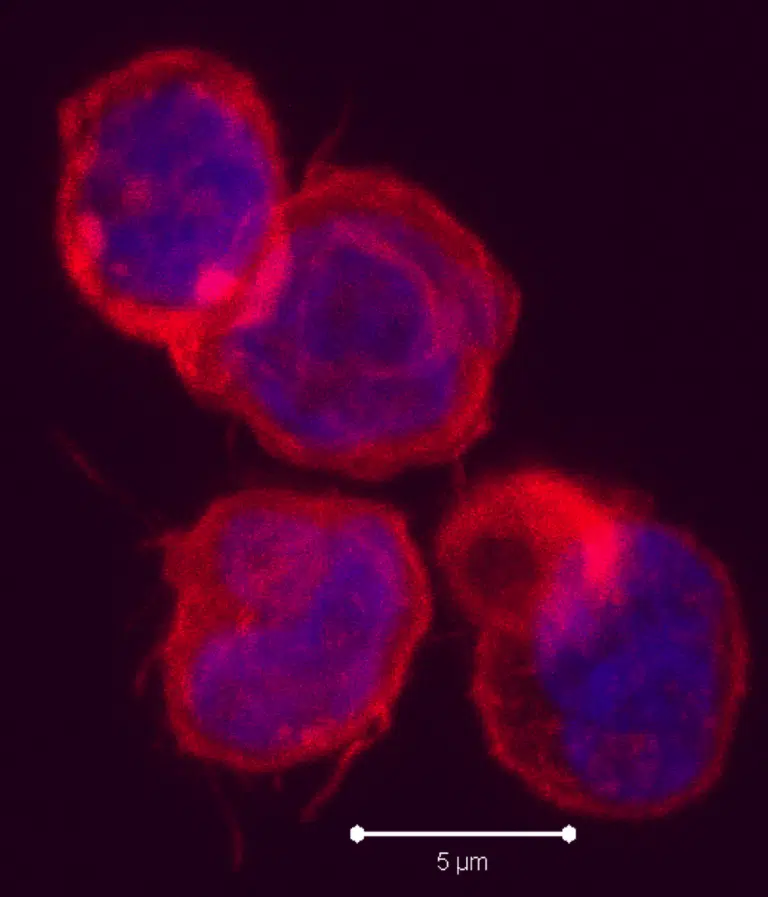
Natural killer (NK) cells make up as much as 15% of human peripheral blood mononuclear cells (PBMC), and range from 5-20% of peripheral blood lymphocytes. NK cells generally fall into three subtypes: CD56dimCD16+, CD56brightCD16+/-, and CD56–CD16+ NK cells, whose prevalence and functions we have discussed previously.
NK cells are a promising avenue for cell-based anti-tumor immunotherapy. However, PBMC contain relatively few of these cells, which is a technical challenge for these efforts and for other studies that need large numbers of NK cells. In the April 2013 issue of Clinical & Experimental Immunology, Wang et. al describe an in vitro method for the preferential expansion of human NK cells from PBMC.
Expanding NK cells in vitro requires multiple signals for survival, proliferation, and activation.
Prior Method: IL-15 and CD137L
In an earlier study, Fujisaki et. al (2009) showed that highly cytotoxic CD56+ NK cells could be strongly expanded when cultured with a modified version of the K562 chronic myeloid leukemia cell line. This K562 cell line was engineered to express a membrane-bound form of IL-15 and the 41BB ligand (CD137L).
Under this protocol, NK cells expanded an average of 21.6-fold after 7 days and 277-fold after 21 days in culture, reaching 98.6% purity at 21 days. CD3+ T cells, meanwhile, fell to an average of 3.1% of the remaining cells after 21 days.
Expansion alone is not enough – the expanded cells also need to work. The NK cells produced by this method had enhanced killing ability in vitro. In mouse models of acute myeloid leukemia (AML) using immune-deficient NOD/scid-IL2RGnull mice, these NK cells produced strong anti-leukemic activity. This method generates large numbers of highly functional human NK cells.
New Method: IL-21 and CD137L
In the current study, Wang et. al used a similar approach, engineering the K562 cell line to express a membrane-bound form of IL-21 along with CD137L.
Under these conditions, NK cells expanded from less than 30% of PBMC to over 85% after 7 days, and to 95% after 3 weeks. Over the same period, CD3+ T cells dropped from 60% initially to 6% at seven days and 1% at three weeks. NK cell proliferation continued for eight weeks in culture, reaching over 100-fold by 3 weeks (exact numbers and ranges were not stated in the paper). This method selectively expands NK cells about as effectively as the Fujisaki et. al method.
Functional Quality of Expanded NK Cells
Wang et. al also tested how well these expanded NK cells function. The cells showed enhanced expression of activating and inhibitory NK receptors, along with significantly enhanced cytotoxic killing ability after culture. This killing ability peaked after one to three weeks in culture, then decreased somewhat – but stayed higher than in resting NK cells. These expanded NK cells are highly functional.
Open Questions
It would be useful to directly compare the extent and quality of NK cell expansion using CD137L combined with membrane-bound IL-15 (Fujisaki et. al) versus membrane-bound IL-21 (Wang et. al). IL-21 is a strong, preferential activator of STAT3, and Wang et al did establish a role for STAT3 in inducing these cells. IL-15, by contrast, is a strong activator of STAT5 and activates STAT3 to a lesser extent. However, IL-15 has been shown to strongly induce expression of the STAT3-activating cytokine IL-10. To optimize clinical use of expanded NK cells, it will be important to determine how these different cytokine-STAT signals each contribute to NK cell proliferation, survival, and activation.
Further Reading:
Membrane-bound interleukin-21 and CD137 ligand induce functional human natural killer cells from peripheral blood mononuclear cells through STAT-3 activation. Wang X, Lee DA, Wang Y, Wang L, Yao Y, Lin Z, Cheng J, Zhu S. Clin Exp Immunol. 2013 Apr;172(1):104-12. doi: 10.1111/cei.12034.
Expansion of highly cytotoxic human natural killer cells for cancer cell therapy. Fujisaki H, Kakuda H, Shimasaki N, Imai C, Ma J, Lockey T, Eldridge P, Leung WH, Campana D. Cancer Res. 2009 May 1;69(9):4010-7. doi: 10.1158/0008-5472.CAN-08-3712. Epub 2009 Apr 21.
Natural Killer Cell subtypes and markers in human PBMC
Types of immune cells present in human PBMC
Prospects for the use of NK cells in immunotherapy of human cancer. Ljunggren HG, Malmberg KJ. Nat Rev Immunol. 2007 May;7(5):329-39.
Properties of the K562 cell line, derived from a patient with chronic myeloid leukemia. Klein E, Ben-Bassat H, Neumann H, Ralph P, Zeuthen J, Polliack A, Vánky F. Int J Cancer. 1976 Oct 15;18(4):421-31.
Characterization of cytokine differential induction of STAT complexes in primary human T and NK cells. Yu CR, Young HA, Ortaldo JR. J Leukoc Biol. 1998 Aug;64(2):245-58.
IL-15-induced IL-10 increases the cytolytic activity of human natural killer cells. Park JY, Lee SH, Yoon SR, Park YJ, Jung H, Kim TD, Choi I. Mol Cells. 2011 Sep;32(3):265-72. doi: 10.1007/s10059-011-1057-8. Epub 2011 Jul 29.
Sanguine supplies research-grade human PBMCs for studies like this.