
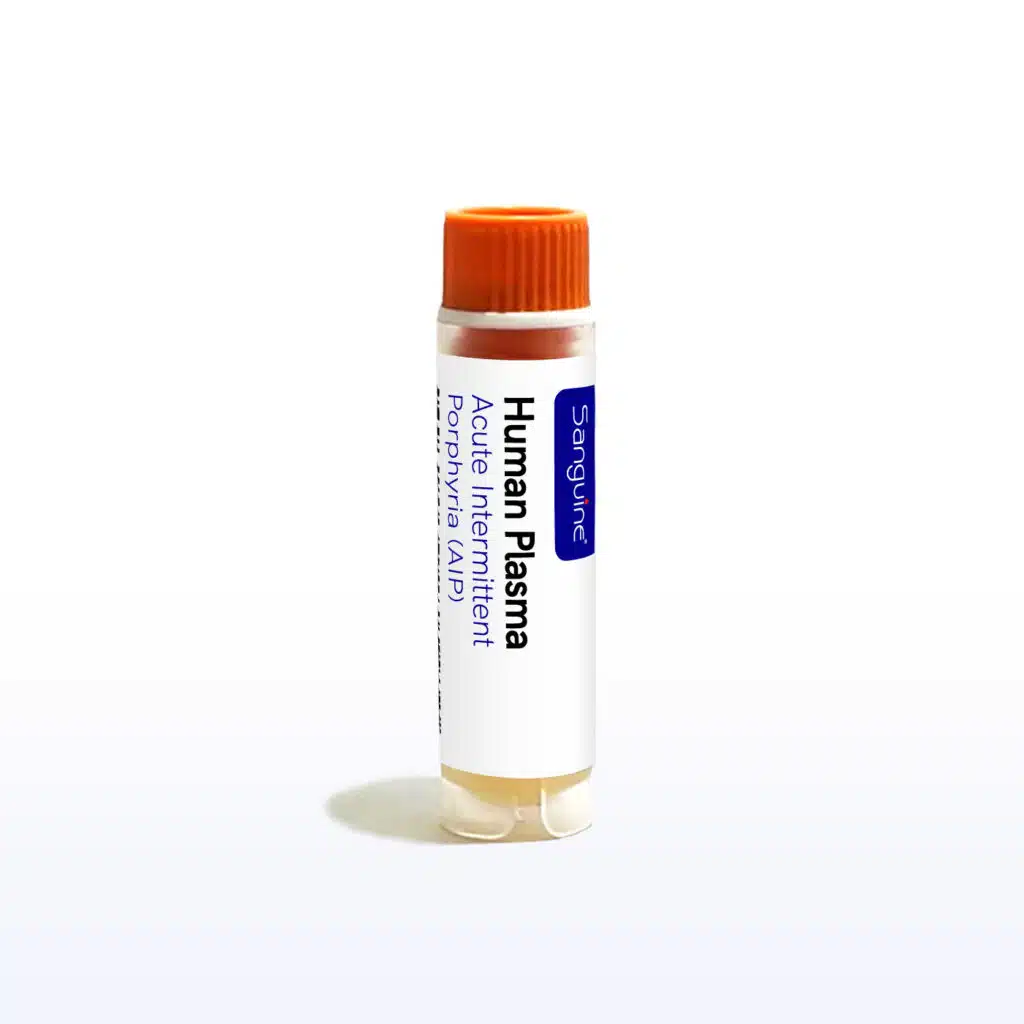
Acute Intermittent Porphyria Plasma
 Powered by Bioz
About:Acute Intermittent Porphyria Plasma is collected from donors with clinically confirmed acute intermittent porphyria (AIP). Useful for analyzing metabolic intermediates, inflammatory markers, and oxidative stress signatures.
About Acute Intermittent Porphyria Plasma
Acute Intermittent Porphyria (AIP) Plasma for Research
Acute Intermittent Porphyria Plasma is collected from donors clinically diagnosed with acute intermittent porphyria and processed within hours of collection to preserve key analytes such as metabolic intermediates, proteins, and metabolites. This human plasma supports biomarker discovery and mechanistic research into heme biosynthesis and the neurovisceral pathophysiology of AIP.
About Acute Intermittent Porphyria
AIP is an inherited metabolic disorder of heme biosynthesis, not an inflammatory or autoimmune disease. It results from deficiency of hydroxymethylbilane synthase (HMBS, also called porphobilinogen deaminase), the third enzyme in the pathway. When hepatic heme demand rises, the rate-limiting enzyme ALAS1 is induced and the partial HMBS block causes accumulation of the upstream porphyrin precursors δ-aminolevulinic acid (ALA) and porphobilinogen (PBG). ALA in particular is implicated in the acute neurovisceral attacks that define the condition — severe abdominal pain, autonomic instability, peripheral neuropathy, hyponatraemia, and neuropsychiatric features.
Attacks are typically provoked rather than spontaneous, and the common triggers matter for study design: CYP-inducing drugs, fasting or carbohydrate restriction, alcohol, infection, and hormonal fluctuation across the menstrual cycle. Most people carrying an HMBS variant remain biochemically latent and never experience an attack, so distinguishing manifest from latent donors is essential.
Donor Stratification Available
- Disease state — manifest (symptomatic) vs latent/asymptomatic HMBS variant carriers
- Attack status — during an acute attack, in remission, or with recurrent attacks
- Biochemical confirmation — urinary PBG and ALA values where tested
- Genetic confirmation — HMBS variant where sequenced
- Treatment status — including donors on hemin or ALAS1-directed therapy
- Matched healthy controls available
Product Features
- Research Use Only (RUO)
- Plasma collected from clinically confirmed acute intermittent porphyria donors
- Processed within one day of collection
- Light-protected handling on request, as porphyrin precursors are photolabile
- IRB-approved protocols and informed consent
- Custom aliquot volumes available upon request
De-identified Donor Data
- Verified acute intermittent porphyria diagnosis
- Demographic data: age, sex assigned at birth, race/ethnicity
- Donor-reported medications, allergies, and comorbidities
- Additional acute intermittent porphyria-specific metadata available
Applications
- ALA and PBG quantification and assay development
- Heme biosynthesis pathway and ALAS1 regulation research
- Biomarker discovery and validation, including attack-prediction markers
- Metabolomics and proteomics studies
- Neurotoxicity mechanism research
- Therapeutic response research, including siRNA and hemin approaches
Other Acute Intermittent Porphyria Specimen Types
Matched material from AIP donors is available as AIP serum, whole blood, and PBMC.
Compliance and Quality Assurance
- IRB-approved and HIPAA-compliant protocols
- Electronic informed consent with 21 CFR Part 11 – compliant e-signatures
- Documentation support available for regulatory review
Ordering and Customization
Acute intermittent porphyria plasma is available in standard and custom volumes. For international orders or documentation requirements, please email learnmore@sanguinebio.com to ensure compatibility with your country’s regulations. For the full specimen range, see our human plasma collection.
Applications
- Immunology and translational research
- Biomarker discovery and validation
- Drug screening and assay development
- Vaccine and infectious disease research
Product Features
- Research Use Only (RUO), Plasma
- Sourced from screened, consented donors
- Processed under validated SOPs
- QC tested for purity, viability, and sterility
- Processed within 24 hours of collection
- IRB-approved protocols with electronic informed consent
Donor Metadata
- Verified diagnosis and clinical history
- Demographic data: age, sex assigned at birth, race/ethnicity
- Medication and treatment background when available
Compliance and Quality Assurance
- IRB-approved collections and standardized procedures
- 21 CFR Part 11-compliant e-consent system
- HIPAA-compliant data management
Ordering & Customization
Human Plasma are available in customizable aliquot sizes. For international orders or documentation needs, please contact learnmore@sanguinebio.com to confirm requirements and availability. We also work with multiple ordering platforms and distributors, learn more here.
Protocols & Documentation
-
Download
Plasma Isolation
Protocol for plasma separation from anticoagulated whole blood, including processing, storage, and traceability requirements.
-
Informed Consent Form (ICF)
Available upon request — confirms donor consent for research use and downstream commercialization.
Plasma
Where can I find your complete catalog?
You can find our full product catalog here.
How long can samples be stored?
Storage depends on sample type but often cryopreserved samples stored in liquid nitrogen can be stored for years.
What customization options are available?
Extensive customization is available. To discuss your project request a quote or email us at learnmore@sanguinebio.com.
Do you offer prospective collections?
Sanguine offers flexible prospective collection services tailored to fit your research. For more information and to request a quote, please see: our prospective biospecimen collection services page.
What is the turnaround time for custom collections?
Timelines depend on condition, sample type, and I/E criteria but we often start collection within 2 weeks of signed agreement.
Do you have samples in stock?
YES - we have in-stock inventory. You can also email us at learnmore@sanguinebio.com as we continually get new samples in our inventory.
What does unique donor mean?
Each sample from a different individual - Unique donor means each sample comes from a different person, ensuring biological diversity in your study.
Are samples collected under IRB-approved protocols?
YES - "IRB-approved collection protocols" and IRB approval documentation available upon request. Sanguine utilizes two internationally-recognized IRBs (Advarra and WCG IRB) for review and approval.
Frequently Asked Questions
Ask a Question
Pair with a Healthy Control
Match your Acute Intermittent Porphyria Plasma with normal donor samples for comparison
Healthy Plasma
206 In Stock View InventoryNeed a custom Plasma cohort?
Our scientific team can scope prospective collections with donor-specific I/E criteria, typically starting within 2 weeks of agreement.