
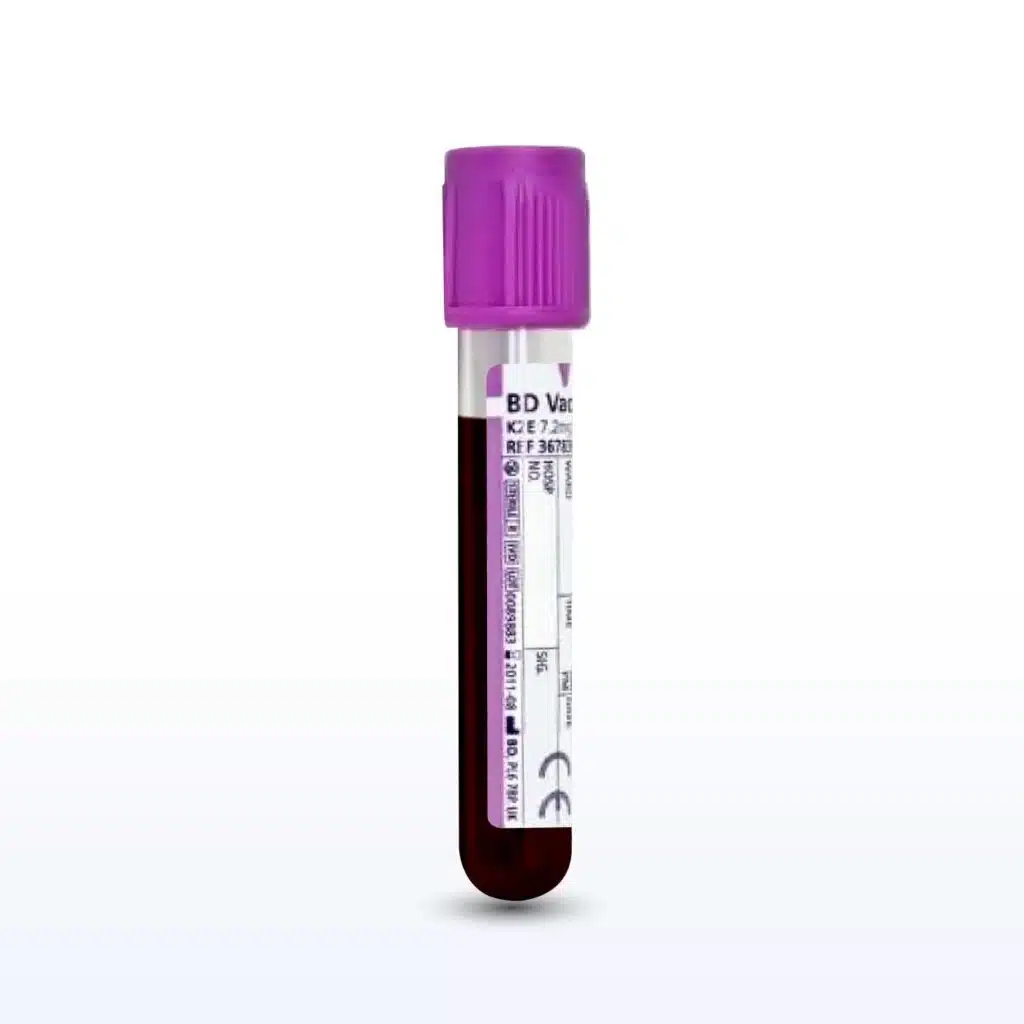
Vitiligo Whole Blood
 Powered by Bioz
About:Fresh Vitiligo Whole Blood - consented samples from donors with clinically confirmed vitiligo, an autoimmune disease driven by CD8+ T cell destruction of melanocytes. Ideal for cytotoxic T cell immunophenotyping, CXCL9/CXCL10 biomarker studies and JAK pathway research. Activity and subtype stratification available.
About Vitiligo Whole Blood
Vitiligo Whole Blood for Autoimmune Dermatology Research
Vitiligo Whole Blood is collected from IRB-consented donors with clinically confirmed vitiligo and shipped same day to preserve cellular and plasma analytes. Vitiligo is an autoimmune skin disease in which epidermal melanocytes are destroyed, producing sharply demarcated depigmented macules. Because the target cell and the effector mechanism are both well defined, vitiligo is a widely used human model of tissue-specific autoimmunity. These fresh samples support dermatological and immunological research into pathogenesis, biomarkers and treatment response.
Melanocyte-Directed Autoimmunity and Why Whole Blood
- Melanocyte loss in vitiligo is driven principally by CD8+ cytotoxic T cells recognising melanocyte differentiation antigens, making autoreactive T cell characterisation central to the field.
- The IFN-gamma–CXCL9/CXCL10–CXCR3 axis is the best-characterised signalling pathway in vitiligo, recruiting cytotoxic T cells to skin; this axis underpins the rationale for JAK inhibition in the disease.
- Melanocyte-directed autoantibodies are also detectable in patients, though cellular immunity is regarded as the dominant effector mechanism.
- Vitiligo is frequently associated with other autoimmune conditions, particularly autoimmune thyroid disease, so comorbidity metadata supports shared-pathway research.
- Whole blood retains cytotoxic and regulatory T cell populations alongside the plasma compartment carrying chemokines and autoantibodies, allowing paired cellular and soluble analysis from a single draw.
- Because whole blood is cellular, it supports immunophenotyping, antigen-specific T cell assays and RNA-based profiling in addition to circulating chemokine measurement.
Donor Stratification Available
- Disease subtype: non-segmental (generalised) versus segmental vitiligo
- Disease activity: actively spreading versus stable disease
- Extent of body surface involvement where documented
- Presence of associated autoimmune conditions, particularly autoimmune thyroid disease
- Treatment status: topical corticosteroids or calcineurin inhibitors, JAK inhibitors, phototherapy, or treatment-naive
- Matched healthy controls available
Product Features
- Fresh whole blood from clinically diagnosed vitiligo donors
- Custom tubes and anticoagulants available
- Collected and shipped same-day for maximum freshness
- Custom volumes available on request
- Research Use Only (RUO)
De-identified Donor Data
- Confirmed vitiligo diagnosis by physician or specialist
- Demographic details: age, sex assigned at birth, ethnicity
- Medical history including allergies and infectious disease status
- Disease activity, extent and treatment history where documented
Applications
- Immunophenotyping of CD8+ cytotoxic and regulatory T cell populations
- Melanocyte antigen-specific T cell response research
- CXCL9 and CXCL10 chemokine biomarker studies of disease activity
- JAK/STAT and interferon pathway signalling research
- Melanocyte-directed autoantibody detection and assay development
- Gene expression and transcriptomic analysis
- Treatment response and repigmentation biomarker discovery
- Drug response and mechanism-of-action studies
Other Vitiligo Specimen Types
Compliance and Quality Assurance
- IRB-approved protocols and electronic informed consent
- HIPAA-compliant data management
- Fast shipping with real-time tracking
Ordering & Customization
Vitiligo whole blood is available in a range of standard and custom volumes. For pricing, current availability, international orders or documentation requirements, please email learnmore@sanguinebio.com to ensure compatibility with your country’s regulations. To browse donor cohorts across our full inventory, visit our human whole blood page.
Applications
- Hematology and clinical chemistry research
- Plasma, serum, and PBMC isolation
- Flow cytometry and biomarker studies
- Drug-spike and ex vivo stimulation assays
Product Features
- Research Use Only (RUO), human whole blood
- Collected from screened, consented donors
- Available in EDTA, sodium heparin, ACD, or citrate anticoagulants
- Shipped fresh under temperature-controlled conditions
- Drawn and shipped same day of collection
- IRB-approved protocols with electronic informed consent
Donor Metadata
- Verified diagnosis and clinical history
- Demographic data: age, sex assigned at birth, race/ethnicity
- Medication and treatment background when available
Compliance and Quality Assurance
- IRB-approved collections and standardized procedures
- 21 CFR Part 11-compliant e-consent system
- HIPAA-compliant data management
Ordering & Customization
Human Whole Blood are available in customizable aliquot sizes. For international orders or documentation needs, please contact learnmore@sanguinebio.com to confirm requirements and availability. We also work with multiple ordering platforms and distributors, learn more here.
Whole Blood
Where can I find your complete catalog?
You can find our full product catalog here.
How long can samples be stored?
Storage depends on sample type but often cryopreserved samples stored in liquid nitrogen can be stored for years.
What customization options are available?
Extensive customization is available. To discuss your project request a quote or email us at learnmore@sanguinebio.com.
Do you offer prospective collections?
Sanguine offers flexible prospective collection services tailored to fit your research. For more information and to request a quote, please see: our prospective biospecimen collection services page.
What is the turnaround time for custom collections?
Timelines depend on condition, sample type, and I/E criteria but we often start collection within 2 weeks of signed agreement.
Do you have samples in stock?
YES - we have in-stock inventory. You can also email us at learnmore@sanguinebio.com as we continually get new samples in our inventory.
What does unique donor mean?
Each sample from a different individual - Unique donor means each sample comes from a different person, ensuring biological diversity in your study.
Are samples collected under IRB-approved protocols?
YES - "IRB-approved collection protocols" and IRB approval documentation available upon request. Sanguine utilizes two internationally-recognized IRBs (Advarra and WCG IRB) for review and approval.
Frequently Asked Questions
Ask a Question
Pair with a Healthy Control
Match your Vitiligo Whole Blood with normal donor samples for comparison
Healthy Whole Blood
View InventoryNeed a custom Whole Blood cohort?
Our scientific team can scope prospective collections with donor-specific I/E criteria, typically starting within 2 weeks of agreement.