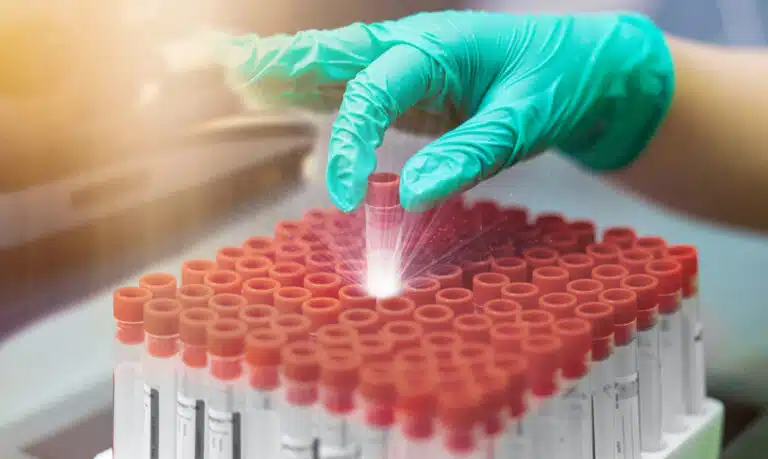
Advancing Long COVID Research: The Critical Role of Biospecimens in Understanding Post-Acute Sequelae
Introduction
Long COVID, formally known as post-acute sequelae of SARS-CoV-2 infection (PASC), still affects millions of people across the United States. This is true even as the pandemic shifts toward endemic circulation. Research suggests that 10-30% of people with confirmed COVID-19 develop persistent symptoms lasting weeks to months afterward.1,2 That creates an urgent need for diagnostic tools, therapeutic interventions, and a fuller understanding of what’s driving the condition. Advancing this research depends on access to well-characterized biospecimens from patients with confirmed long COVID.
Long COVID is a varied condition — it can involve cardiovascular, neurological, immunological, and metabolic complications. Understanding it requires longitudinal specimen collections paired with detailed clinical data. From study design to sample delivery, researchers need biospecimen resources that capture the natural history of post-acute disease. These resources must also support biomarker discovery and therapeutic validation.
Understanding Long COVID: Clinical Manifestations and Research Needs
Long COVID covers a wide range of persistent symptoms after acute SARS-CoV-2 infection. Common ones include fatigue, cognitive dysfunction (“brain fog”), shortness of breath, chest pain, palpitations, headache, and exercise intolerance.3 These symptoms can show up regardless of how severe the original infection was — even people with mild acute COVID-19 can develop them.
Recent systematic reviews have identified several symptom clusters in long COVID patients, with fatigue as the most common complaint. Neurological symptoms, including cognitive impairment and headaches, affect a large share of patients. These symptoms significantly reduce quality of life.4 Cardiovascular complications, including postural orthostatic tachycardia syndrome (POTS) and myocarditis, are especially concerning and need continued research.
Research priorities in long COVID include:
Biomarker Discovery: Finding diagnostic, prognostic, and predictive biomarkers that can stratify patients, predict natural history, and guide treatment. Promising markers under study include inflammatory cytokines (IL-6, TNF-α), endothelial dysfunction markers, and immune dysregulation signatures.5
Mechanistic Studies: Understanding viral persistence, autoimmune activation, endothelial dysfunction, microbiome changes, and mitochondrial dysfunction that may drive persistent symptoms. Matched sample sets — plasma, serum, PBMCs, and other matrices — support this kind of comprehensive mechanistic work.
Therapeutic Development: Supporting clinical trials and drug development that target long COVID symptoms and their underlying causes. Well-characterized patient cohorts with documented treatment responses are invaluable for validation studies.
Risk Stratification: Identifying host genetic factors, pre-existing conditions, and acute infection characteristics that predict who develops long COVID. Pairing genomic annotation with outcomes data supports precision medicine approaches.
The Role of Biospecimens in Long COVID Research
Longitudinal biospecimen collections are the gold standard for long COVID research. They let investigators track immune dynamics, inflammatory markers, and molecular signatures over time. Serial collections from the same patient — spanning acute infection, convalescence, and long COVID — are powerful tools for understanding disease progression and recovery.
Essential Specimen Types for Long COVID Research
Plasma and Serum Specimens
High-quality plasma and serum support measurement of cytokines, chemokines, antibody responses, viral antigens, and other soluble mediators. Studies have found elevated inflammatory markers — including IL-6, C-reactive protein, and D-dimer — in some long COVID patients. This suggests ongoing inflammation months after acute infection.6 Frozen aliquots with standardized collection protocols keep biomarker measurements consistent across platforms.
Peripheral Blood Mononuclear Cells (PBMCs)
Cryopreserved PBMCs support immune phenotyping, T-cell and B-cell repertoire analysis, and functional studies. Research suggests long COVID patients may show persistent immune activation, T-cell exhaustion, and shifted immune cell populations. These changes are detectable by flow cytometry and single-cell sequencing.7 Viable PBMCs with documented recovery rates support this deeper immune characterization.
Whole Blood Specimens
Whole blood collections support RNA sequencing, genomic analysis, and comprehensive blood chemistry panels. Transcriptomic profiling of long COVID patients has revealed distinct gene expression signatures tied to symptom severity and duration — offering mechanistic insight and potential therapeutic targets.8
Critical Annotation for Long COVID Biospecimens
The value of long COVID biospecimens goes well beyond the physical samples. Detailed clinical and molecular annotation is what turns a biospecimen into a powerful translational research tool. Key data elements include:
Acute Infection Characteristics:
- Confirmed COVID-19 diagnosis date and testing method
- Initial symptom onset and severity
- Hospitalization status and interventions required
- Viral variant information when available
Long COVID Symptom Documentation:
- Persistent symptom onset and duration
- Symptom severity scores and validated questionnaires
- Organ system involvement (cardiovascular, neurological, pulmonary, etc.)
- Impact on functional capacity and quality of life
Treatment History:
- Acute phase treatments (antivirals, corticosteroids, other medications)
- Long COVID symptom management approaches
- Response to interventions
Vaccination Status:
- COVID-19 vaccine type and dates
- Vaccination timeline relative to infection
- Breakthrough infection status
Outcomes Data:
- Natural history over time
- Recovery trajectories and timelines
- Biomarker changes with treatment or over time
- Development of new complications
Emerging Research Findings in Long COVID
Recent research using well-characterized biospecimens has pointed to several promising directions for understanding and treating long COVID:
Immune Dysregulation: Studies have found persistent immune activation markers — elevated inflammatory cytokines, shifted T-cell populations, and autoantibody production — in some long COVID patients. These findings point to possible targets for immune-modulating treatments.9
Endothelial Dysfunction: Evidence of ongoing vascular dysfunction months after acute infection lines up with cardiovascular symptoms and exercise intolerance. Biomarker panels that assess endothelial health could help identify patients at risk for cardiovascular complications early.10
Viral Persistence: Studies using patient tissue and blood specimens have found SARS-CoV-2 viral antigens and RNA in some long COVID patients months after their initial infection. That raises questions about where the virus might persist and what role it plays in ongoing symptoms.11
Metabolic Alterations: Metabolomic profiling shows disrupted energy metabolism and mitochondrial dysfunction in long COVID patients. This may help explain fatigue and exercise intolerance. These findings open up new treatment approaches that target metabolic pathways.
Supporting Long COVID Research: From Basic Discovery to Clinical Translation
Organizations supporting infectious disease research, including SanguineBio, offer prospective biospecimen collection services tailored to long COVID study needs. Custom cohort recruitment allows precise matching to inclusion/exclusion criteria, symptom profiles, and collection timepoints aligned with your study design.
Access to patients across the United States through established donor networks makes rapid cohort assembly possible. Quality standards stay high throughout. From study design to sample delivery, streamlined processes keep research timelines on track while meeting your specifications for downstream use.
For researchers who need existing inventory, curated collections of long COVID specimens with full annotation offer immediate access to well-characterized samples. Check our inventory to explore available long COVID biospecimen options.
The Path Forward: Precision Medicine for Long COVID
As research keeps revealing how complex post-acute COVID-19 is, high-quality biospecimens paired with deep phenotyping matter more than ever. Precision medicine approaches — using genomic profiling, immune signatures, and metabolic phenotypes — hold promise for stratifying patients and personalizing treatment.
Future directions in long COVID research include:
- Development of validated diagnostic biomarker panels
- Identification of therapeutic targets through multi-omics approaches
- Clinical trials testing immune-modulating, anti-inflammatory, and metabolism-targeting interventions
- Predictive models for long COVID risk assessment
- Long-term natural history studies tracking recovery and complications
The urgency here is real. Millions of people are affected. Healthcare systems are still managing the ongoing burden of post-acute sequelae. Strong biospecimen resources, paired with collaborative research, will speed progress toward effective diagnostics and treatments.
Conclusion
Long COVID research needs high-quality, well-annotated biospecimens that capture the natural history of this complex condition. Longitudinal collections from patients with confirmed SARS-CoV-2 infection and documented persistent symptoms are invaluable for biomarker discovery, mechanistic studies, and therapeutic development. As the scientific community works to understand post-acute COVID-19, investment in strong biospecimen resources will be essential to reaching breakthroughs that improve patient outcomes.
Learn more about our infectious disease biospecimen portfolio.
References
- CDC. Post-COVID Conditions. Centers for Disease Control and Prevention. Updated 2024. Accessed December 9, 2024. https://www.cdc.gov/coronavirus/2019-ncov/long-term-effects/
- Davis HE, McCorkell L, Vogel JM, Topol EJ. Long COVID: major findings, mechanisms and recommendations. Nat Rev Microbiol. 2023;21(3):133-146. doi:10.1038/s41579-022-00846-2
- Nalbandian A, Sehgal K, Gupta A, et al. Post-acute COVID-19 syndrome. Nat Med. 2021;27(4):601-615. doi:10.1038/s41591-021-01283-z
- Groff D, Sun A, Ssentongo AE, et al. Short-term and Long-term Rates of Postacute Sequelae of SARS-CoV-2 Infection: A Systematic Review. JAMA Netw Open. 2021;4(10):e2128568. doi:10.1001/jamanetworkopen.2021.28568
- Peluso MJ, Deeks SG. Early clues regarding the pathogenesis of long-COVID. Trends Immunol. 2022;43(4):268-270. doi:10.1016/j.it.2022.02.008
- Queiroz MAF, Neves PDMM, Lima SS, et al. Cytokine Profiles Associated With Acute COVID-19 and Long COVID-19 Syndrome. Front Cell Infect Microbiol. 2022;12:922422. doi:10.3389/fcimb.2022.922422
- Phetsouphanh C, Darley DR, Wilson DB, et al. Immunological dysfunction persists for 8 months following initial mild-to-moderate SARS-CoV-2 infection. Nat Immunol. 2022;23(2):210-216. doi:10.1038/s41590-021-01113-x
- Su Y, Yuan D, Chen DG, et al. Multiple early factors anticipate post-acute COVID-19 sequelae. Cell. 2022;185(5):881-895.e20. doi:10.1016/j.cell.2022.01.014
- Klein J, Wood J, Jaycox JR, et al. Distinguishing features of Long COVID identified through immune profiling. Nature. 2023;623(7985):139-148. doi:10.1038/s41586-023-06651-y
- Raman B, Bluemke DA, Lüscher TF, Neubauer S. Long COVID: post-acute sequelae of COVID-19 with a cardiovascular focus. Eur Heart J. 2022;43(11):1157-1172. doi:10.1093/eurheartj/ehac031
- Proal AD, VanElzakker MB. Long COVID or Post-acute Sequelae of COVID-19 (PASC): An Overview of Biological Factors That May Contribute to Persistent Symptoms. Front Microbiol. 2021;12:698169. doi:10.3389/fmicb.2021.698169