CD34+ Hematopoietic Stem Cells for Research: Sources and Applications

Every mature blood and immune cell traces back to a hematopoietic stem cell. For researchers working in gene therapy, transplant biology, or hematopoietic differentiation, CD34+ cells are the entry point to that entire lineage tree — and where you source them from changes what your experiment can do.
What Are CD34+ Hematopoietic Stem and Progenitor Cells?
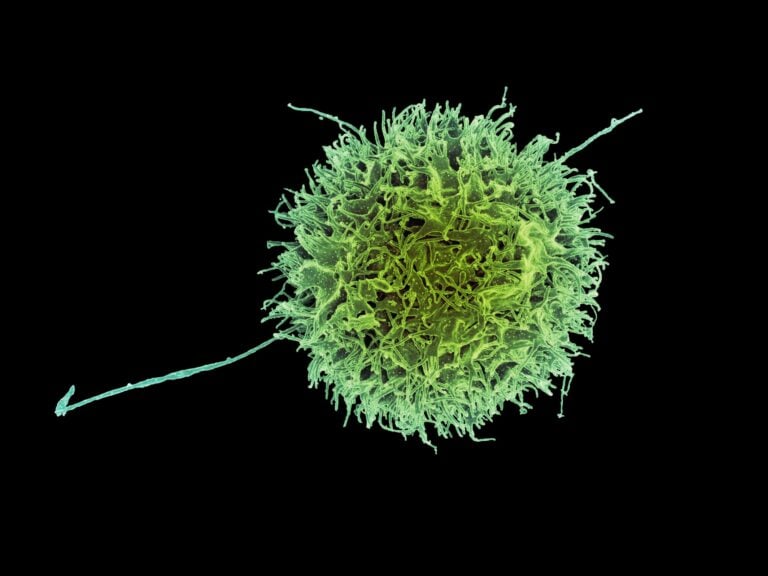
CD34 is the surface marker used to identify and isolate hematopoietic stem and progenitor cells (HSPCs) — the self-renewing population capable of differentiating into every mature blood and immune cell lineage. CD34+ cells are rare in steady-state adult peripheral blood, which is why researchers turn to two specific, richer sources.
Two Sources of CD34+ Cells: Cord Blood vs. Mobilized Peripheral Blood
The source you choose shapes the biology of what you get:
- Cord blood-derived CD34+ cells are more primitive and less differentiated than their adult counterparts, with longer telomeres and broader lineage potential. This translates to better engraftment performance in transplantation and humanized mouse models, though total yield per collection is limited by cord blood unit volume.
- Mobilized peripheral blood CD34+ cells — collected by leukapheresis after cytokine mobilization — are more committed progenitors, but available in far higher absolute numbers per collection, making this the practical choice when cell quantity is the priority.
Neither source is universally “better” — the right choice depends on whether your study needs primitive, high-engraftment potential cells or simply needs a large quantity of CD34+ material.
Research Applications
- Gene therapy and gene editing: CD34+ HSPCs are the standard target for ex vivo gene correction approaches, including CRISPR-based strategies for sickle cell disease and beta-thalassemia, since corrected cells can be expanded and reinfused to reconstitute the hematopoietic system.
- Humanized mouse models: CD34+ cell engraftment in immunodeficient mice builds a human immune system for in vivo study — cord blood-derived cells in particular are associated with more balanced, durable humanization.
- Hematopoietic differentiation studies: CD34+ cells are the standard starting population for studying lineage commitment and differentiation into specific blood cell types under defined culture conditions.
- Sickle cell disease and thalassemia research: Both conditions are studied and treated at the level of the CD34+ HSPC, since correcting the stem cell population corrects all of its downstream progeny.
- Transplant biology: CD34+ cell dose and quality are the primary determinants of engraftment success in both research models and clinical hematopoietic stem cell transplantation.
Sourcing Considerations
Whichever source you use, a few specifications determine whether the material will actually perform in your assay: CD34+ purity and absolute cell count (the primary driver of engraftment and expansion outcomes), viability at the time of use, and — where possible — functional colony-forming assay data, since post-thaw viability alone doesn’t guarantee that cells will engraft or expand as expected. For gene editing work specifically, transduction efficiency can vary meaningfully between cord blood and mobilized sources, so it’s worth confirming which source your specific protocol was optimized against.
Frequently Asked Questions
What is the difference between cord blood and mobilized CD34+ cells?
Cord blood CD34+ cells are more primitive with better engraftment potential but limited yield per unit. Mobilized peripheral blood CD34+ cells are more differentiated progenitors but available in much higher quantities per collection.
Why are CD34+ cells used in gene therapy?
Because they sit at the top of the hematopoietic lineage tree, correcting a genetic defect in CD34+ HSPCs corrects it in every downstream blood and immune cell they give rise to — making them the standard target for ex vivo gene correction in hematologic diseases.
How rare are CD34+ cells in blood?
CD34+ HSPCs are rare in steady-state peripheral blood — roughly 0.01–0.1% of mononuclear cells — which is why researchers source them from cord blood or cytokine-mobilized peripheral blood instead, where frequencies are substantially higher.
Explore Sanguine’s mobilized CD34+ cells for high-yield needs, or cord blood-derived CD34+ cells for applications prioritizing engraftment potential.