Research in Review: Novel Biomarkers for Atopic Dermatitis Identified in Newborns
Atopic Dermatitis and the Search for Early Biomarkers
Atopic dermatitis (AD), commonly known as eczema, is a complex skin condition that affects nearly 30% of children worldwide.(1) It’s especially common in infants and is linked to a higher risk of food allergies, allergic rhinitis, and asthma later on — a pattern known as the “atopic march.” Identifying AD early and treating it proactively could meaningfully improve quality of life and may reduce the risk of that broader atopic march.
Understanding the gene-gene and gene-environment interactions behind inflammation and flare-ups is genuinely difficult. The disease looks different from patient to patient because of several factors — dysregulated cytokines, immune mediator activation, host-microbe interactions, and a weakened skin barrier all play a role.(2) Because of this variability, a single treatment that works for everyone with AD is unlikely.
Current Treatment Landscape
Most AD patients currently rely on topical corticosteroids during flare-ups to calm the skin and repair the damaged outer layer. More recently, topical immune-modulating drugs like crisaborole (Eucrisa®) and injectable biologics like dupilumab (Dupixent®) have shown stronger results in certain patients.
Finding biomarkers that can predict who will develop AD, or distinguish between different presentations of the disease, is critical for building targeted treatments for specific patient subgroups — and these markers could eventually become useful diagnostic tools in the clinic. This research has already helped drive at least 70 new topical and systemic compounds into clinical development.(3) As we learn more about the molecular mechanisms behind AD, precision medicine offers real hope for better prevention and management.
New Research: Predicting AD Before Symptoms Appear
Recent research published in the Journal of Allergy and Clinical Immunology identified several novel skin biomarkers that could predict early-onset AD in newborns before any clinical signs appear.(4) Using non-invasive skin tape samples from two-month-old newborns — some with a family history of AD, some without — researchers identified several predictive biomarkers in the outermost skin layer (the stratum corneum) of infants who went on to develop AD.
These markers included lower levels of key protein-bound ceramides, which are crucial for skin barrier formation, along with higher IL-13 levels and a combination of type 2 cytokines and lipid biomarkers. Combined with a family history of atopic disease, these markers were strong predictors of future AD, with an odds ratio between 20 and 54. Since the study only included infants of Asian ethnicity, replicating these results in other ethnic groups would help confirm how broadly the findings apply.
These results could eventually guide precision medicine in the clinic — for example, screening newborns for these markers and then using emollients containing specific ceramides, or biologics that target the Th2-skewed immune response, to prevent or treat AD before it starts.
How the Study Was Done
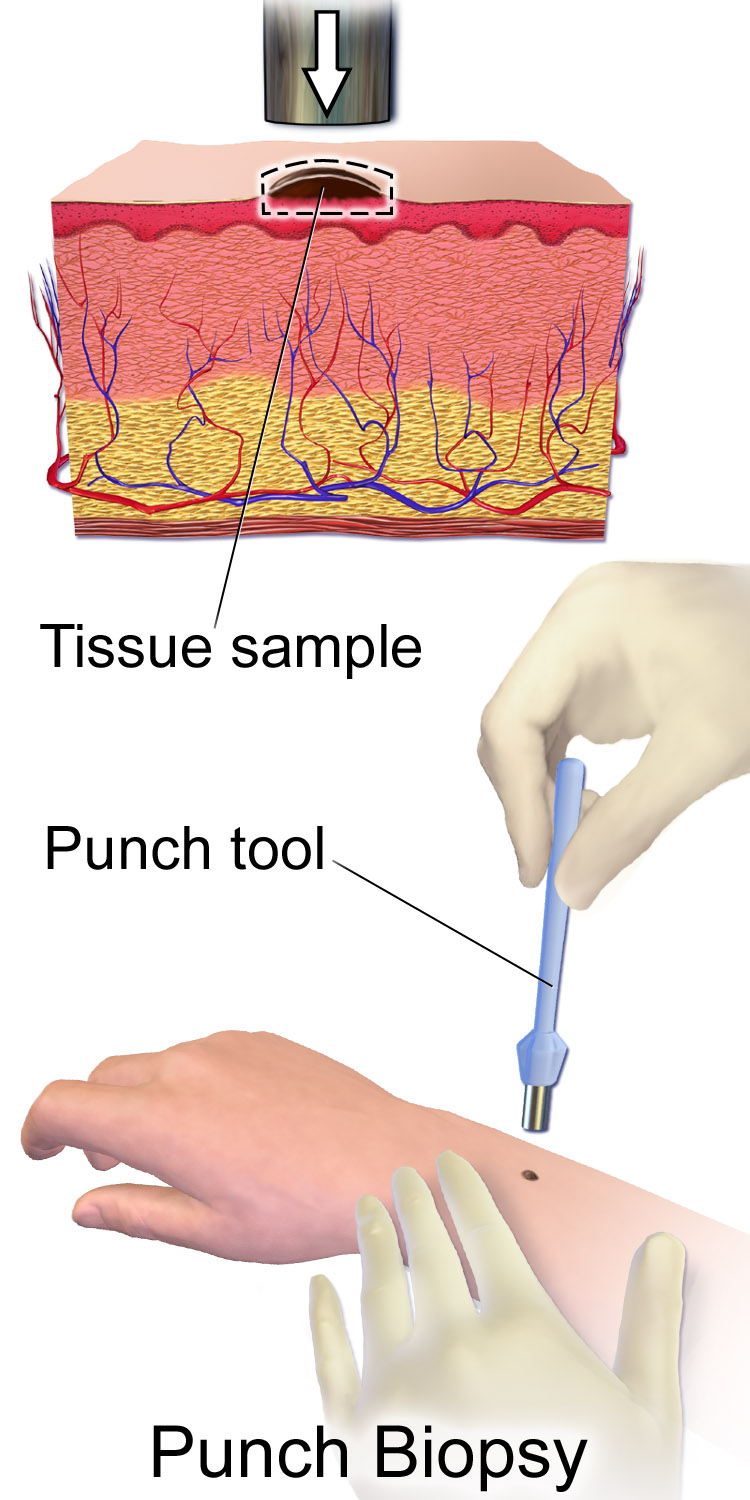
Researchers made these discoveries using non-invasive skin tape collection in 111 babies, 74 of whom were considered at risk for AD. This method uses medical adhesive tape to lift inflamed skin cells in a quick, painless process — replacing the need for invasive biopsies in research.
The skin tape samples were analyzed with mass spectrometry to profile a wide range of lipid molecules, and with cytokine immunoassays to understand the mechanisms behind skin barrier function and immune response. Skin taping is a valuable tool for biomarker discovery across many skin-related autoimmune diseases, since it gives a snapshot of a patient’s epidermal profile. It’s especially useful because it’s extremely safe — even on newborn skin — while still providing rich information for both research and clinical use.
Ultimately, uncovering the molecular features behind various skin diseases helps us understand why they happen and points toward new therapeutic approaches.
Sanguine’s Role in Skin Biomarker Research
Here at Sanguine, we offer skin taping biospecimen collection along with customizable laboratory processing and testing to support biomarker research and scientific discovery. We’re pioneers in patient-centric mobile study recruitment and prospective biospecimen procurement, bringing research participation into patients’ homes to achieve fast enrollment and high retention rates.
Our database of over 60,000 willing research participants across the United States gives us access to many disease populations, including patients with AD, psoriasis, cutaneous lupus erythematosus, and other autoimmune skin conditions. Contact us to learn more about our approach to biospecimen collection and how we can help set your study up for success.

References
- Abuabara K, Yu AM, Okhovat JP, Allen IE, Langan SM. The prevalence of atopic dermatitis beyond childhood: A systematic review and meta-analysis of longitudinal studies. Allergy. 2018 Mar;73(3):696–704.
- Luger T, Amagai M, Dreno B, Dagnelie MA, Liao W, Kabashima K, et al. Atopic dermatitis: Role of the skin barrier, environment, microbiome, and therapeutic agents. J Dermatol Sci. 2021 Jun;102(3):142–57.
- Bieber T. Atopic dermatitis: an expanding therapeutic pipeline for a complex disease. Nat Rev Drug Discov. 2022 Jan;21(1):21–40.
- Berdyshev E, Kim J, Kim BE, Goleva E, Lyubchenko T, Bronova I, et al. Stratum corneum lipid and cytokine biomarkers at age 2 months predict the future onset of atopic dermatitis. Journal of Allergy and Clinical Immunology. 2023 Feb;S0091674923002270.