
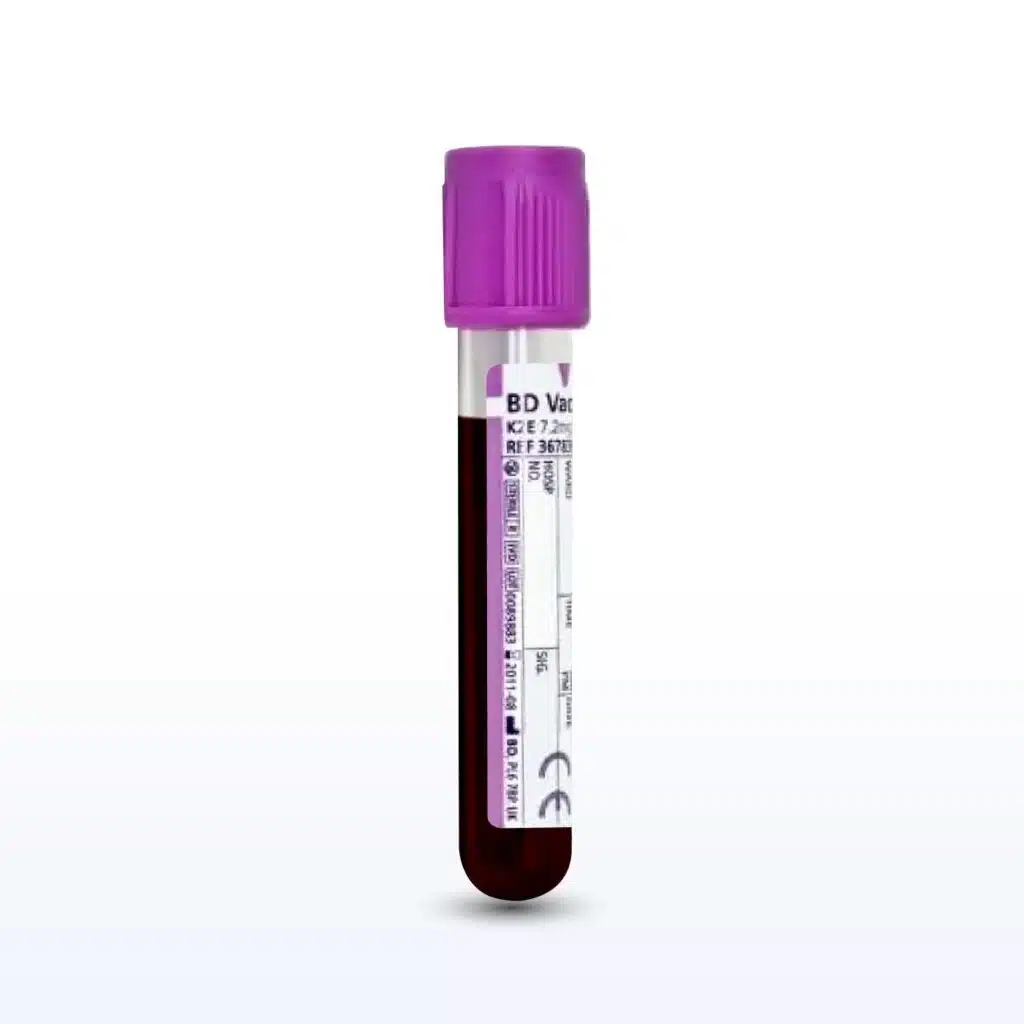
Hidradenitis Suppurativa Whole Blood
 Powered by Bioz
About:Fresh whole blood from consented donors with physician-confirmed hidradenitis suppurativa, an immune-mediated inflammatory skin disease. Retains neutrophils and monocytes lost in PBMC preps, supporting TNF/IL-1/IL-17 pathway work, whole-blood transcriptomics and ex vivo stimulation. Stratified by Hurley stage, treatment status and smoking history.
About Hidradenitis Suppurativa Whole Blood
Hidradenitis Suppurativa Whole Blood for Inflammatory Skin Disease Research
Hidradenitis Suppurativa (HS) Whole Blood is collected from IRB-consented donors with a physician-confirmed HS diagnosis and shipped same-day for dermatology, innate immunity and inflammation research. HS is a chronic, immune-mediated inflammatory skin disease of follicular occlusion — it is not an autoantibody-driven autoimmune condition. Custom anticoagulants and collection tubes are available, and matched serum, plasma and PBMC from the same donors can be requested.
Why Whole Blood for Hidradenitis Suppurativa
HS begins with occlusion and rupture of the terminal hair follicle in apocrine-gland-bearing intertriginous skin, releasing keratin and microbial material into the dermis and triggering a strongly innate, neutrophil-rich inflammatory response that organises into nodules, abscesses and epithelialised tunnels. That biology makes granulocytes central — and granulocytes are exactly what density-gradient PBMC preparations discard.
- Preserves neutrophils and monocytes in native proportions — critical for a disease whose lesions are dominated by neutrophilic infiltrate and tunnel formation, and for deriving neutrophil-to-lymphocyte ratio alongside the same draw.
- Total-leukocyte RNA including granulocytes — whole-blood transcriptomics captures the granulocyte compartment that PBMC RNA-seq systematically misses, supporting work on the TNF, IL-1 and IL-17 pathways implicated in HS.
- Ex vivo whole-blood stimulation — LPS or lesional-flora stimulation in autologous plasma keeps innate cells in a physiologic milieu, useful for studying the exaggerated innate response reported in HS.
- Supports biologic mechanism-of-action work — HS is treated with TNF blockade and IL-17 pathway inhibition, so whole blood allows pathway readouts to be paired with documented treatment status.
- Genomic and pharmacogenomic DNA — sufficient high-molecular-weight DNA for genotyping studies of familial and syndromic HS.
- Paired plasma from the same tube — systemic inflammatory markers such as CRP can be measured alongside cellular readouts without a second donor visit.
Donor Stratification Available
- Hurley stage I, II or III, and IHS4 lesion counts where recorded
- Lesion phenotype: inflammatory nodules and abscesses versus established draining tunnels; anatomical distribution
- Treatment status: treatment-naive, topical or systemic antibiotics, TNF inhibitor, IL-17 pathway inhibitor, or post-surgical
- Smoking status and BMI category — both strongly associated with HS severity
- Comorbidities including inflammatory arthritis, acne, pilonidal disease and inflammatory bowel disease
- Matched healthy controls available, age- and sex-matched on request
Product Features
- Fresh whole blood from clinically diagnosed hidradenitis suppurativa donors
- Custom anticoagulants and collection tubes available (EDTA, sodium heparin, ACD, PAXgene and others on request)
- Same-day collection and shipment
- Custom draw volumes; values reported per lot
- Research Use Only (RUO)
De-identified Donor Data
- Physician-confirmed diagnosis, including Hurley stage where available
- Demographics: age, sex assigned at birth, race/ethnicity
- Relevant medical, medication and treatment history
- Additional HS-specific metadata available on request
Applications
- Whole-blood transcriptomic profiling of the granulocyte and monocyte compartments
- Neutrophil function, chemotaxis and extracellular trap studies
- TNF, IL-1 and IL-17 pathway biomarker discovery
- Ex vivo stimulation and cytokine release assays in autologous plasma
- Biologic response and non-response research stratified by treatment history
- Systemic inflammatory burden and comorbidity research
- DNA extraction for genotyping and pharmacogenomics
- Assay development and qualification for dermatology clinical programmes
Other Hidradenitis Suppurativa Specimen Types
- Hidradenitis Suppurativa Serum
- Hidradenitis Suppurativa Plasma
- Hidradenitis Suppurativa PBMC
- Hidradenitis Suppurativa Leukopak
- Hidradenitis Suppurativa Skin Punch Biopsy
Compliance and Quality Assurance
- IRB-approved protocols and electronic informed consent
- HIPAA-compliant donor data handling
- Documentation support available for regulatory review
Ordering & Customization
Hidradenitis suppurativa whole blood is available in standard and custom volumes. For pricing, availability or a specific stratification request, email learnmore@sanguinebio.com; please also contact us for international orders or documentation requirements. To browse availability across all disease states, visit our human whole blood page.
Applications
- Hematology and clinical chemistry research
- Plasma, serum, and PBMC isolation
- Flow cytometry and biomarker studies
- Drug-spike and ex vivo stimulation assays
Product Features
- Research Use Only (RUO), human whole blood
- Collected from screened, consented donors
- Available in EDTA, sodium heparin, ACD, or citrate anticoagulants
- Shipped fresh under temperature-controlled conditions
- Drawn and shipped same day of collection
- IRB-approved protocols with electronic informed consent
Donor Metadata
- Verified diagnosis and clinical history
- Demographic data: age, sex assigned at birth, race/ethnicity
- Medication and treatment background when available
Compliance and Quality Assurance
- IRB-approved collections and standardized procedures
- 21 CFR Part 11-compliant e-consent system
- HIPAA-compliant data management
Ordering & Customization
Human Whole Blood are available in customizable aliquot sizes. For international orders or documentation needs, please contact learnmore@sanguinebio.com to confirm requirements and availability. We also work with multiple ordering platforms and distributors, learn more here.
Whole Blood
Where can I find your complete catalog?
You can find our full product catalog here.
How long can samples be stored?
Storage depends on sample type but often cryopreserved samples stored in liquid nitrogen can be stored for years.
What customization options are available?
Extensive customization is available. To discuss your project request a quote or email us at learnmore@sanguinebio.com.
Do you offer prospective collections?
Sanguine offers flexible prospective collection services tailored to fit your research. For more information and to request a quote, please see: our prospective biospecimen collection services page.
What is the turnaround time for custom collections?
Timelines depend on condition, sample type, and I/E criteria but we often start collection within 2 weeks of signed agreement.
Do you have samples in stock?
YES - we have in-stock inventory. You can also email us at learnmore@sanguinebio.com as we continually get new samples in our inventory.
What does unique donor mean?
Each sample from a different individual - Unique donor means each sample comes from a different person, ensuring biological diversity in your study.
Are samples collected under IRB-approved protocols?
YES - "IRB-approved collection protocols" and IRB approval documentation available upon request. Sanguine utilizes two internationally-recognized IRBs (Advarra and WCG IRB) for review and approval.
Frequently Asked Questions
Ask a Question
Pair with a Healthy Control
Match your Hidradenitis Suppurativa Whole Blood with normal donor samples for comparison
Healthy Whole Blood
View InventoryNeed a custom Whole Blood cohort?
Our scientific team can scope prospective collections with donor-specific I/E criteria, typically starting within 2 weeks of agreement.