
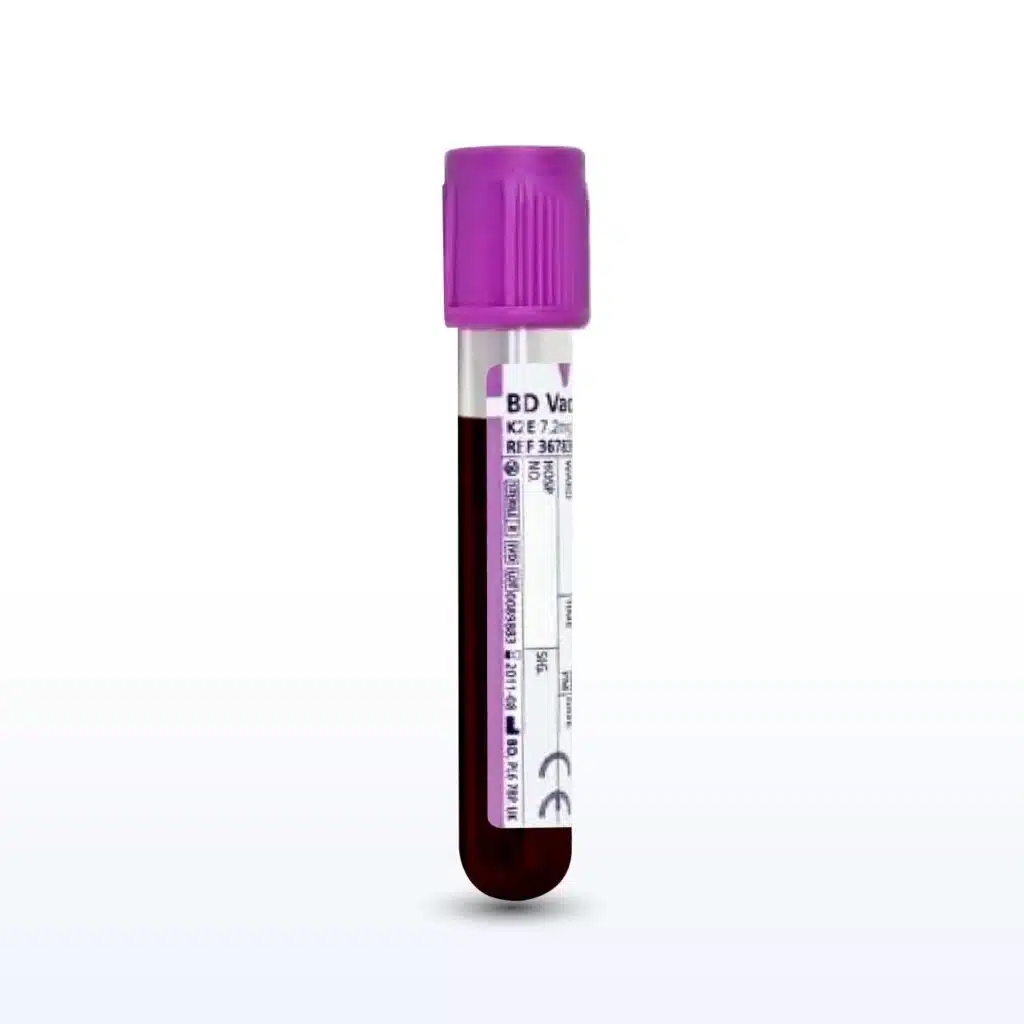
Multiple Sclerosis Whole Blood
 Powered by Bioz
About:Multiple Sclerosis Whole Blood — fresh, same-day whole blood from consented donors with clinically confirmed MS, an autoimmune demyelinating disease of the central nervous system. Ideal for immunophenotyping, whole-blood stimulation assays, transcriptomics, HLA typing, and disease-modifying therapy pharmacodynamics. Course subtype, activity, and treatment status available for stratification.
About Multiple Sclerosis Whole Blood
Multiple Sclerosis Whole Blood for Neuroimmunology Research
Multiple Sclerosis Whole Blood is collected from IRB-consented donors with clinically confirmed multiple sclerosis (MS) and shipped same-day. Because the cellular compartment is intact, these fresh samples support immunophenotyping, functional assays, transcriptomics, and germline genotyping in neuroimmunology research.
MS Immunopathology and Why Whole Blood
Multiple sclerosis is an autoimmune, inflammatory demyelinating disease of the central nervous system. It is neither a dermatological condition nor a primary neurodegenerative one, although neurodegeneration follows the inflammatory injury:
- Autoimmune attack on myelin. Autoreactive CD4+ T cells of Th1 and Th17 phenotype, together with CD8+ T cells and B cells, cross the blood-brain barrier and drive focal demyelination, oligodendrocyte injury, and secondary axonal loss
- B cells are causally involved. The efficacy of anti-CD20 therapies established B cells as central to relapse biology, alongside the long-recognised intrathecal immunoglobulin synthesis seen as oligoclonal bands in cerebrospinal fluid
- Lymphocyte trafficking is a validated drug target — α4-integrin blockade and sphingosine-1-phosphate receptor modulation both act by restricting lymphocyte access to the CNS, making circulating lymphocyte composition a direct pharmacodynamic readout
- Risk architecture is well mapped: HLA-DRB1*15:01 is the dominant genetic risk allele, and Epstein-Barr virus infection, low vitamin D status, and smoking are established environmental associations
- Course subtypes differ mechanistically: relapsing-remitting MS is inflammation-dominant, while secondary and primary progressive forms feature progressive neurodegeneration with less prominent focal inflammation
- Why whole blood: fresh, unfractionated blood preserves granulocytes as well as mononuclear cells, permits same-day flow cytometry and stimulation assays, and is the preferred material for RNA stabilisation and germline HLA and risk-variant genotyping
Donor Stratification Available
- Course subtype: relapsing-remitting, secondary progressive, or primary progressive MS
- Disease activity: active relapse versus clinical remission
- Disability level where Expanded Disability Status Scale scores are documented
- Treatment status: treatment-naive, on anti-CD20 therapy, S1P modulators, natalizumab, or oral immunomodulators
- Disease duration and age at onset
- Age, sex assigned at birth, race/ethnicity, and vitamin D or smoking status where recorded
- Matched healthy controls available
Product Features
- Fresh whole blood from clinically diagnosed multiple sclerosis donors
- Custom tubes and anticoagulants available, including RNA stabilisation tubes
- Collected and shipped same-day for maximum viability
- Standard and custom volumes available
- Research Use Only (RUO)
De-identified Donor Data
- Confirmed multiple sclerosis diagnosis by physician or specialist, with subtype where documented
- Demographic details: age, sex assigned at birth, ethnicity
- Medical history including allergies and infectious disease status
- Disease-modifying therapy history and disability scores available on request
Applications
- Immunophenotyping of T-cell, B-cell, monocyte, and NK populations in MS
- Whole-blood stimulation and functional cytokine release assays
- Lymphocyte trafficking and disease-modifying therapy pharmacodynamic studies
- Whole-blood gene expression and transcriptomic analysis
- HLA typing and germline risk-variant genotyping
- Regulatory T-cell and B-cell subset characterisation
- Drug response and mechanism-of-action research
- Comparative studies across MS course subtypes and against matched controls
Other Multiple Sclerosis Specimen Types
- Multiple Sclerosis PBMC and Leukopak — cryopreserved and apheresis-derived cells
- Multiple Sclerosis Serum, Plasma, and Bulk Plasma — for soluble analytes including neurofilament light chain
- Multiple Sclerosis Cerebrospinal Fluid — the CNS-proximal compartment, for oligoclonal band and intrathecal immunoglobulin research
- Course-specific cohorts: Relapsing-Remitting MS Whole Blood and Secondary Progressive MS Whole Blood
- Pre-isolated subsets: CD4+ T cells, CD8+ T cells, CD19+ B cells, and CD56+ NK cells
Compliance and Quality Assurance
- IRB-approved protocols and electronic informed consent
- HIPAA-compliant data management
- Fast shipping with real-time tracking
Ordering and Customization
Multiple sclerosis whole blood is available in a range of standard and custom volumes. For pricing, international orders, or documentation requirements, please email learnmore@sanguinebio.com to ensure compatibility with your country’s regulations. For healthy-donor controls and the full specimen range, see our human whole blood collection.
Applications
- Hematology and clinical chemistry research
- Plasma, serum, and PBMC isolation
- Flow cytometry and biomarker studies
- Drug-spike and ex vivo stimulation assays
Product Features
- Research Use Only (RUO), human whole blood
- Collected from screened, consented donors
- Available in EDTA, sodium heparin, ACD, or citrate anticoagulants
- Shipped fresh under temperature-controlled conditions
- Drawn and shipped same day of collection
- IRB-approved protocols with electronic informed consent
Donor Metadata
- Verified diagnosis and clinical history
- Demographic data: age, sex assigned at birth, race/ethnicity
- Medication and treatment background when available
Compliance and Quality Assurance
- IRB-approved collections and standardized procedures
- 21 CFR Part 11-compliant e-consent system
- HIPAA-compliant data management
Ordering & Customization
Human Whole Blood are available in customizable aliquot sizes. For international orders or documentation needs, please contact learnmore@sanguinebio.com to confirm requirements and availability. We also work with multiple ordering platforms and distributors, learn more here.
Whole Blood
Where can I find your complete catalog?
You can find our full product catalog here.
How long can samples be stored?
Storage depends on sample type but often cryopreserved samples stored in liquid nitrogen can be stored for years.
What customization options are available?
Extensive customization is available. To discuss your project request a quote or email us at learnmore@sanguinebio.com.
Do you offer prospective collections?
Sanguine offers flexible prospective collection services tailored to fit your research. For more information and to request a quote, please see: our prospective biospecimen collection services page.
What is the turnaround time for custom collections?
Timelines depend on condition, sample type, and I/E criteria but we often start collection within 2 weeks of signed agreement.
Do you have samples in stock?
YES - we have in-stock inventory. You can also email us at learnmore@sanguinebio.com as we continually get new samples in our inventory.
What does unique donor mean?
Each sample from a different individual - Unique donor means each sample comes from a different person, ensuring biological diversity in your study.
Are samples collected under IRB-approved protocols?
YES - "IRB-approved collection protocols" and IRB approval documentation available upon request. Sanguine utilizes two internationally-recognized IRBs (Advarra and WCG IRB) for review and approval.
Frequently Asked Questions
Ask a Question
Pair with a Healthy Control
Match your Multiple Sclerosis Whole Blood with normal donor samples for comparison
Healthy Whole Blood
View InventoryNeed a custom Whole Blood cohort?
Our scientific team can scope prospective collections with donor-specific I/E criteria, typically starting within 2 weeks of agreement.