
Advancing HPV Vaccination Research: How Biospecimens Are Accelerating Progress Toward Cervical Cancer Elimination
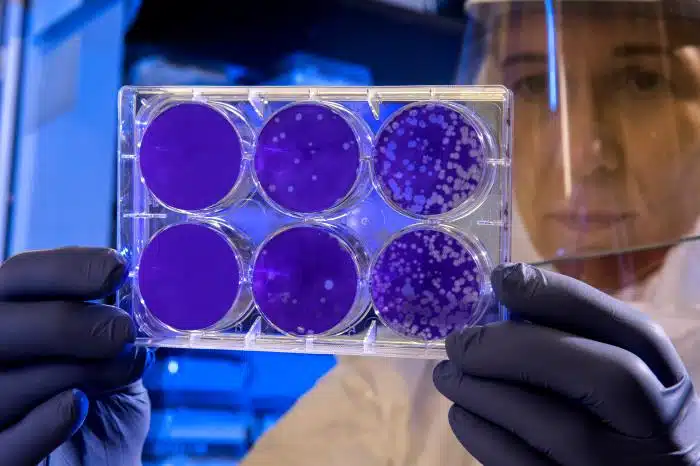
Photo credit: CDC/ Robert Denty; James Gathany
Human papillomavirus (HPV) is one of the most common sexually transmitted infections in the world. Nearly all sexually active people encounter at least one HPV type in their lifetime. Most infections clear on their own. But persistent infection with high-risk strains — especially HPV 16 and 18 — causes nearly all cervical cancer. It is also responsible for a share of cancers of the oropharynx, anus, vulva, vagina, and penis.1,2 Prophylactic HPV vaccines are one of modern medicine’s biggest cancer-prevention wins. They have the potential to eliminate cervical cancer as a public health threat this century. HPV research sits at the intersection of our infectious disease and oncology biospecimen portfolios.
Research on HPV vaccination depends on well-characterized biospecimens from people with confirmed HPV infection, across different viral types, vaccination statuses, and clinical outcomes. From study design to sample delivery, investigators need specimens paired with HPV genotyping data, antibody titers, vaccination history, and natural history information. That data supports work to evaluate vaccine efficacy, optimize dosing, understand immune response, and develop next-generation vaccines for more HPV types.3
The World Health Organization’s endorsement of single-dose HPV vaccination schedules shows how fast this field is moving. It also shows how much biospecimens matter for generating the evidence behind policy change with global reach.4
Understanding HPV: Virology, Epidemiology, and Cancer Risk
HPV includes more than 200 viral types, classified as low-risk or high-risk based on cancer potential. Low-risk types like HPV 6 and 11 cause benign conditions such as genital warts. High-risk types — mainly HPV 16 and 18 — cause about 70% of cervical cancer cases worldwide.5 Other high-risk types, including HPV 31, 33, 35, 45, 52, and 58, account for the rest.
Epidemiology and Disease Burden
- Global Prevalence: HPV infection affects an estimated 80% of sexually active people at some point. Prevalence peaks in young adults shortly after they become sexually active. Most infections clear within 1–2 years through natural immunity.6
- Cancer Incidence: Cervical cancer is the fourth most common cancer in women worldwide, with over 600,000 new cases and 340,000 deaths each year. Incidence varies widely by region, with the highest burden where screening and vaccination access are limited.7
- Other HPV-Associated Cancers: HPV also causes many oropharyngeal cancers (especially in men), anal cancers, and cancers of the vulva, vagina, and penis. Rising oropharyngeal cancer rates in some groups show why gender-neutral vaccination matters.8
HPV Vaccines: Development, Implementation, and Impact
Regulators have approved three prophylactic HPV vaccines:
- Bivalent vaccine (HPV 16, 18)
- Quadrivalent vaccine (HPV 6, 11, 16, 18)
- Nonavalent vaccine (HPV 6, 11, 16, 18, 31, 33, 45, 52, 58)
These vaccines use virus-like particles (VLPs) that mimic HPV capsid proteins. They trigger a strong antibody response without any infectious viral material. In clinical trials, they were more than 90% effective at preventing persistent infection and precancerous lesions from vaccine-included HPV types, in people not previously infected.9,10
Global Implementation Progress
Since the vaccine launched in 2006, HPV vaccination programs have reached more than 125 countries. In countries with high coverage — including Australia, Scotland, and England — real-world data shows steep drops in HPV prevalence, genital warts, and precancerous cervical lesions. Early signals also point to lower cervical cancer rates in vaccinated groups.11,12
Still, global coverage remains low, especially in low- and middle-income countries where cervical cancer burden is highest. The WHO’s recommendation for single-dose HPV vaccination in girls ages 9–20 is a major policy shift aimed at improving access and coverage.13
The Role of Biospecimens in HPV Vaccination Research
Well-characterized HPV biospecimens support several key research areas: vaccine efficacy and effectiveness studies, immunogenicity assessment, natural history studies, and screening and diagnostics development.
Vaccine Efficacy and Effectiveness Studies
Immunogenicity Assessment
Serum specimens from vaccinated people let researchers measure anti-HPV antibody titers against both vaccine-included and non-included HPV types. Longitudinal collections track how long antibodies persist — years to decades — which informs decisions about booster doses. Studies comparing one-, two-, and three-dose responses help optimize vaccine schedules with real evidence.14
Cross-Protection Evaluation
HPV vaccines offer partial protection against related, non-vaccine HPV types. Biospecimens paired with full HPV genotyping let researchers measure how much cross-protection exists and how long it lasts — potentially expanding vaccine benefits beyond their direct targets.
Breakthrough Infection Investigation
Confirmed HPV infections with vaccine-type strains are rare in vaccinated people, but they happen. Investigating these cases requires fast access to specimens for viral genotyping, antibody measurement, and immune characterization to understand what went wrong.
HPV Natural History and Immune Response Studies
Clearance vs. Persistence
Some confirmed HPV infections clear on their own. Others persist and progress toward cancer. Understanding why requires longitudinal specimen collections from people across every disease stage. PBMC specimens let researchers characterize HPV-specific cellular immunity, including the T-cell and innate immune responses tied to clearance and persistence.15
Biomarker Discovery
Finding biomarkers that predict persistence, progression, or treatment response requires specimens from people at multiple points in HPV’s natural history. Candidate markers include viral load in cervical specimens, HPV E6/E7 oncoprotein expression, methylation patterns, and host immune signatures. Pairing these with clinical data and genomic annotation can make biomarkers more reliable across populations in the United States.
Co-Factor Investigation
Research on co-factors that raise HPV-related cancer risk — smoking, immunosuppression, co-infections, genetic susceptibility — needs biospecimens with detailed, standardized patient data. Integrated patient data annotation supports analyses that separate viral and host contributions to progression risk.
Screening and Diagnostics Development
HPV DNA Testing Validation
Commercial HPV DNA tests need validation against specimens confirmed for HPV status through multiple methods. Panels spanning HPV types, viral loads, and collection methods support assay development and regulatory submissions.
Novel Biomarker Validation
New diagnostic approaches — targeting HPV RNA, methylation, or protein markers — need well-characterized specimen sets for validation. Specimens spanning acute infection through invasive cancer support a full picture of test performance.
Point-of-Care Test Development
Rapid HPV tests for underserved settings need specimens that represent the target population, including self-collected vaginal samples and specimens from people with varying infection rates.
Single-Dose HPV Vaccination: Research Supporting Policy Change
The WHO’s endorsement of single-dose HPV vaccination is a major shift, built on evidence from clinical trials and real-world studies. It has big implications for global cervical cancer elimination — potentially improving coverage while cutting costs and logistics.16
Evidence Base for Single-Dose Schedules
Immunogenicity Data
Studies using biospecimens from single-dose recipients found high, sustained antibody titers at protective levels. Antibody concentrations were lower than after multi-dose schedules, but they still exceeded natural infection levels and stayed stable over long follow-up periods.17 These studies often rely on standardized serum and plasma collections for consistent serology testing across platforms and timepoints.
Effectiveness Evidence
In settings where programmatic challenges led many people to receive only a single dose, real-world data showed large drops in HPV infection and precancerous lesions. These findings — based on population-level specimen collection and testing — provided key evidence for policy change.18
Duration of Protection
Longitudinal biospecimen collections tracking antibody levels 10+ years after single-dose vaccination feed modeling studies that predict long-term protection. Continued biospecimen-based surveillance will confirm whether those predictions hold up.
Biospecimen Requirements for HPV Research
Sample Types and Annotation
Cervical and Vaginal Specimens
Clinician-collected or self-collected cervical/vaginal samples in the right transport media support HPV genotyping, viral load quantification, and co-testing strategies. Pair these with cytology results and colposcopy findings when available.
Serum and Plasma
High-quality serum, collected under standardized protocols, supports antibody testing across HPV types. Plasma supports complementary immune assays and multi-analyte biomarker work; larger programs sometimes use bulk plasma for assay development, validation panels, and cross-lab harmonization.
Peripheral Blood Mononuclear Cells
Cryopreserved PBMCs from vaccinated and HPV-infected people support cellular immunity studies, including HPV-specific T-cell responses and innate immune characterization. For deeper immune phenotyping, subsets like CD3+ T cells and CD56+ NK cells support mechanistic studies of immune correlates of protection.
Tissue Specimens
When available, cervical tissue biopsies or surgical specimens from precancerous lesions or invasive cancers support work on local immune responses, viral integration, and host-pathogen interactions.
Critical Clinical Annotation
Specimens should include full documentation of:
HPV Testing Results
- HPV genotype(s) detected
- Viral load or cycle threshold values
- Testing methodology and platform
- Specimen collection date and anatomic site
Vaccination History
- Vaccine product (bivalent, quadrivalent, or nonavalent)
- Number of doses received and dates
- Age at first vaccination
- Reasons for incomplete series (if applicable)
Clinical Outcomes
- Cervical cytology results (Pap test findings)
- Colposcopy and biopsy findings
- Treatment interventions for precancerous lesions
- Natural history outcomes (clearance vs. persistence)
Demographics and Risk Factors
- Age, race/ethnicity, geographic location
- Sexual behavior history (as collected/approved by protocol)
- Smoking status
- Immunosuppression status
- Co-infections (HIV, other STIs)
Emerging Research Frontiers in HPV Prevention
Therapeutic Vaccines
Prophylactic HPV vaccines prevent new infections, but they don’t treat existing HPV infections or lesions. Developing therapeutic vaccines that target HPV-infected cells and precancerous lesions needs specimens from people with documented persistent infection and cervical dysplasia.19
Gender-Neutral Vaccination Strategies
HPV-associated cancers in men — especially oropharyngeal cancers — have driven vaccination recommendations to expand to boys. Studying vaccine impact in men benefits from well-characterized specimens across U.S. populations, paired with vaccination history and confirmed HPV status.
Immunocompromised Populations
People with HIV, organ transplants, or other immunocompromising conditions face higher HPV-related cancer risk and may respond differently to vaccination. Studies in these groups need carefully characterized specimens with detailed immune annotation.
Next-Generation Vaccines
Vaccines targeting additional HPV types, new platforms, or therapeutic components all need diverse biospecimen resources for proof-of-concept and clinical validation.
Supporting Global Cervical Cancer Elimination
The WHO has set ambitious targets: vaccinate 90% of girls by age 15, screen 70% of women with high-performance tests, and treat 90% of women with cervical disease. Hitting these goals takes sustained research, backed by strong biospecimen resources.
Sanguine supports HPV research through our infectious disease biospecimen portfolio and oncology biospecimen portfolio, available through inventory and prospective collection services. We can design custom cohorts matched to specific HPV types, vaccination statuses, disease stages, and demographics across U.S. populations.
From study design to sample delivery, streamlined processes keep research timelines on track while meeting your specifications for genotyping, serology, and advanced data — including linkable genomic annotation where appropriate.
Real-World Impact: Biospecimens Driving Policy and Practice
The shift from three-dose to single-dose HPV vaccination shows how biospecimen-based research shapes public health policy on a global scale. That evidence path — from controlled trials to real-world effectiveness studies — required specimen collection, testing, and analysis across many countries and populations.
The shift from HPV DNA testing as a cytology add-on toward primary HPV screening followed a similar path. It relied on biospecimen-based validation studies that showed better sensitivity for detecting precancerous lesions. These changes are speeding up progress toward cervical cancer elimination.
Future policy decisions — expanding single-dose vaccination to more groups, optimizing screening intervals, adopting self-collection — will keep depending on rigorous biospecimen-based research.
Conclusion
HPV vaccination and screening are powerful tools for eliminating cervical cancer. Together, they have the potential to prevent hundreds of thousands of cancer deaths worldwide each year. The research behind these tools — from single-dose schedules to next-generation vaccines and new diagnostics — depends on access to well-characterized biospecimens.
HPV biospecimen collections with full genotyping, serology, and clinical annotation let investigators evaluate vaccine performance and understand HPV’s natural history. They also help validate diagnostic tests and build prevention strategies. As the global community works toward cervical cancer elimination, biospecimen resources will stay essential to reaching that goal.
Explore HPV-Related Biospecimens
Support HPV vaccination and prevention studies with core sample types including human serum, human plasma, scalable bulk plasma, and immune profiling resources like PBMCs, CD3+ T cells, and CD56+ NK cells. For questions about cohorts, annotation, or timelines, explore our prospective collection services or contact our team.
Explore our infectious disease biospecimen portfolio | Explore our oncology biospecimen portfolio | Request a custom quote | Contact us
References
- de Martel C, Plummer M, Vignat J, Franceschi S. Worldwide burden of cancer attributable to HPV by site, country and HPV type. Int J Cancer. 2017;141(4):664-670. doi:10.1002/ijc.30716
- Bray F, Ferlay J, Soerjomataram I, Siegel RL, Torre LA, Jemal A. Global cancer statistics 2018: GLOBOCAN estimates of incidence and mortality worldwide for 36 cancers in 185 countries. CA Cancer J Clin. 2018;68(6):394-424. doi:10.3322/caac.21492
- Schiller JT, Lowy DR. Raising expectations for subunit vaccine. J Infect Dis. 2015;211(9):1373-1375. doi:10.1093/infdis/jiu648
- WHO. WHO Looks Back at 2024 – Vaccine Introductions. World Health Organization. Published 2024. Accessed December 9, 2024.
- Muñoz N, Bosch FX, de Sanjosé S, et al. Epidemiologic classification of human papillomavirus types associated with cervical cancer. N Engl J Med. 2003;348(6):518-527. doi:10.1056/NEJMoa021641
- Chesson HW, Dunne EF, Hariri S, Markowitz LE. The estimated lifetime probability of acquiring human papillomavirus in the United States. Sex Transm Dis. 2014;41(11):660-664. doi:10.1097/OLQ.0000000000000193
- Sung H, Ferlay J, Siegel RL, et al. Global Cancer Statistics 2020: GLOBOCAN Estimates of Incidence and Mortality Worldwide for 36 Cancers in 185 Countries. CA Cancer J Clin. 2021;71(3):209-249. doi:10.3322/caac.21660
- Chaturvedi AK, Engels EA, Pfeiffer RM, et al. Human papillomavirus and rising oropharyngeal cancer incidence in the United States. J Clin Oncol. 2011;29(32):4294-4301. doi:10.1200/JCO.2011.36.4596
- Paavonen J, Naud P, Salmerón J, et al. Efficacy of human papillomavirus (HPV)-16/18 AS04-adjuvanted vaccine against cervical infection and precancer caused by oncogenic HPV types (PATRICIA): final analysis of a double-blind, randomised study in young women. Lancet. 2009;374(9686):301-314. doi:10.1016/S0140-6736(09)61248-4
- Joura EA, Giuliano AR, Iversen OE, et al. A 9-valent HPV vaccine against infection and intraepithelial neoplasia in women. N Engl J Med. 2015;372(8):711-723. doi:10.1056/NEJMoa1405044
- Falcaro M, Castañon A, Ndlela B, et al. The effects of the national HPV vaccination programme in England, UK, on cervical cancer and grade 3 cervical intraepithelial neoplasia incidence: a register-based observational study. Lancet. 2021;398(10316):2084-2092. doi:10.1016/S0140-6736(21)02178-4
- Lei J, Ploner A, Elfström KM, et al. HPV Vaccination and the Risk of Invasive Cervical Cancer. N Engl J Med. 2020;383(14):1340-1348. doi:10.1056/NEJMoa1917338
- Barnabas RV, Brown ER, Onono MA, et al. Efficacy of Single-Dose HPV Vaccination among Young African Women. NEJM Evid. 2022;1(5). doi:10.1056/EVIDoa2100056
- Kreimer AR, Struyf F, Del Rosario-Raymundo MR, et al. Efficacy of Fewer Than Three Doses of an HPV-16/18 AS04-Adjuvanted Vaccine: Combined Analysis of Data From the Costa Rica Vaccine and PATRICIA Trials. Lancet Oncol. 2015;16(7):775-786. doi:10.1016/S1470-2045(15)00047-9
- Stanley MA. Epithelial cell responses to infection with human papillomavirus. Clin Microbiol Rev. 2012;25(2):215-222. doi:10.1128/CMR.05028-11
- Basu P, Malvi SG, Joshi S, et al. Vaccine efficacy against persistent human papillomavirus (HPV) 16/18 infection at 10 years after one, two, and three doses of quadrivalent HPV vaccine in girls in India: a multicentre, prospective, cohort study. Lancet Oncol. 2021;22(11):1518-1529. doi:10.1016/S1470-2045(21)00453-8
- Sankaranarayanan R, Prabhu PR, Pawlita M, et al. Immunogenicity and HPV infection after one, two, and three doses of quadrivalent HPV vaccine in girls in India: a multicentre prospective cohort study. Lancet Oncol. 2016;17(1):67-77. doi:10.1016/S1470-2045(15)00414-3
- WHO. One-dose Human Papillomavirus (HPV) Vaccine Offers Solid Protection Against Cervical Cancer. World Health Organization. Published April 11, 2022. Accessed December 9, 2024.
- Yang A, Farmer E, Wu TC, Hung CF. Perspectives for therapeutic HPV vaccine development. J Biomed Sci. 2016;23(1):75. doi:10.1186/s12929-016-0293-9


