
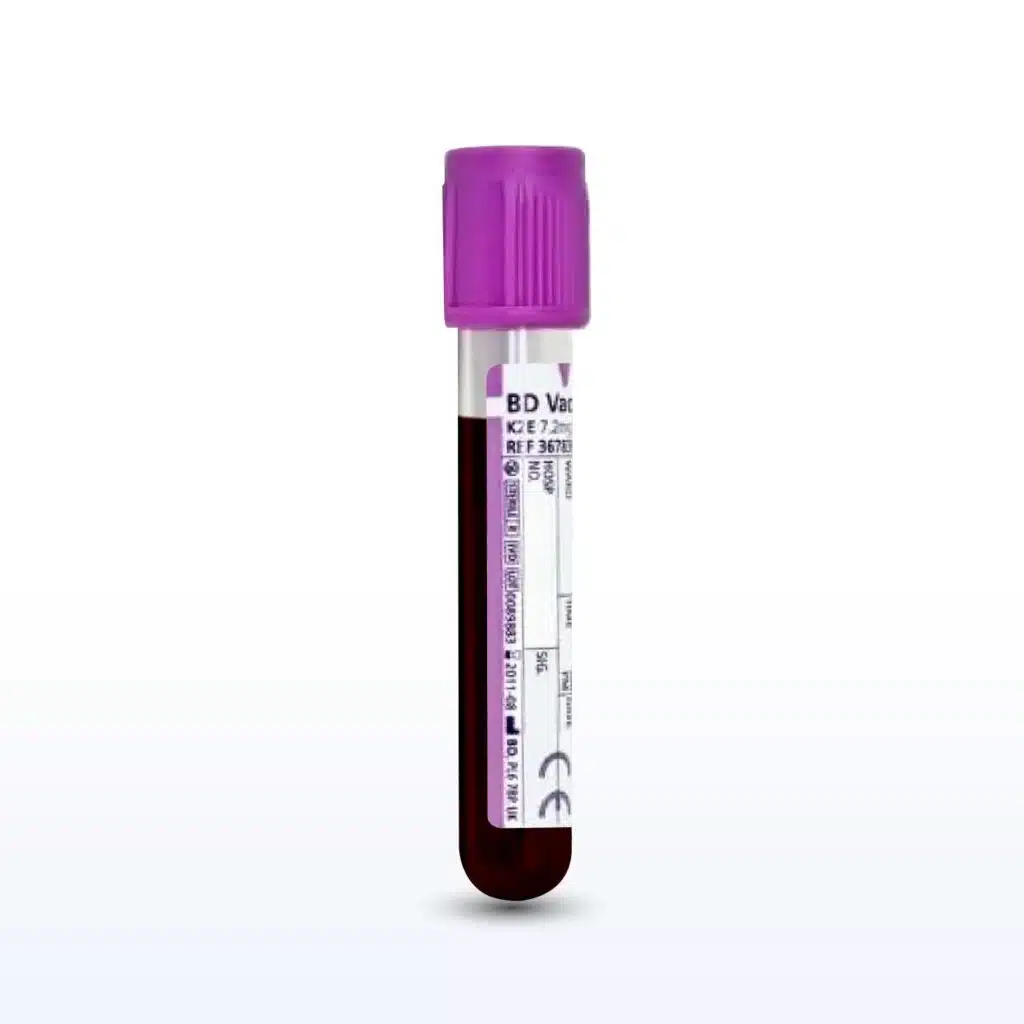
Human Immunodeficiency Virus HIV Whole Blood
 Powered by Bioz
About:Fresh whole blood from consented donors with confirmed HIV infection, stratifiable by ART status, viral load, and CD4 count. Supports absolute CD4/CD8 immunophenotyping, latent reservoir characterisation, chronic immune activation profiling, and antiretroviral response research.
About Human Immunodeficiency Virus HIV Whole Blood
HIV Whole Blood for Virology and Infectious Disease Immunology Research
Sanguine collects fresh whole blood from IRB-consented donors with clinically confirmed HIV infection, screened and handled under strict biosafety protocols, for virology, immunology, and infectious disease research. Custom anticoagulants and tube types are available, and samples are collected and shipped same-day.
Why Whole Blood for HIV Research
HIV-1 is a retroviral infection, and the biology of interest is the interaction between the virus and a host immune response — not autoimmunity. Whole blood is the only blood specimen that preserves every leukocyte compartment together with the plasma the virus circulates in, which matters because HIV pathology is distributed across cell types that density-gradient isolation removes or distorts.
- Target cell biology intact — HIV-1 enters CD4+ T cells via CD4 with CCR5 or CXCR4 co-receptors; whole blood preserves the target population in its native proportion alongside the cells it interacts with
- Absolute counts, not just frequencies — CD4 count and the CD4:CD8 ratio are the central clinical immunology readouts in HIV and require whole blood, since PBMC preparation destroys absolute quantification
- Compartments lost in PBMC preparation — granulocytes, and the erythrocyte and platelet fractions, are retained in whole blood and are relevant to chronic immune activation and inflammation in treated infection
- Chronic immune activation and exhaustion — persistent inflammation and inhibitory receptor expression on T cells persist even under suppressive therapy, and are read out across monocyte, NK, and T cell compartments simultaneously
- Latent reservoir work needs cells at scale — the integrated provirus persists in resting memory CD4+ T cells at low frequency, so reservoir quantification and cure-directed assays depend on high input cell numbers from unfractionated blood
- Paired viral and cellular readouts from one draw — plasma viral RNA and host cellular phenotype can be measured on the same specimen without cross-collection variability
Donor Stratification Available
- Treatment status — antiretroviral-naive, on ART with virological suppression, or viraemic despite therapy
- Viral load and CD4 count — current values and nadir CD4 where recorded
- CD4:CD8 ratio — where available, as a marker of residual immune dysregulation
- Disease and treatment duration — time since diagnosis and time on current regimen; long-term non-progressors where identified
- Co-infection status — hepatitis B, hepatitis C, or other concurrent infection where documented
- Matched healthy controls available — demographically matched seronegative donors
Product Features
- Fresh whole blood from clinically diagnosed HIV-positive donors
- Custom anticoagulants and collection tubes available
- Same-day collection and shipment under biosafety protocol
- Standard and custom volumes
- Research Use Only (RUO)
De-identified Donor Data
- Physician-confirmed HIV diagnosis, viral load, and ART status where available
- Demographics: age, sex assigned at birth, ethnicity
- Relevant medical, treatment, and co-infection history
- Additional clinical values reported per lot or available on request
Applications
- Viral load quantification and latent reservoir characterisation
- Immunophenotyping of CD4 and CD8 T cell populations with absolute counts
- T cell exhaustion and chronic immune activation profiling
- Innate compartment analysis across monocytes, NK cells, and granulocytes
- Gene expression, transcriptomic, and host restriction factor studies
- Antiretroviral drug response and resistance research
- HIV-specific T cell and broadly neutralising antibody research
- Assay development and validation for infectious disease diagnostics
Other HIV Specimen Types
Matched material from the same HIV donor pool is available as HIV serum, plasma, PBMC, and leukopak. Isolated subsets are available as HIV CD4+ T cells and CD8+ T cells.
Compliance and Quality Assurance
- IRB-approved protocols and electronic informed consent
- HIPAA-compliant donor data handling and biosafety-compliant shipping
- 21 CFR Part 11-compliant e-signatures with documentation support for regulatory review
Ordering & Customization
HIV whole blood is available in standard and custom volumes. For pricing, international orders, or documentation requirements, email learnmore@sanguinebio.com. To browse the full specimen range and healthy-donor controls, see our human whole blood collection.
Applications
- Hematology and clinical chemistry research
- Plasma, serum, and PBMC isolation
- Flow cytometry and biomarker studies
- Drug-spike and ex vivo stimulation assays
Product Features
- Research Use Only (RUO), human whole blood
- Collected from screened, consented donors
- Available in EDTA, sodium heparin, ACD, or citrate anticoagulants
- Shipped fresh under temperature-controlled conditions
- Drawn and shipped same day of collection
- IRB-approved protocols with electronic informed consent
Donor Metadata
- Verified diagnosis and clinical history
- Demographic data: age, sex assigned at birth, race/ethnicity
- Medication and treatment background when available
Compliance and Quality Assurance
- IRB-approved collections and standardized procedures
- 21 CFR Part 11-compliant e-consent system
- HIPAA-compliant data management
Ordering & Customization
Human Whole Blood are available in customizable aliquot sizes. For international orders or documentation needs, please contact learnmore@sanguinebio.com to confirm requirements and availability. We also work with multiple ordering platforms and distributors, learn more here.
Whole Blood
Where can I find your complete catalog?
You can find our full product catalog here.
How long can samples be stored?
Storage depends on sample type but often cryopreserved samples stored in liquid nitrogen can be stored for years.
What customization options are available?
Extensive customization is available. To discuss your project request a quote or email us at learnmore@sanguinebio.com.
Do you offer prospective collections?
Sanguine offers flexible prospective collection services tailored to fit your research. For more information and to request a quote, please see: our prospective biospecimen collection services page.
What is the turnaround time for custom collections?
Timelines depend on condition, sample type, and I/E criteria but we often start collection within 2 weeks of signed agreement.
Do you have samples in stock?
YES - we have in-stock inventory. You can also email us at learnmore@sanguinebio.com as we continually get new samples in our inventory.
What does unique donor mean?
Each sample from a different individual - Unique donor means each sample comes from a different person, ensuring biological diversity in your study.
Are samples collected under IRB-approved protocols?
YES - "IRB-approved collection protocols" and IRB approval documentation available upon request. Sanguine utilizes two internationally-recognized IRBs (Advarra and WCG IRB) for review and approval.
Frequently Asked Questions
Ask a Question
Pair with a Healthy Control
Match your Human Immunodeficiency Virus HIV Whole Blood with normal donor samples for comparison
Healthy Whole Blood
View InventoryNeed a custom Whole Blood cohort?
Our scientific team can scope prospective collections with donor-specific I/E criteria, typically starting within 2 weeks of agreement.